 Indietro
Atoms, Molecules, Bonds, and Water: Foundations of Biological Chemistry
Guida di studio - Note intelligenti
 Appunti personalizzati basati sui tuoi materiali, ampliati con definizioni chiave, esempi e contesto.
Atoms, Molecules, and Bonds
Common Terms and States of Matter
Understanding the basic building blocks of matter is essential for studying biology. Matter is anything that has mass and takes up space, and it exists in four primary states: solid, liquid, gas, and plasma.
Matter: Anything that has mass and occupies space.
States of Matter: Solid, liquid, gas, and plasma, each with distinct properties and transitions (e.g., melting, vaporization, ionization).
Elements: Pure substances that cannot be broken down by chemical reactions; each element is made of only one type of atom.
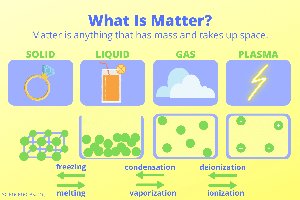
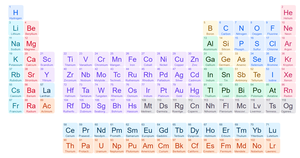
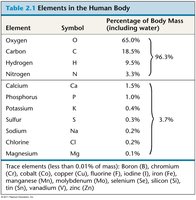
Table: Elements in the Human Body
Element | Symbol | Percentage of Body Mass |
|---|---|---|
Oxygen | O | 65.0% |
Carbon | C | 18.5% |
Hydrogen | H | 9.5% |
Nitrogen | N | 3.3% |
Calcium | Ca | 1.5% |
Phosphorus | P | 1.0% |
Potassium | K | 0.4% |
Sulfur | S | 0.3% |
Sodium | Na | 0.2% |
Chlorine | Cl | 0.2% |
Magnesium | Mg | 0.1% |
Atoms, Molecules, and Compounds
An atom is the smallest unit of an element that retains its unique properties. Molecules are formed by connecting two or more atoms, which may be the same or different elements. Compounds are molecules formed by atoms of different elements.
Atom: Smallest component of an element.
Molecule: Two or more atoms bonded together.
Compound: Molecule formed by atoms of different elements.
Atomic Structure: Historical Models
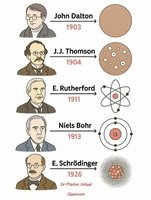
The understanding of atomic structure has evolved through several models:
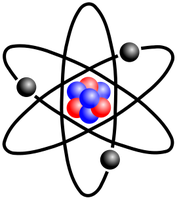
Rutherford Model (1911): Atom has a dense nucleus (protons and neutrons) with electrons orbiting around it; most of the atom is empty space.
Bohr Model (1913): Electrons orbit the nucleus at specific energy levels (shells); only a fixed number of electrons can occupy each shell.
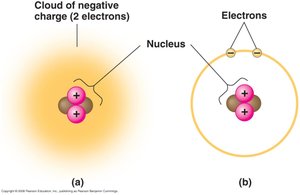
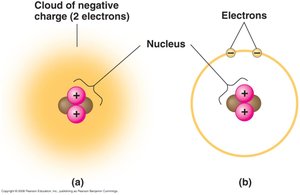
Schrödinger Quantum Mechanics Model (1926): Electrons exist in a cloud-like quantum orbit; their exact position cannot be determined at any time.
Atomic Structure: Components and Characteristics
Atoms are composed of a nucleus (protons and neutrons) and electrons. The number of protons determines the atomic number and the identity of the element.
Atomic Number: Number of protons in the nucleus; defines the element.
Atomic Mass: Sum of protons and neutrons; electrons have negligible mass.
Isotopes: Variants of an element with different numbers of neutrons; some isotopes are radioactive.
Electron Shells and Energy Levels
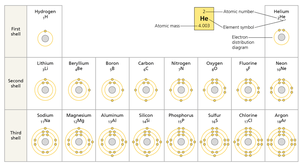
Electrons occupy specific energy levels (shells) around the nucleus. The arrangement of electrons determines how atoms interact and form bonds.
Shells: First shell holds 2 electrons, second holds 8, third holds 8.
Energy Levels: Higher shells have higher energy; electrons fill lower energy shells first.
Stability: Atoms with full outer shells are more stable.
Chemical Bonds
Ionic Bonds
Ionic bonds form when one atom donates an electron to another, resulting in charged ions that attract each other.
Ion: Atom that has gained or lost an electron.
Cation: Positively charged ion (lost electron).
Anion: Negatively charged ion (gained electron).
Ionic Bond: Attraction between oppositely charged ions.
Covalent Bonds
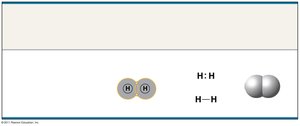
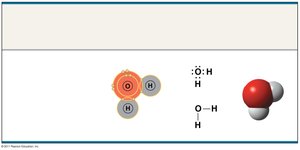
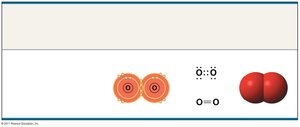
Covalent bonds form when atoms share pairs of electrons. The sharing can be equal (nonpolar) or unequal (polar).
Nonpolar Covalent Bond: Equal sharing of electrons between atoms of the same element or similar electronegativity.
Polar Covalent Bond: Unequal sharing; electrons spend more time around the atom with higher electronegativity (e.g., O, N, S, F).
Hydrogen Bonds
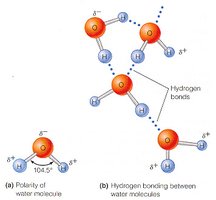
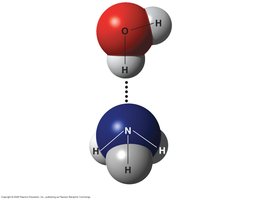
Hydrogen bonds are weak attractions between a hydrogen atom (attached to an electronegative atom) and another electronegative atom in a nearby molecule. They are crucial for the properties of water and biological molecules.
Hydrogen Bond: Attraction between a hydrogen atom and an electronegative atom (e.g., O or N).
Importance: Responsible for water's cohesion, adhesion, and high specific heat.
van der Waals Forces
van der Waals forces are very weak bonds that occur between closely adjacent atoms. They are important in molecular interactions, such as those seen in gecko feet.
van der Waals Forces: Weak attractions between molecules or parts of molecules that are close together.
Bond Strength Comparison
Ionic Bonds: Strong
Covalent Bonds: Strong
Hydrogen Bonds: Weak
van der Waals Forces: Very weak
Special Properties of Water
Water as a Solvent
Water is known as the "universal solvent" due to its ability to dissolve many polar (hydrophilic) substances. Nonpolar (hydrophobic) molecules do not dissolve readily in water.
Hydrophilic: Polar molecules that dissolve in water.
Hydrophobic: Nonpolar molecules that do not dissolve in water.
Heat Capacity and Temperature Regulation
Water has a high specific heat capacity, meaning it can absorb or lose a lot of heat without changing temperature quickly. This property helps regulate temperature in organisms and environments.
Specific Heat Capacity: Amount of heat required to change the temperature of water.
Heat of Vaporization: Extra heat absorbed to evaporate water; important for cooling mechanisms like sweating.
Cohesion and Adhesion
Water molecules exhibit cohesion (bonding to themselves) and adhesion (bonding to other substances), which are essential for processes like transpiration and capillary action in plants.
Cohesion: Water molecules stick to each other via hydrogen bonds.
Adhesion: Water molecules stick to other surfaces.
Density of Water and Ice
Ice is less dense than liquid water, which allows it to float. Water is most dense at 4°C.
Density: Mass per unit volume; ice's lower density is due to its molecular structure.
Acids, Bases, and pH
Water Ionization and pH
Water can dissociate into hydrogen ions (H+) and hydroxide ions (OH-). The concentration of H+ determines the pH of a solution.
Neutral pH: pH 7; [H+] = [OH-] = molar.
Acid: pH < 7; [H+] > M.
Base: pH > 7; [H+] < M.
Equation: Water Ionization
Importance of pH and Buffers
pH affects chemical bonds, molecular structure, and biochemical reactions. Buffers help maintain stable pH by donating or removing H+ or OH- ions.
Buffer: Substance that resists changes in pH.
Table: Bond Types and Strengths
Bond Type | Strength |
|---|---|
Ionic | Strong |
Covalent | Strong |
Hydrogen | Weak |
van der Waals | Very weak |
Additional info: The notes cover foundational concepts from General Biology chapters 2 and 3, including atomic structure, chemical bonds, and water properties, which are essential for understanding biological molecules and processes.
