 Indietro
Bacteria and Archaea: Diversity, Structure, and Function
Guida di studio - Note intelligenti
 Appunti personalizzati basati sui tuoi materiali, ampliati con definizioni chiave, esempi e contesto.
Chapter 26: Bacteria and Archaea
Introduction to Bacteria and Archaea
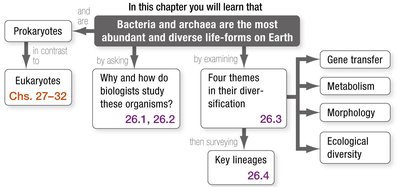
Bacteria and Archaea are two of the three largest domains of life, with Eukarya as the third. Both are prokaryotic, meaning they lack a membrane-bound nucleus, but they differ in the molecular composition of their plasma membranes and cell walls. These organisms are primarily unicellular and are among the most ancient and diverse life forms on Earth.
Prokaryotes: Organisms without a membrane-bound nucleus.
Microbiome: The community of microbes inhabiting a particular environment, including the human body.
Distinguishing Features of Bacteria and Archaea
Bacteria and Archaea can be differentiated by several molecular and structural features:
Molecular Feature | Bacteria | Archaea |
|---|---|---|
RNA polymerase | One type (5 subunits) | One type (13 subunits; similar to eukaryotes) |
Peptidoglycan in cell wall | Present | Absent |
First amino acid in translation | Formylmethionine | Methionine |
Histones associated with DNA | No | Yes |
Biological Impact and Abundance
Bacteria and Archaea are ancient, abundant, and ubiquitous. The oldest known fossils are 3.5 billion years old. They dominate Earth's biomass and are found in diverse environments, from soil to deep ocean sediments.
Estimated hundreds of thousands of species exist.
Microbes are abundant in the human body (e.g., ~1000 species in the large intestine).
Habitat Diversity and Extremophiles
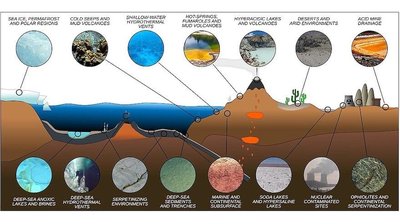
Bacteria and Archaea inhabit nearly every environment on Earth, including extreme habitats such as hydrothermal vents, acidic hot springs, and polar ice. Organisms that thrive in such conditions are called extremophiles.
Extremophiles help us understand the origin of life and are models for astrobiology.
Enzymes from extremophiles are used in industrial applications.
Medical Importance: Pathogens and Germ Theory
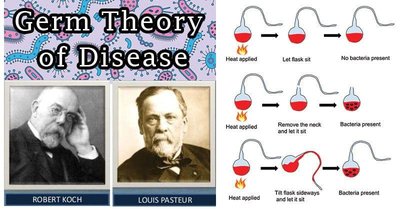
Some bacteria are pathogens, causing diseases in humans. The germ theory of disease states that certain diseases are caused by the transmission and growth of specific bacteria and viruses.
Koch’s postulates provide a framework for linking specific microbes to specific diseases.
Pathogens can be transmitted person-to-person, by vectors, or through contaminated food/water.
Virulence and Endospores
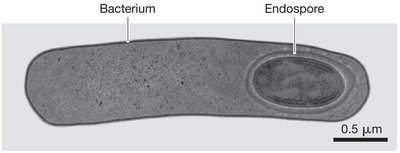
Virulence is the ability of a microbe to cause disease. Some bacteria produce endospores, which are dormant, tough structures that allow survival in harsh conditions and facilitate disease transmission.
Antibiotics and Biofilms
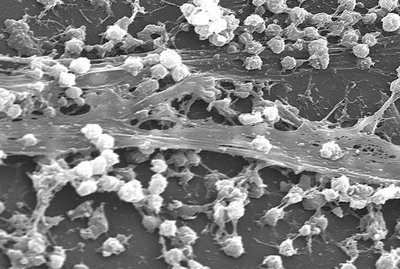
Antibiotics are molecules that kill or inhibit bacteria, often produced by soil bacteria and fungi. Overuse has led to antibiotic resistance. Biofilms are bacterial colonies encased in a protective matrix, making them resistant to antibiotics.
Role in Bioremediation
Bioremediation uses bacteria and archaea to clean up pollutants, especially organic solvents. Strategies include fertilizing contaminated sites to promote microbial growth and seeding sites with specific microbes.
Studying Bacteria and Archaea
Enrichment Cultures
Enrichment cultures are laboratory techniques that isolate and grow microbes under specific conditions, leading to the discovery of organisms such as thermophiles.
Metagenomics
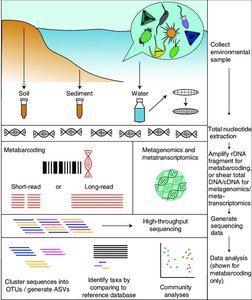
Metagenomics (environmental sequencing) identifies species and metabolic pathways by analyzing DNA from environmental samples, allowing rapid discovery of previously unknown organisms.
Investigating the Human Microbiome
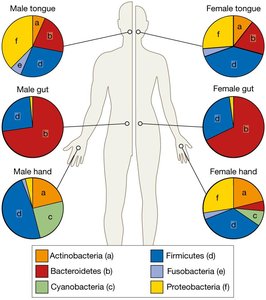
The human body hosts a diverse microbiome, especially in the gut, which contains trillions of bacteria and archaea. These microbes are essential for health, influencing digestion, immunity, and disease susceptibility.
Molecular Phylogenetics
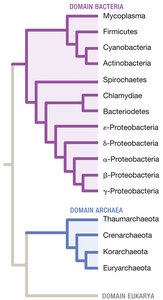
Phylogenetic trees based on ribosomal RNA (16S and 18S rRNA) sequences have revealed the evolutionary relationships among Bacteria, Archaea, and Eukarya. Monophyletic groups (clades) are identified through molecular and morphological analysis.
Themes in the Diversification of Bacteria and Archaea
Genetic Variation through Gene Transfer
Bacteria and Archaea acquire genetic diversity through lateral gene transfer:
Transformation: Uptake of DNA from the environment.
Transduction: Transfer of DNA by viruses.
Conjugation: Direct transfer of DNA between cells via cell-to-cell contact.
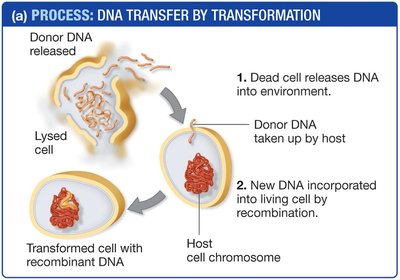
Morphological Diversity
Bacteria and Archaea vary in size, shape (filaments, spheres, rods, spirals), and motility (flagella, gliding). Cell wall composition is also diverse, with Gram-positive and Gram-negative types distinguished by Gram staining.
Gram Type | Cell Wall Structure | Staining Result |
|---|---|---|
Gram-positive | Thick peptidoglycan layer | Purple |
Gram-negative | Thin peptidoglycan + outer membrane | Pink |
Metabolic Diversity
Bacteria and Archaea display remarkable metabolic diversity, using various energy and carbon sources:
Phototrophs: Use light energy (photophosphorylation).
Chemoorganotrophs: Oxidize organic molecules for energy.
Chemolithotrophs: Oxidize inorganic molecules for energy.
Autotrophs: Synthesize organic compounds from CO2 or methane.
Heterotrophs: Obtain organic compounds from the environment.
ATP can be produced by cellular respiration (using electron transport chains), fermentation, or photophosphorylation. Bacteria and Archaea use a wide variety of electron donors and acceptors, resulting in diverse metabolic by-products.
Ecological Diversity and Global Impacts
Bacteria and Archaea play crucial roles in global biogeochemical cycles, including the oxygen and nitrogen cycles. Cyanobacteria were the first organisms to produce oxygen via photosynthesis, fundamentally altering Earth's atmosphere.
Nitrogen fixation: Conversion of atmospheric N2 to ammonia (NH3), making nitrogen available to living organisms.
Nitrogen cycle: Movement of nitrogen through ecosystems, driven by bacterial and archaeal metabolism.
Key Lineages of Bacteria and Archaea
Bacteria
Lineage | Morphology | Metabolism | Relevance |
|---|---|---|---|
Actinobacteria | Rods or filaments, some form mycelia | Chemoheterotrophs, some fix nitrogen | Produce antibiotics, cause tuberculosis and leprosy |
Chlamydiae | Spherical, very small, clusters | Chemoheterotrophs, obligate parasites | Cause chlamydia, can lead to infertility |
Cyanobacteria | Filaments, spheres, spirals | Photoautotrophs, nitrogen fixation | Origin of oxygen-rich atmosphere, algal blooms |
Firmicutes | Rods or spheres, chains/clusters | Chemoheterotrophs, some fix nitrogen | Cause anthrax, strep throat, used in food production |
Proteobacteria | Diverse: rods, spheres, spirals | Heterotrophs, chemoautotrophs, some photosynthetic | Cause cholera, food poisoning, nitrogen cycling |
Spirochaetes | Corkscrew-shaped, individual cells | Chemoheterotrophs, fermentation | Cause syphilis, Lyme disease |
Archaea
Lineage | Morphology | Metabolism | Relevance |
|---|---|---|---|
Crenarchaeota | Rods, spheres, filaments, discs | Chemoheterotrophs, chemolithoautotrophs | Live in extreme environments (hot, acidic, high-pressure) |
Euryarchaeota | Rods, spheres, filaments, spirals, discs | Chemoheterotrophs, chemolithoautotrophs, methanogens | Produce methane, found in diverse habitats |
Thaumarchaeota | Rod-shaped | Chemolithoautotrophs (ammonia oxidation) | Abundant in oceans, important in nitrogen cycling |
Additional info: The study of Bacteria and Archaea is foundational for understanding the evolution of life, the functioning of ecosystems, and the development of medical and industrial applications.
