 Indietro
Bacteria and Archaea: Diversity, Structure, and Ecological Roles
Guida di studio - Note intelligenti
 Appunti personalizzati basati sui tuoi materiali, ampliati con definizioni chiave, esempi e contesto.
Bacteria and Archaea: Diversity, Structure, and Ecological Roles
Introduction to Bacteria and Archaea
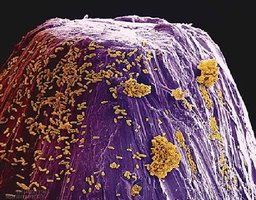
Bacteria and Archaea are two domains of prokaryotic life that exhibit remarkable diversity and abundance. They are found in nearly every environment on Earth and play essential roles in ecological and evolutionary processes.
Diversity: Bacteria and Archaea display a wide range of metabolic, structural, and ecological adaptations.
Abundance: Prokaryotes are present in vast numbers in air, water, soil, and within other organisms.
Short Generation Time: Their rapid reproduction enables quick adaptation and evolution.
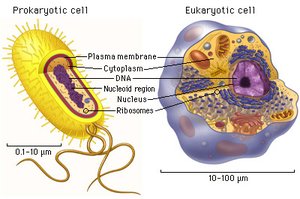
Prokaryotic Cell Structure
Prokaryotic cells lack a nucleus and membrane-bound organelles, distinguishing them from eukaryotic cells. Their genetic material is located in a nucleoid region, and they possess a plasma membrane, cytoplasm, and ribosomes.
No Nuclear Membrane: DNA is not enclosed within a nucleus.
Cell Wall: Most prokaryotes have a rigid cell wall that maintains shape and protects against environmental stress.
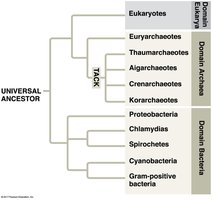
Classification and Phylogeny
Prokaryotes are classified into two domains: Bacteria and Archaea. Eukarya is more closely related to Archaea than to Bacteria. The term "prokaryote" is paraphyletic, as it does not include all descendants of a common ancestor.
Domains of Life: Bacteria, Archaea, and Eukarya.
Phylogenetic Relationships: Based on genetic and molecular evidence.
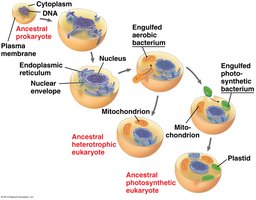
Evolutionary Origins
Eukaryotic cells are thought to have evolved through endosymbiosis, where ancestral cells engulfed bacteria that became mitochondria and plastids. Horizontal gene transfer has played a significant role in prokaryotic evolution.
Endosymbiosis: Origin of mitochondria and plastids from bacteria.
Horizontal Gene Transfer: Movement of genetic material between organisms other than by descent.
Genetic Exchange in Prokaryotes
Prokaryotes can exchange genetic material through several mechanisms, increasing genetic diversity and adaptability.
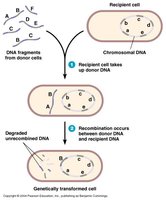
Transformation: Uptake of free DNA from the environment.
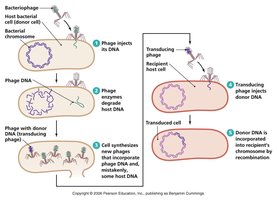
Transduction: Transfer of DNA via bacteriophages (viruses).
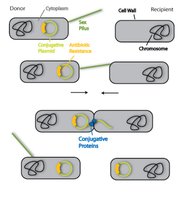
Conjugation: Direct transfer of DNA between cells through a pilus.
Prokaryotic Cell Shapes and Structures
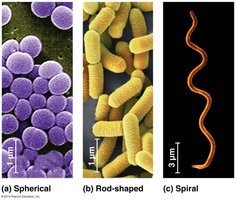
Prokaryotes exhibit three major shapes: coccus (spherical), bacillus (rod-shaped), and spiral. Their cell wall composition varies between Bacteria and Archaea.
Coccus: Spherical shape.
Bacillus: Rod-shaped.
Spiral: Spiral or helical shape.
Cell Wall Composition and Gram Staining
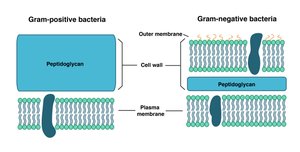
The cell wall is a critical feature for most prokaryotes. Bacterial cell walls contain peptidoglycan, while archaeal cell walls are composed of proteins or other polymers. The Gram stain differentiates bacteria based on cell wall structure.
Gram-Positive: Thick peptidoglycan layer, stains purple.
Gram-Negative: Thin peptidoglycan layer and outer membrane, stains pink/red.
Reproduction: Binary Fission
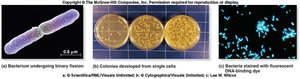
Prokaryotes reproduce asexually by binary fission, a process of simple cell division. This rapid reproduction contributes to their evolutionary success.
Binary Fission: One cell divides into two genetically identical cells.
Colony Formation: Used to count and study bacteria in laboratory settings.
Metabolic Diversity and Nutritional Types
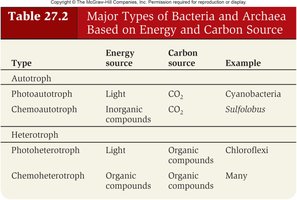
Bacteria and Archaea display diverse metabolic strategies, classified by their energy and carbon sources. This diversity allows them to inhabit a wide range of environments.
Type | Energy Source | Carbon Source | Example |
|---|---|---|---|
Photoautotroph | Light | CO2 | Cyanobacteria |
Chemoautotroph | Inorganic compounds | CO2 | Sulfolobus |
Photoheterotroph | Light | Organic compounds | Chloroflexi |
Chemoheterotroph | Organic compounds | Organic compounds | Many bacteria |
Oxygen Requirements
Prokaryotes are classified by their response to oxygen:
Obligate Aerobes: Require oxygen for survival.
Facultative Aerobes: Can use oxygen but can also grow without it.
Obligate Anaerobes: Cannot tolerate oxygen.
Aerotolerant Anaerobes: Do not use oxygen but are not harmed by it.
Nitrogen Fixation
Many prokaryotes can convert atmospheric nitrogen (N2) into ammonia (NH3), a process known as nitrogen fixation. This is essential for making nitrogen available to living organisms.
Nitrogen Fixation:
Archaea: Unique Features and Extremophiles
Archaea possess unique membrane lipids with ether linkages and branched hydrocarbons, making them more resistant to extreme conditions. Many Archaea are extremophiles, thriving in environments such as hot springs, acidic waters, or high-salt areas.
Membrane Structure: Ether linkages and branched hydrocarbons.
Extremophiles: Hyperthermophiles, acidophiles, halophiles.
Ecological Roles of Prokaryotes
Bacteria and Archaea are crucial in global nutrient cycles, including the carbon and nitrogen cycles. They act as producers, decomposers, and symbionts.
Producers: Cyanobacteria perform oxygenic photosynthesis and contribute to atmospheric oxygen.
Decomposers: Break down dead organic matter, recycling nutrients.
Symbionts: Form mutualistic relationships with other organisms, such as in the human gut or with tube worms.
Bacteria as Pathogens and Beneficial Organisms
While some bacteria cause diseases, most are harmless or beneficial. Pathogenic bacteria are responsible for diseases such as cholera, leprosy, and tooth decay. Beneficial bacteria aid in digestion, nutrient cycling, and environmental cleanup.
Pathogens: Cause diseases in humans, animals, and plants.
Mutualists: Aid in digestion and other physiological processes.
Bioremediation: Some bacteria can degrade pollutants and help solve environmental problems.
Summary Table: Major Types of Bacteria and Archaea Based on Energy and Carbon Source
Type | Energy Source | Carbon Source | Example |
|---|---|---|---|
Photoautotroph | Light | CO2 | Cyanobacteria |
Chemoautotroph | Inorganic compounds | CO2 | Sulfolobus |
Photoheterotroph | Light | Organic compounds | Chloroflexi |
Chemoheterotroph | Organic compounds | Organic compounds | Many bacteria |
