 Indietro
Bacteria and Archaea: Diversity, Structure, and Ecological Roles
Guida di studio - Note intelligenti
 Appunti personalizzati basati sui tuoi materiali, ampliati con definizioni chiave, esempi e contesto.
Chapter 26 - Bacteria and Archaea
Introduction to Bacteria and Archaea
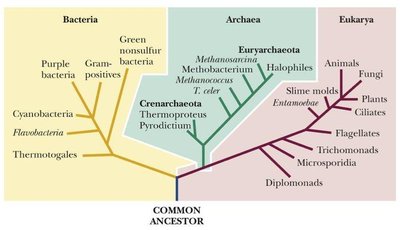
Bacteria and Archaea represent two of the three domains of life, with Eukarya as the third. Both are prokaryotic, meaning they lack a membrane-bound nucleus, but they differ significantly at the molecular level, including their plasma membranes and cell walls. These domains are ancient, diverse, and abundant, with lineages dating back billions of years.
Bacteria and Archaea are mostly unicellular and prokaryotic.
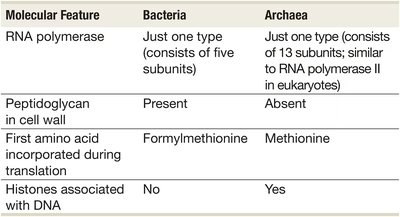
They are distinguished by molecular features such as cell wall composition and RNA polymerase structure.
They are ubiquitous, found in nearly every environment on Earth.
Ancient Lineages and Fossil Evidence
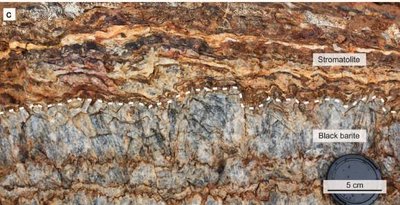
The oldest fossils are of bacteria, dating back 3.5 billion years, while eukaryotes appear much later. Fossilized stromatolites provide evidence of early microbial life and are among the earliest signs of life on Earth.
Stromatolites are layered structures formed by microbial activity.
These fossils help trace the evolutionary history of life.
Microbial Abundance and Diversity
Bacteria and Archaea are dominant life forms in terms of total volume and abundance. They inhabit diverse environments, from soil and seawater to extreme habitats such as hydrothermal vents and Antarctic ice.
Microbial diversity is vast, with thousands of species described and many more likely undiscovered.
Microbes are found in extreme environments, known as extremophiles.
Extremophiles and Their Importance
Extremophiles are organisms that thrive in extreme conditions, such as high temperature, acidity, salinity, or pressure. Their study provides insights into the origins of life and has applications in biotechnology and astrobiology.
Enzymes from extremophiles are used in industrial processes.
Astrobiologists use extremophiles as models for potential extraterrestrial life.
Pathogenic Bacteria and Disease
Some bacteria cause illness in humans and other organisms. Koch's postulates outline the criteria for linking a specific microbe to a specific disease. Infectious diseases can spread through direct contact, vectors, or contaminated food and water.
Virulence refers to the ability of a microbe to cause disease.
Pathogenic strains often possess unique genes, such as those coding for toxins.
Endospore Formation
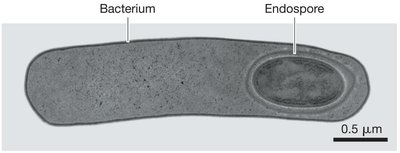
Some bacteria produce endospores, which are tough, dormant structures that allow survival in harsh conditions. Endospores are resistant to heat, radiation, and antibiotics, and play a role in disease transmission.
Endospores contain DNA, RNA, ribosomes, and enzymes.
They resume growth when conditions become favorable.
Antibiotics and Resistance
Antibiotics are molecules that kill or inhibit bacteria, produced naturally by some soil bacteria and fungi. Overuse has led to the evolution of drug-resistant strains, posing challenges in medicine and agriculture.
Genetic Variation via Gene Transfer
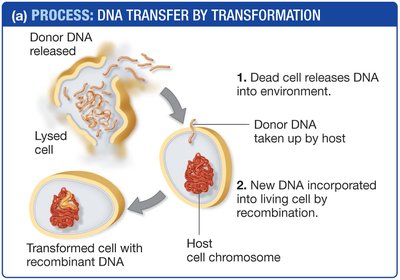
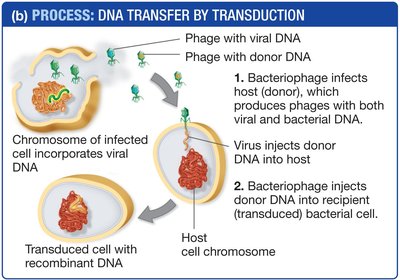
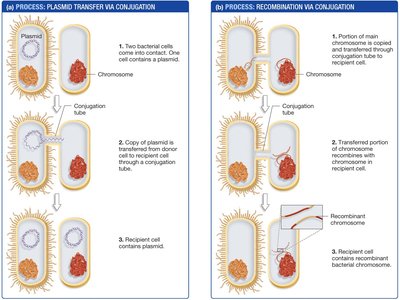
Bacteria and Archaea acquire genetic variation through lateral gene transfer, which allows for the acquisition of new traits beyond binary fission. The main mechanisms are transformation, transduction, and conjugation.
Transformation: Uptake of DNA from the environment.
Transduction: Transfer of DNA via viruses (bacteriophages).
Conjugation: Direct cell-to-cell transfer of genetic material.
Morphological Diversity
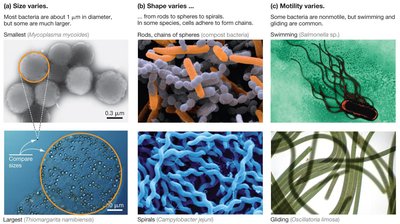
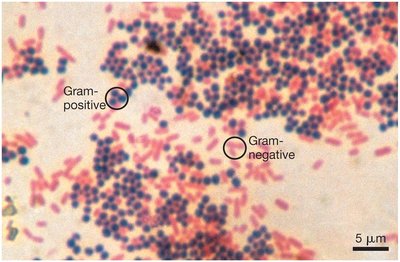
Bacteria and Archaea exhibit diversity in size, shape, and motility. Cell wall composition is a key distinguishing feature, identified by Gram staining.
Shapes include filaments, spheres, rods, and chains.
Motility mechanisms include flagella and gliding.
Gram-positive cells have thick peptidoglycan walls; Gram-negative cells have thin walls and an outer membrane.
Metabolic Diversity
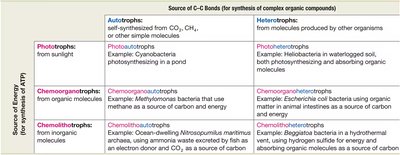
Bacteria and Archaea display remarkable metabolic diversity, allowing them to occupy a wide range of ecological niches. They acquire energy and carbon through various pathways.
Phototrophs: Use light to produce ATP.
Chemoorganotrophs: Oxidize organic molecules for energy.
Chemolithotrophs: Oxidize inorganic molecules for energy.
Autotrophs: Synthesize organic compounds from CO2 or CH4.
Heterotrophs: Obtain organic compounds from other organisms.
Ecological Diversity and Global Impacts
Bacteria and Archaea play crucial roles in global biogeochemical cycles, including oxygen and nitrogen cycles. Their metabolic activities impact the environment and support life on Earth.
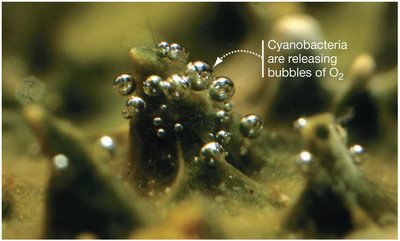
Responsible for oxygen production via photosynthesis (cyanobacteria).
Responsible for nitrogen fixation, making nitrogen available to plants.
The Oxygen Revolution
Cyanobacteria were the first organisms to produce oxygen through photosynthesis, fundamentally changing Earth's atmosphere and enabling aerobic respiration.
Nitrogen Fixation and the Nitrogen Cycle
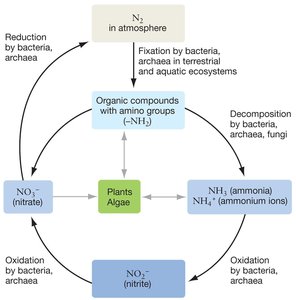
Nitrogen is essential for proteins and nucleic acids, but most organisms cannot use atmospheric N2. Certain bacteria and archaea convert N2 to ammonia (NH3), making nitrogen accessible to plants and other organisms. The nitrogen cycle involves multiple microbial processes, including nitrification and denitrification.
Nitrate Pollution
Excessive use of ammonia fertilizers leads to nitrate pollution in aquatic environments, causing oxygen depletion and the formation of "dead zones." This highlights the environmental impact of microbial activity and human practices.
Key Lineages of Bacteria and Archaea
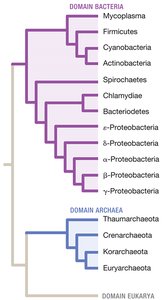
Bacteria and Archaea are classified into various lineages, each with unique characteristics and ecological roles. Understanding these lineages is essential for studying microbial diversity and evolution.
Summary Table: Molecular Features of Bacteria vs. Archaea
Molecular Feature | Bacteria | Archaea |
|---|---|---|
RNA polymerase | Just one type (five subunits) | One type (13 subunits; similar to eukaryotes) |
Peptidoglycan in cell wall | Present | Absent |
First amino acid in translation | Formylmethionine | Methionine |
Histones associated with DNA | No | Yes |
Summary Table: Metabolic Diversity
Source of Energy | Source of C–C Bonds | Example |
|---|---|---|
Phototrophs | Autotrophs | Cyanobacteria (photosynthesis) |
Phototrophs | Heterotrophs | Photoheterotrophs in waterlogged soil |
Chemoorganotrophs | Autotrophs | Methylomonas bacteria (methane) |
Chemoorganotrophs | Heterotrophs | Escherichia coli (organic molecules) |
Chemolithotrophs | Autotrophs | Ocean-dwelling Nitrosopumilus maritimus |
Chemolithotrophs | Heterotrophs | Beggiatoa bacteria (hydrogen sulfide) |
Summary Table: Nitrogen Cycle
Process | Microbial Role |
|---|---|
Fixation | Bacteria and archaea convert N2 to NH3 |
Nitrification | Bacteria convert NH3 to NO2 and NO3 |
Denitrification | Bacteria and archaea convert NO3 to N2 |
Additional info: Academic context was added to clarify the ecological roles, metabolic pathways, and evolutionary significance of Bacteria and Archaea, as well as to expand on the tables and diagrams for completeness.
