 Indietro
Bacteria and Archaea: Structure, Diversity, and Ecological Roles
Guida di studio - Note intelligenti
 Appunti personalizzati basati sui tuoi materiali, ampliati con definizioni chiave, esempi e contesto.
Chapter 27: Bacteria and Archaea
Overview of the Tree of Life
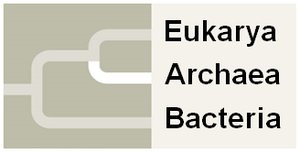
The tree of life represents the evolutionary relationships among all living organisms, divided into three domains: Bacteria, Archaea, and Eukarya. Prokaryotes (Bacteria and Archaea) are fundamental to the biosphere and were the first organisms to inhabit Earth.
Bacteria and Archaea are prokaryotic, lacking a nucleus and membrane-bound organelles.
Eukarya includes all eukaryotic organisms.
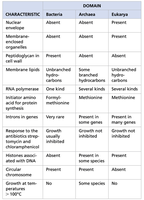
lCharacteristic | Bacteria | Archaea | Eukarya |
|---|---|---|---|
Nuclear envelope | Absent | Absent | Present |
Membrane-bound organelles | Absent | Absent | Present |
Peptidoglycan in cell wall | Present | Absent | Absent |
Membrane lipids | Unbranched hydrocarbons | Some branched hydrocarbons | Unbranched hydrocarbons |
RNA polymerase | One kind | Several kinds | Several kinds |
Initiator amino acid for protein synthesis | Formyl-methionine | Methionine | Methionine |
Introns in genes | Very rare | Present in some genes | Present |
Histones associated with DNA | Absent | Present in some species | Present |
Circular chromosome | Present | Present | Absent |
Growth at temperatures >100°C | No | Some species | No |
Structural and Functional Adaptations of Prokaryotes
Prokaryotes exhibit remarkable structural and functional adaptations that contribute to their success in diverse environments.
Cell size: Most prokaryotic cells are 0.5–5 µm, much smaller than eukaryotic cells.
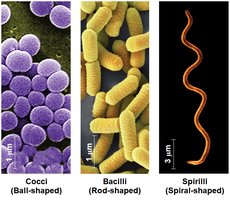
Cell shapes: The three most common shapes are cocci (spherical), bacilli (rod-shaped), and spirilli (spiral-shaped).
Cell-Surface Structures
The cell wall is a critical structure for prokaryotes, maintaining cell shape, protecting the cell, and preventing lysis in hypotonic environments.
Bacterial cell walls: Contain peptidoglycan, a polymer of sugars and amino acids.
Archaeal cell walls: Lack peptidoglycan; contain polysaccharides and proteins.
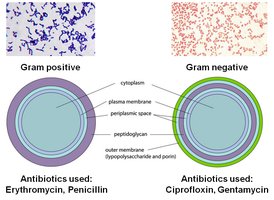
Gram stain: Used to classify bacteria as Gram-positive or Gram-negative based on cell wall structure.
Gram-positive: Thick peptidoglycan layer; susceptible to antibiotics like penicillin.
Gram-negative: Thin peptidoglycan layer and an outer membrane; often more resistant to antibiotics.
Antibiotics and Bacterial Cell Walls
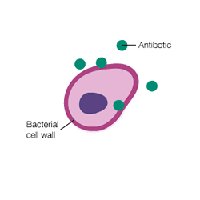
Many antibiotics target peptidoglycan, damaging bacterial cell walls and leading to cell death. Gram-positive bacteria are particularly susceptible to these antibiotics.
Capsules and Endospores
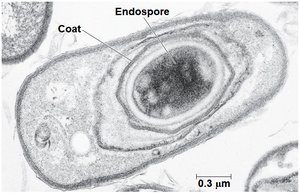
Capsule: A sticky layer of polysaccharide or protein outside the cell wall, aiding in adherence and protection.
Endospores: Metabolically inactive, highly resistant structures formed by some bacteria to survive harsh conditions.
Fimbriae and Pili
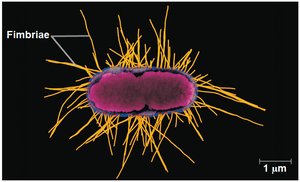
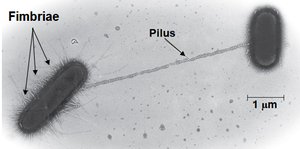
Fimbriae: Hair-like appendages that allow prokaryotes to adhere to surfaces and each other.
Pili (sex pili): Longer appendages used for DNA transfer during conjugation.
Motility
About half of all prokaryotes exhibit taxis, the ability to move toward or away from stimuli. Flagella are the most common structures used for motility, differing in structure between prokaryotes and eukaryotes.
Internal Organization and DNA
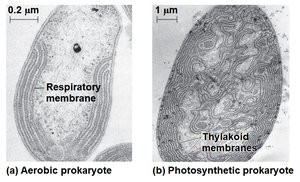
Prokaryotic cells lack membrane-bound organelles but may have specialized membranes for respiration or photosynthesis.
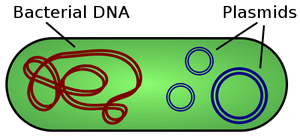
Genome: Prokaryotic genome is smaller and consists mostly of a single circular chromosome located in the nucleoid region.
Plasmids: Small, circular DNA molecules that replicate independently and carry additional genes.
Reproduction
Prokaryotes reproduce rapidly by binary fission, leading to quick population growth and adaptation.
Genetic Diversity in Prokaryotes
Genetic diversity in prokaryotes arises from rapid reproduction, mutation, and genetic recombination.
Rapid reproduction: Short generation times allow mutations to accumulate quickly.
Genetic recombination: Includes transformation (uptake of foreign DNA), transduction (gene transfer by viruses), and conjugation (direct transfer between cells).
Conjugation and Plasmids
Conjugation involves the transfer of genetic material via a pilus. The F plasmid enables DNA donation, and R plasmids carry antibiotic resistance genes.
Nutritional and Metabolic Adaptations
Prokaryotes are classified by how they obtain energy and carbon:
Photoautotrophs: Use light for energy and CO2 for carbon.
Chemoautotrophs: Use inorganic compounds for energy and CO2 for carbon.
Photoheterotrophs: Use light for energy and organic compounds for carbon.
Chemoheterotrophs: Use organic compounds for both energy and carbon.
Role of Oxygen and Nitrogen
Obligate aerobes: Require O2 for respiration.
Obligate anaerobes: Poisoned by O2; use fermentation or anaerobic respiration.
Facultative anaerobes: Can use O2 or not, depending on availability.
Nitrogen fixation: Some prokaryotes convert N2 to NH3, essential for amino acid and nucleic acid synthesis.
Metabolic Cooperation
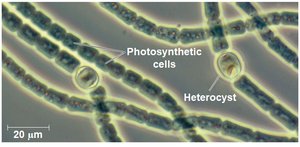
Prokaryotes cooperate metabolically, allowing them to exploit environmental resources efficiently. In cyanobacteria, photosynthetic cells and nitrogen-fixing cells (heterocysts) work together.
Prokaryotic Diversity
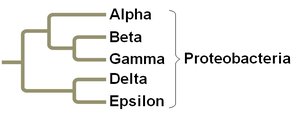
Prokaryotes are divided into two domains: Bacteria and Archaea. Bacteria are further classified into major phylogenetic groups, including Proteobacteria, Chlamydias, Spirochetes, Cyanobacteria, and Gram-positive bacteria.
Proteobacteria Subgroups
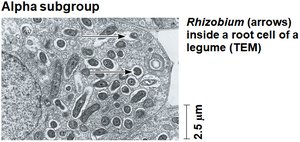
Alpha: Includes Rhizobium, which forms root nodules in legumes.
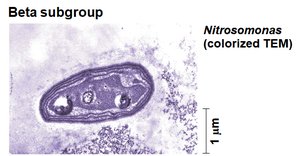
Beta: Includes Nitrosomonas, which converts NH4+ to NO2-.
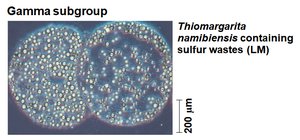
Gamma: Includes Thiomargarita namibiensis and pathogenic species like Salmonella.
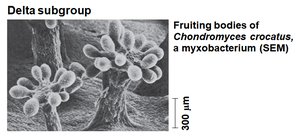
Delta: Includes myxobacteria and Bdellovibrios.
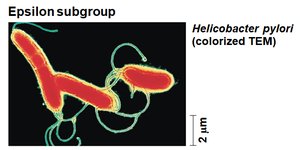
Epsilon: Includes Campylobacter and Helicobacter pylori.
Other Bacterial Groups
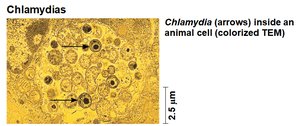
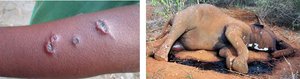
Chlamydias: Parasitic bacteria causing diseases like blindness.
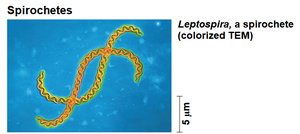
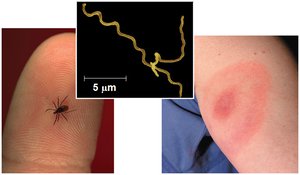
Spirochetes: Spiral-shaped bacteria, some pathogenic (e.g., Lyme disease).
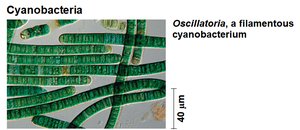
Cyanobacteria: Photosynthetic bacteria, likely ancestors of plant chloroplasts.
Gram-positive bacteria: Includes actinomycetes, Bacillus anthracis, Clostridium botulinum, Staphylococcus, Streptococcus, and Mycoplasmas.
Archaea
Archaea share traits with both Bacteria and Eukarya and often inhabit extreme environments.
Extreme halophiles: Thrive in highly saline environments.
Extreme thermophiles: Thrive in very hot environments.
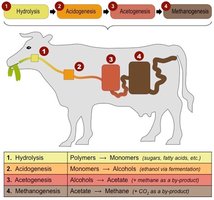
Methanogens: Produce methane as a metabolic byproduct, found in swamps and animal guts.
Ecological Roles of Prokaryotes
Prokaryotes are essential for recycling chemical elements, functioning as decomposers, and converting molecules to usable forms. They play major roles in symbiotic relationships, including mutualism, commensalism, and parasitism.
Symbiosis and Biofilms
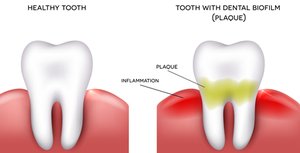
Prokaryotes often form biofilms, complex communities attached to surfaces, which can have beneficial or harmful effects.
Prokaryotes and Human Health
Prokaryotes can be both beneficial and harmful to humans. Mutualistic bacteria in the gut aid digestion, while pathogenic bacteria cause diseases.
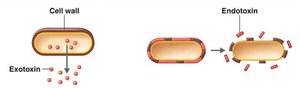
Exotoxins: Secreted toxins causing disease even if bacteria are not present.
Endotoxins: Released only when bacteria die and their cell walls break down.
Prokaryotes in Research and Technology
Prokaryotes are used in biotechnology, genetic engineering, bioremediation, and research. Examples include E. coli in gene cloning and the CRISPR-Cas system for genome editing.
----------------------------------------
