 Indietro
Basic Principles of Animal Form and Function (Chapter 40 Study Guide)
Guida di studio - Note intelligenti
 Appunti personalizzati basati sui tuoi materiali, ampliati con definizioni chiave, esempi e contesto.
Basic Principles of Animal Form and Function
Introduction
This chapter explores how animal structure (form) and function are interrelated, focusing on adaptations that allow animals to survive and thrive in diverse environments. It covers hierarchical organization, tissue types, coordination systems, homeostasis, thermoregulation, and energy requirements.
Animal Form and Function: Correlation and Evolution
Structure and Function at All Levels
Animal anatomy and physiology are closely linked, with form often providing clues to function. The body plan of an animal is determined by its genome, shaped by millions of years of evolution.
Key Point: Physical laws (strength, diffusion, movement, heat exchange) limit animal forms.
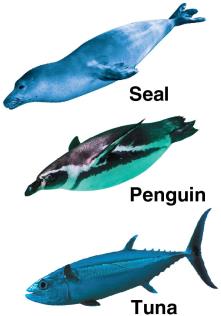
Key Point: Convergent evolution leads to similar adaptations in unrelated species facing similar challenges.
Example: Fast-swimming animals like seals, penguins, and tuna have streamlined bodies for efficient movement in water.
Size, Shape, and Environmental Interaction
Key Point: Larger animals require thicker skeletons and more muscle mass for support and movement.
Key Point: Mobility becomes limited as size increases.
Exchange with the Environment
Surface Area and Volume
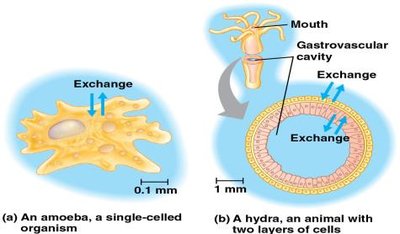
Materials such as nutrients, waste, and gases must be exchanged across cell membranes. The rate of exchange is proportional to surface area, while the amount exchanged is proportional to volume.
Key Point: Single-celled organisms have sufficient surface area for exchange; multicellular organisms require specialized structures.
Example: Amoeba vs. hydra: Amoeba exchanges directly; hydra uses a gastrovascular cavity.
Adaptations for Exchange
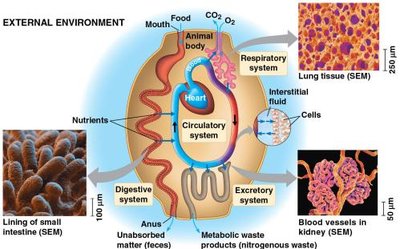
Key Point: Complex animals have branched or folded internal surfaces to facilitate exchange.
Key Point: Interstitial fluid links exchange surfaces to body cells.
Example: Internal exchange surfaces in digestive, respiratory, and excretory systems.
Hierarchical Organization of Body Plans
Levels of Organization
Key Point: Cells form tissues, tissues form organs, organs form organ systems.
Key Point: Some organs belong to multiple organ systems (e.g., pancreas).
Major Organ Systems in Mammals
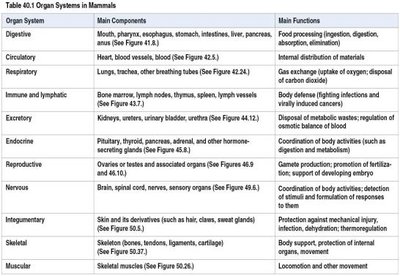
Organ systems coordinate functions necessary for survival.
Organ System | Main Components | Main Functions |
|---|---|---|
Digestive | Mouth, pharynx, esophagus, stomach, intestines, liver, pancreas, anus | Food processing (ingestion, digestion, absorption, elimination) |
Circulatory | Heart, blood vessels, blood | Internal distribution of materials |
Respiratory | Lungs, trachea, other breathing tubes | Gas exchange |
Immune & Lymphatic | Bone marrow, lymph nodes, thymus, spleen, lymph vessels | Body defense |
Excretory | Kidneys, ureters, urinary bladder, urethra | Waste disposal, regulation of osmotic balance |
Endocrine | Pituitary, thyroid, pancreas, adrenal, other hormone-secreting glands | Coordination of body activities |
Reproductive | Ovaries, testes, associated organs | Reproduction |
Nervous | Brain, spinal cord, nerves, sensory organs | Coordination of body activities, response to stimuli |
Integumentary | Skin, hair, claws, glands | Protection against injury, thermoregulation |
Skeletal | Bone, tendons, ligaments, cartilage | Body support, movement, protection |
Muscular | Skeletal muscles | Movement |
Animal Tissues
Epithelial Tissue
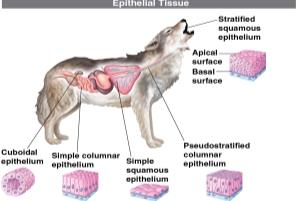
Epithelial tissue covers the body and lines organs and cavities. Cells are closely packed and may be cuboidal, columnar, or squamous.
Key Point: Functions include protection, absorption, secretion, and sensation.
Example: Stratified squamous epithelium protects surfaces; simple columnar epithelium absorbs nutrients.
Connective Tissue
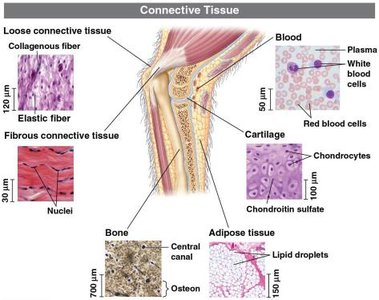
Connective tissue holds tissues and organs together, consisting of cells in an extracellular matrix of fibers and foundation.
Key Point: Types of fibers: collagenous (strength), reticular (connection), elastic (stretch).
Key Point: Six major types: loose, fibrous, bone, adipose, blood, cartilage.
Example: Tendons (fibrous), fat storage (adipose), skeleton (bone).
Muscle Tissue
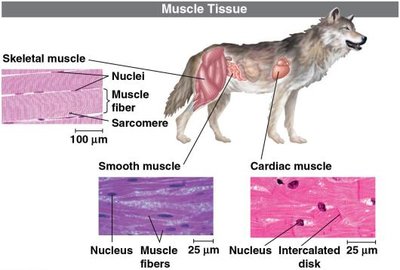
Muscle tissue enables movement via contraction. Three types: skeletal (voluntary), smooth (involuntary), cardiac (heart).
Key Point: Muscle cells contain actin and myosin filaments.
Example: Skeletal muscle moves limbs; cardiac muscle contracts heart.
Nervous Tissue
Nervous tissue receives, processes, and transmits information. Contains neurons (impulse transmission) and glial cells (support).
Key Point: Neurons transmit signals; glia support and nourish neurons.
Coordination and Control: Endocrine vs. Nervous Systems
Endocrine System
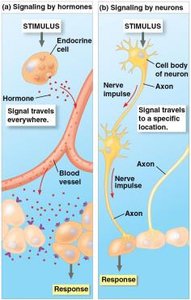
Key Point: Uses hormones released into the bloodstream to affect target cells throughout the body.
Key Point: Coordinates gradual, long-term changes (growth, development, metabolism).
Nervous System
Key Point: Uses nerve impulses transmitted along axons to specific locations.
Key Point: Directs rapid, immediate responses to stimuli.
Feedback Control and Homeostasis
Regulating vs. Conforming
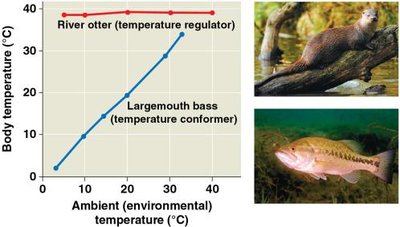
Key Point: Regulators maintain internal conditions despite external changes; conformers allow internal conditions to vary with the environment.
Example: River otter (regulator) vs. largemouth bass (conformer).
Homeostasis Mechanisms
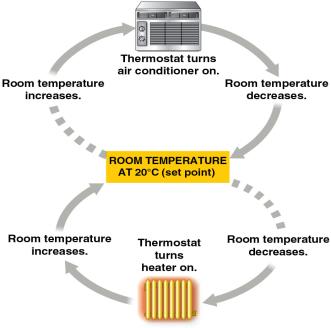
Key Point: Homeostasis maintains variables at a set point via sensors, control centers, and responses.
Example: Room thermostat analogy for temperature regulation.
Negative and Positive Feedback
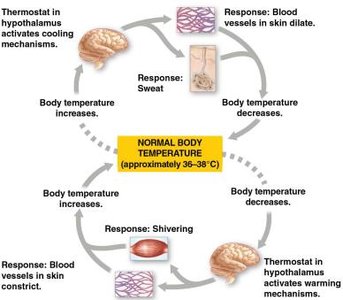
Key Point: Negative feedback dampens changes (e.g., temperature regulation); positive feedback amplifies changes (e.g., childbirth).
Alterations in Homeostasis
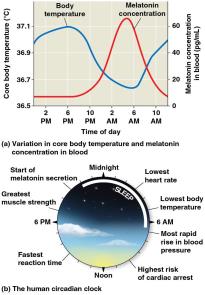
Key Point: Set points can change with age or show cyclic variation (circadian rhythms).
Example: Core body temperature and melatonin concentration vary daily.
Acclimatization
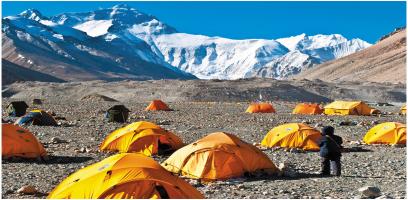
Key Point: Physiological adjustment to environmental changes (e.g., altitude adaptation).
Example: Mountain climbers acclimatize to low oxygen.
Thermoregulation: Form, Function, and Behavior
Endothermy vs. Ectothermy
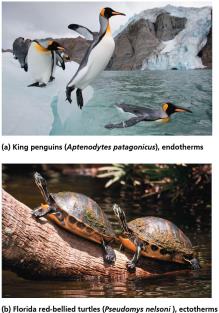
Key Point: Endotherms generate heat metabolically (birds, mammals); ectotherms gain heat from environment (fishes, amphibians, reptiles).
Key Point: Endothermy is energetically expensive; ectotherms tolerate greater temperature variation.
Variation in Body Temperature
Key Point: Poikilotherms have variable body temperature; homeotherms maintain constant temperature.
Heat Exchange Mechanisms
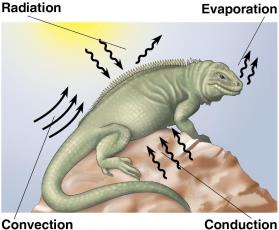
Key Point: Heat is exchanged by radiation, evaporation, convection, and conduction.
Example: Iguana exchanges heat via all four processes.
Thermoregulatory Adaptations
Key Point: Insulation (fur, feathers, blubber) reduces heat loss.
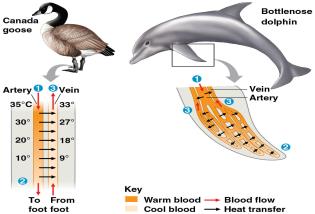
Key Point: Circulatory adaptations (vasodilation, vasoconstriction, countercurrent exchange) regulate heat flow.
Example: Countercurrent heat exchangers in birds and dolphins.
Evaporative Cooling
Key Point: Sweating, bathing, and panting cool the body by evaporation.
Behavioral Responses
Key Point: Animals seek or avoid heat sources, change orientation, or use social behaviors (e.g., huddling).
Example: Dragonfly uses posture to minimize heat absorption.

Metabolic Heat Production
Key Point: Thermogenesis increases heat via muscle activity (shivering) or nonshivering mechanisms (brown fat).
Acclimatization in Thermoregulation
Key Point: Animals adjust insulation, membrane lipids, or produce antifreeze compounds to adapt to temperature changes.
Physiological Thermostats and Fever
Key Point: Hypothalamus in the brain regulates body temperature; fever raises the set point during infection.
Example: Human thermoregulation cycle.
Energy Requirements and Bioenergetics
Energy Allocation and Use
Key Point: Animals are heterotrophs, obtaining energy from food; energy is used for ATP production and biosynthesis.
Quantifying Energy Use
Key Point: Metabolic rate is the sum of all energy used per unit time; measured by heat loss, oxygen consumption, or food/waste analysis.
Minimum Metabolic Rate and Thermoregulation
Key Point: Basal metabolic rate (BMR) for endotherms; standard metabolic rate (SMR) for ectotherms.
Key Point: Ectotherms have lower metabolic rates than endotherms of similar size.
Influences on Metabolic Rate
Key Point: Factors include age, sex, size, activity, temperature, and nutrition.
Size and Metabolic Rate
Key Point: Metabolic rate scales with body mass to the 3/4 power ().
Key Point: Smaller animals have higher metabolic rates per gram than larger animals.
Activity and Metabolic Rate
Key Point: Maximum metabolic rate is inversely related to activity duration; daily energy consumption is 2-4 times BMR or SMR.
Torpor and Energy Conservation
Key Point: Torpor is a state of decreased activity and metabolism; hibernation and estivation are long-term torpor adaptations.
Summary
Animal form and function are tightly linked, shaped by evolutionary and physical constraints.
Hierarchical organization and specialized tissues enable complex functions.
Coordination and control are achieved via endocrine and nervous systems.
Homeostasis and thermoregulation are essential for survival in changing environments.
Energy requirements depend on size, activity, and environment, with adaptations for conservation.
