 Indietro
Biodiversity and Evolution of Land Plants: Bryophytes, Tracheophytes, and Plant Classification
Guida di studio - Note intelligenti
 Appunti personalizzati basati sui tuoi materiali, ampliati con definizioni chiave, esempi e contesto.
Biodiversity and Species Diversity
Species Richness and Evenness
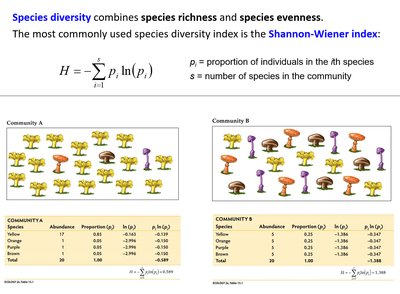
Species diversity is a fundamental concept in ecology, combining species richness (the number of different species present) and species evenness (the relative abundance of each species). The most widely used quantitative measure of species diversity is the Shannon-Wiener index, which accounts for both richness and evenness.
Species richness: The count of distinct species in a community.
Species evenness: The distribution of individuals among those species.
Shannon-Wiener index (H): A mathematical formula to quantify diversity:
Example: Two communities with the same richness but different evenness will have different Shannon-Wiener index values, reflecting their diversity.
Five-Kingdom Classification and Plant Evolution
Overview of Biological Classification
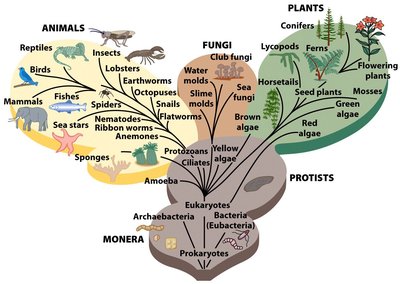
The five-kingdom system, proposed by Whittaker (1969), organizes life into Monera, Protists, Fungi, Plants, and Animals. This classification highlights evolutionary relationships and major traits distinguishing each group.
Monera: Prokaryotes (bacteria and archaea)
Protists: Mostly unicellular eukaryotes with ancient traits
Fungi: Eukaryotic, heterotrophic organisms
Plants: Multicellular, photosynthetic eukaryotes
Animals: Multicellular, heterotrophic eukaryotes
Plant Phylogeny and Major Groups
Evolutionary Relationships Among Plants
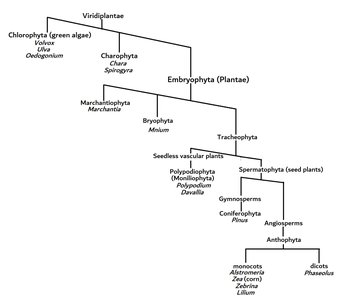
Plant evolution traces the transition from aquatic green algae to complex land plants. The phylogenetic tree illustrates the relationships among major plant groups, including nonvascular and vascular plants.
Viridiplantae: Includes green algae and land plants
Charophyta: Closest algal relatives to land plants
Embryophyta: Land plants, including bryophytes and tracheophytes
Bryophytes: Nonvascular plants (mosses, liverworts, hornworts)
Tracheophytes: Vascular plants (ferns, gymnosperms, angiosperms)
Comparing Protists and Plants
Shared and Derived Traits
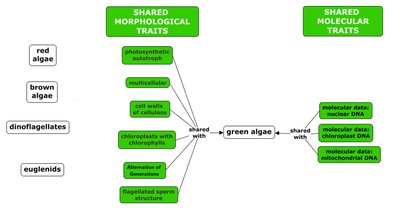
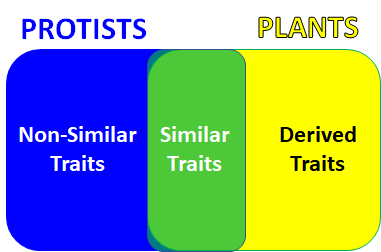
Protists and plants share several morphological and molecular traits, but plants possess unique derived features that enabled their adaptation to terrestrial environments.
Shared morphological traits: Photosynthetic autotrophy, multicellularity, cell walls of cellulose, chloroplasts with chlorophylls, alternation of generations, flagellated sperm structure
Shared molecular traits: Molecular DNA data, chloroplast DNA, mitochondrial DNA
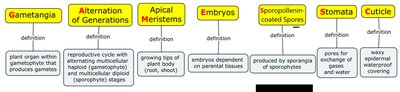
Derived plant traits: Gametangia, alternation of generations, apical meristems, embryos, sporopollenin-coated spores, stomata, cuticle
Derived Traits of Embryophytes (Land Plants)
Key Innovations for Terrestrial Life
Embryophytes evolved several derived traits that distinguish them from their algal ancestors and enabled successful colonization of land.
Gametangia: Multicellular organs that produce gametes
Alternation of Generations: Life cycle with alternating multicellular haploid (gametophyte) and diploid (sporophyte) stages
Apical Meristems: Regions of continuous growth at root and shoot tips
Embryos: Young plants dependent on parental tissues for nourishment
Sporopollenin-coated Spores: Resistant spores produced by sporophytes
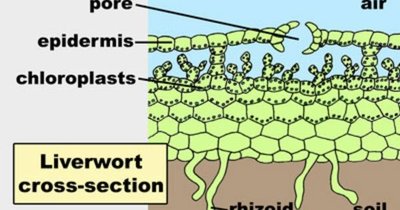
Stomata: Pores for gas exchange (absent in liverworts)
Cuticle: Waxy covering to prevent desiccation
Alternation of Generations in Land Plants
Life Cycle Overview
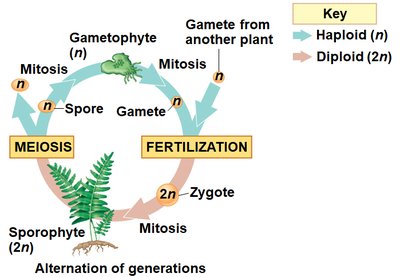
All land plants exhibit heteromorphic alternation of generations, with distinct gametophyte and sporophyte stages. The gametophyte is haploid and produces gametes by mitosis, while the sporophyte is diploid and produces spores by meiosis.
Gametophyte (n): Multicellular, produces gametes
Sporophyte (2n): Multicellular, produces spores
Fertilization: Fusion of gametes forms a diploid zygote
Meiosis: Produces haploid spores from sporophyte
Major Plant Groups: Bryophytes and Tracheophytes
Bryophytes (Nonvascular Plants)
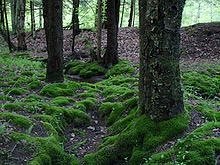
Bryophytes are small, nonvascular plants with life cycles dominated by the gametophyte stage. They require water for reproduction and lack specialized vascular tissue.
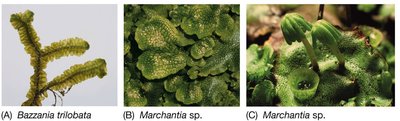
Liverworts (Marchantiophyta): Basal clade, dominant gametophyte, no true stomata, reproduce sexually and asexually via gemmae cups
Mosses (Bryophyta): Diverse, dominant gametophyte, sporophyte dependent on maternal tissue, have true stomata on sporophyte capsule
Hornworts (Anthocerophyta): Less common, similar life cycle traits
Tracheophytes (Vascular Plants)
Tracheophytes possess vascular tissue (xylem and phloem), enabling greater size and complexity. Their life cycle is dominated by the sporophyte stage.
Ferns: Seedless vascular plants, dominant sporophyte, separate gametophyte (prothallus), require water for fertilization
Gymnosperms: Seed plants with exposed seeds (e.g., conifers)
Angiosperms: Flowering plants with seeds enclosed in fruit
Summary Table: Plant Group Characteristics
Comparison of Major Plant Groups
The following table summarizes the dominant life cycle stage and key features of mosses, ferns, and seed plants.
Plant Group | Dominant Stage | Sporophyte | Gametophyte | Example |
|---|---|---|---|---|
Mosses and other nonvascular plants | Gametophyte | Reduced, dependent on gametophyte for nutrition | Dominant | Moss |
Ferns and other seedless vascular plants | Sporophyte | Dominant, independent | Reduced, dependent on sporophyte tissue | Fern |
Seed plants (gymnosperms and angiosperms) | Sporophyte | Dominant | Microscopic, dependent on sporophyte | Conifer, Flowering plant |
Conclusion
Understanding the diversity and evolutionary adaptations of land plants is essential for studying their biology, ecology, and role in terrestrial ecosystems. The transition from aquatic ancestors to complex land plants involved key innovations such as alternation of generations, vascular tissue, and specialized reproductive structures.
