 Indietro
Biological Molecules: Structure and Function in General Biology
Guida di studio - Note intelligenti
 Appunti personalizzati basati sui tuoi materiali, ampliati con definizioni chiave, esempi e contesto.
Biological Molecules
Basic Elements
Living organisms are composed primarily of a select group of elements, which form the basis of biological molecules. These elements are essential for the structure and function of cells and tissues.
Key Elements: Carbon (C), Hydrogen (H), Nitrogen (N), Oxygen (O), Phosphorus (P), Sulfur (S), Calcium (Ca), Potassium (K), Sodium (Na), Chlorine (Cl), Magnesium (Mg)
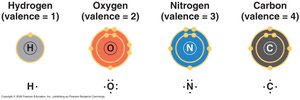
Bonding: Each element forms a characteristic number of bonds, influencing molecular structure and function.
Example: Carbon forms four covalent bonds, allowing for diverse molecular structures.
Carbon: The Foundation of Organic Molecules
Properties of Carbon
Carbon is the central element in organic chemistry, forming the backbone of all biological molecules. Its unique bonding properties enable the formation of complex structures.
Organic Molecules: Defined as carbon-based compounds.
Bonding: Carbon has four electrons in its outer shell, allowing for single, double, and triple bonds.
Covalent Bonds: Carbon tends to form strong covalent bonds, resulting in stable molecules.
Diversity: The versatility of carbon leads to a vast array of possible molecular combinations.
Hydrocarbons
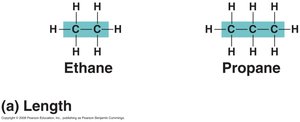
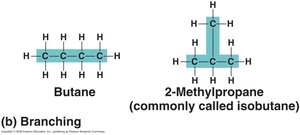
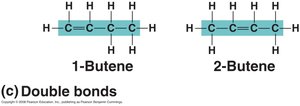
Hydrocarbons are molecules consisting only of hydrogen and carbon. They can vary in structure, affecting their properties and functions.
Straight Chain: Linear arrangement of carbon atoms.
Branched Chain: Carbon atoms form branches off the main chain.
Double Bonds: Presence of double bonds distinguishes saturated from unsaturated hydrocarbons.
Ring Structures
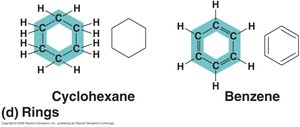
Some biological molecules contain ring structures, which are crucial for their function and stability.
Cyclohexane and Benzene: Common ring structures in organic chemistry.
Example: Steroids and sugars often contain ringed forms.
Isomers and Enantiomers
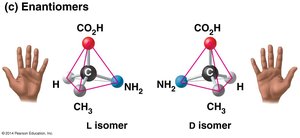
Isomers are molecules with the same chemical formula but different arrangements of atoms, leading to distinct properties. Enantiomers are mirror-image isomers, often with different biological activities.
Structural Isomers: Differ in the connectivity of atoms.
Enantiomers: Mirror images, designated as L/D or R/S.
Example: Ibuprofen and albuterol have effective and ineffective enantiomers.
Functional Groups
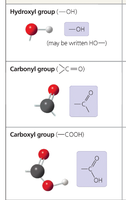
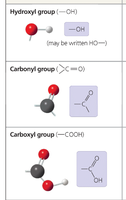
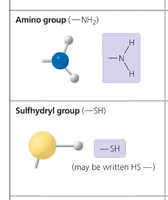
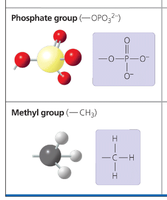
Functional groups are specific groups of atoms within molecules that determine their chemical properties and reactions. They are commonly found in organic molecules.
Hydroxyl (-OH): Found in alcohols.
Carboxyl (-COOH): Found in organic acids.
Amino (-NH2): Found in amino acids.
Phosphate (-PO4): Found in nucleotides.
Methyl (-CH3): Found in many organic molecules.
Macromolecules: Structure and Function
Monomers and Polymers
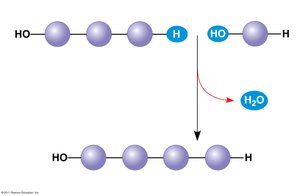
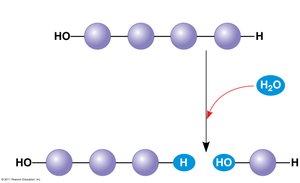
Macromolecules are large organic molecules composed of repeating units called monomers. The process of linking monomers forms polymers, which are essential for biological structure and function.
Monomer: A simple molecule that can be joined to others.
Polymer: A long chain of monomers.
Dehydration Reaction: Joins monomers by removing water.
Hydrolysis Reaction: Breaks polymers by adding water.
Types of Macromolecules
There are four main types of macromolecules in living organisms: carbohydrates, proteins, nucleic acids, and lipids. Each type has distinct structure and function.
Carbohydrates: Energy storage, structural support.
Proteins: Enzymes, structural, transport, signaling.
Nucleic Acids: Genetic information storage and transfer.
Lipids: Energy storage, membrane structure, signaling.
Carbohydrates
Monosaccharides
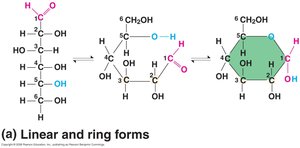
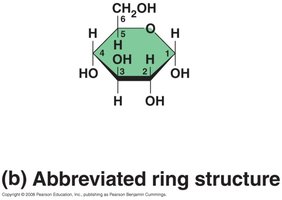
Monosaccharides are simple sugars, serving as the basic units of carbohydrates. They are hydrophilic and dissolve in water, existing in linear or ring forms.
Examples: Glucose, galactose, fructose (hexoses); ribose, deoxyribose (pentoses).
Main Uses: Energy storage, transport, signaling, nucleic acid structure.
Disaccharides
Disaccharides are formed by joining two monosaccharides via a glycosidic bond. They are hydrophilic and serve as energy storage and transport molecules.
Examples: Sucrose, lactose, maltose.
Main Uses: Energy storage and transport.
Polysaccharides
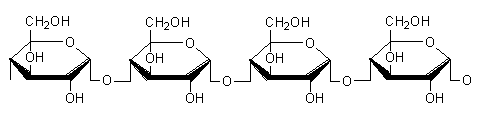
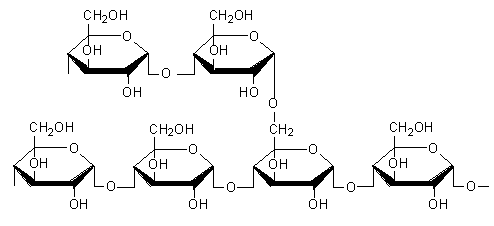
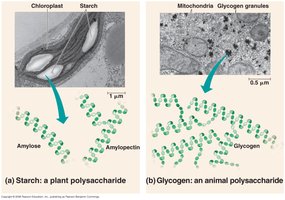
Polysaccharides are complex carbohydrates composed of many monosaccharide units. Their structure determines their function and digestibility.
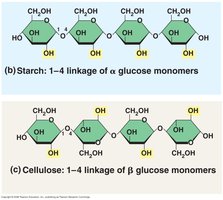
Alpha Glucose Polysaccharides: Starch, amylose, amylopectin (digestible).
Beta Glucose Polysaccharides: Cellulose (indigestible by most animals).
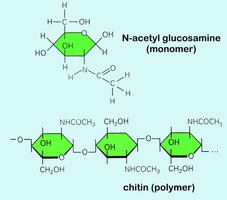
Chitin: Structural polysaccharide in animals, similar to cellulose but with an R group.
Main Uses: Energy storage, fiber, structural support.

Proteins
Amino Acids and Protein Structure
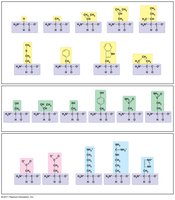
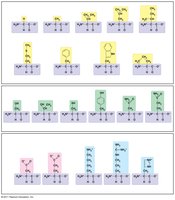
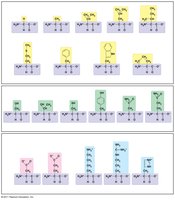
Proteins are polymers of amino acids, which are organic molecules with a central carbon atom bonded to an amine group, carboxyl group, hydrogen, and an R group. The sequence and properties of amino acids determine protein structure and function.
Groups of Amino Acids: Nonpolar (hydrophobic), polar (hydrophilic), negatively charged (acidic), positively charged (basic).
Peptide Bond: Joins amino acids to form polypeptides.
Levels of Structure: Primary (sequence), secondary (local folding), tertiary (complex folding), quaternary (subunit interaction).
Protein Function and Denaturation
Proteins perform a wide variety of functions in cells. Their structure is sensitive to environmental conditions, and misfolding or denaturation can lead to loss of function and disease.
Functions: Enzymatic, structural, transport, signaling, defense.
Denaturation: Loss of structure due to heat, pH, chemicals, or radiation.
Genetic Diseases: Misfolded proteins can cause diseases such as cystic fibrosis and sickle-cell anemia.
Nucleic Acids
Nucleotide Structure
Nucleic acids are polymers of nucleotides, which consist of a phosphate group, a five-carbon sugar (ribose or deoxyribose), and a nitrogenous base.
Pyrimidines: Cytosine, Thymine, Uracil
Purines: Adenine, Guanine
DNA and RNA
DNA is a double-stranded helix that stores genetic information. RNA is single-stranded and plays roles in protein synthesis and gene regulation.
DNA: Deoxyribose sugar, bases A, T, C, G; double helix; stable genetic code.
RNA: Ribose sugar, bases A, U, C, G; single helix; involved in protein synthesis.
Lipids
Classes of Lipids
Lipids are a diverse group of hydrophobic molecules that do not follow the typical monomer-polymer structure. They serve as energy storage, membrane components, and signaling molecules.
Fatty Acids: Hydrocarbon chain with carboxyl group; can be saturated or unsaturated.
Fats (Triglycerides): Three fatty acids attached to glycerol; energy storage and insulation.
Phospholipids: Glycerol, two fatty acids, and a phosphate group; major component of cell membranes.
Steroids: Four linked carbon rings; functions include hormones, vitamin D, and membrane structure.
Macromolecule | Monomer | Polymer | Main Function |
|---|---|---|---|
Carbohydrate | Monosaccharide | Polysaccharide | Energy, structure |
Protein | Amino acid | Polypeptide | Enzymes, structure, transport |
Nucleic Acid | Nucleotide | DNA/RNA | Genetic information |
Lipid | Fatty acid (varies) | None (not true polymer) | Energy, membranes, signaling |
Additional info: The notes above expand on the original content with academic context, definitions, examples, and relevant images to provide a comprehensive mini-study guide for General Biology students.
