 Indietro
Biology: The Study of Life – Foundations and Core Concepts
Guida di studio - Note intelligenti
 Appunti personalizzati basati sui tuoi materiali, ampliati con definizioni chiave, esempi e contesto.
Biology: The Study of Life
Defining Life
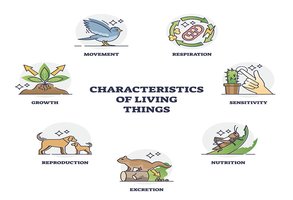
Biology is the scientific study of life and living organisms. To understand what it means to be alive, biologists identify fundamental characteristics shared by all living things. These characteristics distinguish living organisms from non-living matter and are central to the study of biology.
Cells: All organisms are composed of one or more cells, which are the basic units of life.
Replication: Living things reproduce, either by producing new cells or new organisms.
Information: Organisms use genetic information for their activities and pass it to the next generation (inheritance).
Energy: Life requires the acquisition, transformation, and use of energy to drive chemical reactions and control metabolism.
Evolution: Populations of organisms change over time through descent with modification, adaptation, and natural selection.
Homeostasis: Living things maintain internal stability (the "status quo") through physiological processes.
Scientific Notions and Hypothesis
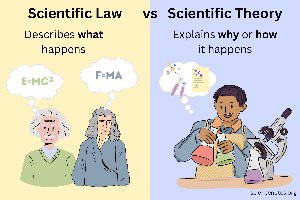
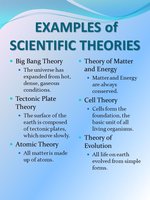
Biology relies on scientific methods to investigate questions about life. A hypothesis is a testable statement that proposes a possible explanation for an observation. Scientific laws describe what happens, while scientific theories explain why or how it happens.
Null Hypothesis: Suggests no significant relationship or effect between variables.
Alternative Hypothesis: Proposes a specific relationship or effect, challenging the null hypothesis.
Part 1: The Basics of Life
Essential Elements of Life
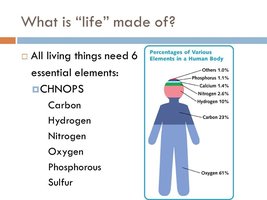
All living things require certain elements to build their structures and carry out life processes. The six essential elements are often remembered by the acronym CHNOPS: Carbon, Hydrogen, Nitrogen, Oxygen, Phosphorus, and Sulfur.
Carbon: Forms the backbone of organic molecules.
Hydrogen: Present in water and organic compounds.
Nitrogen: Key component of proteins and nucleic acids.
Oxygen: Essential for cellular respiration.
Phosphorus: Found in nucleic acids and ATP.
Sulfur: Present in some amino acids and vitamins.
Protein Structure and Function
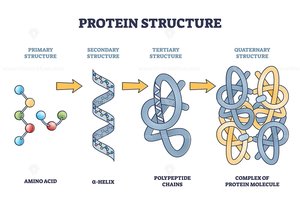
Proteins are vital macromolecules in living organisms, performing structural, enzymatic, and regulatory functions. Their structure is organized into four levels:
Primary Structure: Sequence of amino acids.
Secondary Structure: Local folding into α-helices and β-sheets.
Tertiary Structure: Overall three-dimensional shape of a polypeptide.
Quaternary Structure: Association of multiple polypeptide chains.
Cell Types: Prokaryotes vs. Eukaryotes
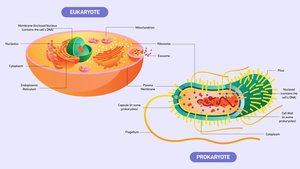
All life is classified into three domains: Bacteria, Archaea, and Eukarya. The distinction between prokaryotes and eukaryotes is fundamental:
Prokaryotes: Cells lack a nucleus and membrane-bound organelles (Bacteria and Archaea).
Eukaryotes: Cells have a nucleus and membrane-bound organelles (Eukarya).
Part 2: The Central Dogma – Information Flow from Genes to Proteins
Central Dogma of Molecular Biology
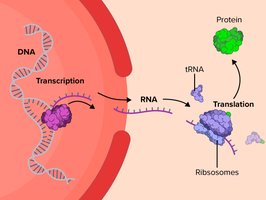
The central dogma describes how genetic information flows from DNA to RNA to protein. This process is essential for gene expression and regulation.
Transcription: DNA is transcribed into messenger RNA (mRNA).
Translation: mRNA is translated into a protein by ribosomes.
Ribosome Structure and Function
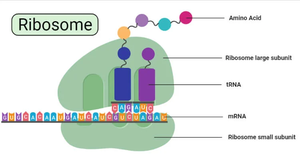
Ribosomes are the molecular machines responsible for translating mRNA into proteins. They consist of a large and small subunit, and interact with tRNA and amino acids during translation.
mRNA: Carries genetic code from DNA.
tRNA: Brings amino acids to the ribosome.
Ribosome: Catalyzes peptide bond formation.
Part 3: Signaling and Evolution
Genetic Variation and Evolutionary Processes
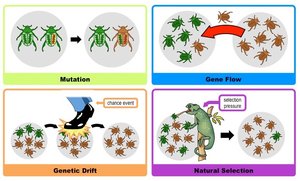
Evolution is driven by genetic variation and several key mechanisms. These processes shape populations and lead to adaptation and diversity.
Mutation: Random changes in DNA sequence.
Gene Flow: Movement of genes between populations.
Genetic Drift: Random changes in allele frequencies.
Natural Selection: Differential survival and reproduction based on traits.
Diversity and Unity of Life
Themes of Life on Earth
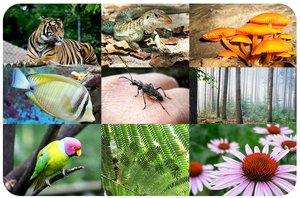
Life exhibits both incredible diversity and fundamental unity. Organisms vary in size, appearance, habitat, nutrition, reproduction, and DNA content, yet share common cellular and molecular features.
Diversity: Many types of organisms distinguished by various characteristics.
Unity: Shared features at the cellular and molecular level.
Classification of Life: Three Domains
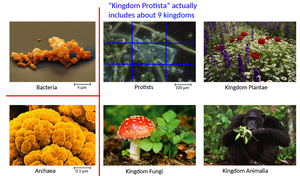
All life is classified into three domains: Bacteria, Archaea, and Eukarya. This classification reflects evolutionary relationships and cellular organization.
Bacteria: Prokaryotic, diverse metabolic capabilities.
Archaea: Prokaryotic, often found in extreme environments.
Eukarya: Eukaryotic, includes plants, animals, fungi, and protists.
Origins of Life: Spontaneous Generation and Experimental Evidence
Spontaneous Generation Theory
The spontaneous generation theory proposed that life arises from non-living matter. This idea was later disproven by scientific experiments.
Louis Pasteur's Experiment
Louis Pasteur demonstrated that life does not spontaneously arise from non-living matter, laying the foundation for microbiology.
Stanley Miller's Experiment (1953)
Stanley Miller's experiment provided evidence that energy input into an environment containing the main atoms and molecules of living beings could spontaneously create organic molecules necessary for life, such as sugars and amino acids.
Organic molecules formed: Alanine, glycine, urea, lactic acid, ribose.
Example: Miller's experiment simulated early Earth conditions and demonstrated the abiotic synthesis of life's building blocks.
Additional info: Miller's experiment is foundational in understanding the chemical origins of life and supports the idea that life's essential molecules can form under natural conditions.
