 Indietro
Biology: The Study of Life – Foundations, Diversity, and Core Principles
Guida di studio - Note intelligenti
 Appunti personalizzati basati sui tuoi materiali, ampliati con definizioni chiave, esempi e contesto.
Biology: The Study of Life
Introduction to Biology
Biology is the scientific study of life, encompassing the structure, function, growth, origin, evolution, and distribution of living organisms. It explores living systems at every level—from microscopic cells and molecules to entire ecosystems and the planet.
Biology comes from the Greek words bios (life) and logos (study).
It seeks to understand the diversity of life and the unifying principles that govern all living things.
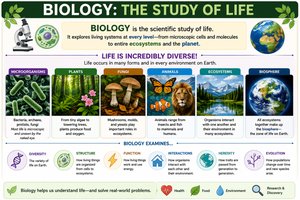
Diversity of Life
Major Groups of Life
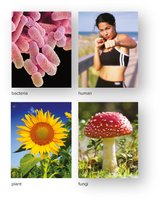
Life on Earth is incredibly diverse, ranging from microscopic bacteria to complex plants and animals. Organisms are classified into major groups based on shared characteristics.
Bacteria: Single-celled prokaryotes found in various environments.
Archaea: Single-celled prokaryotes, often living in extreme environments.
Eukarya: Organisms with complex cells, including protists, fungi, plants, and animals.
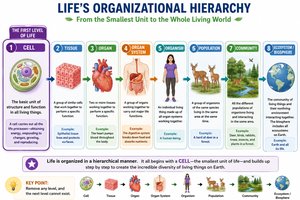
Levels of Biological Organization
Hierarchy of Life
Life is organized in a hierarchical manner, from the smallest unit (cell) to the entire biosphere. Each level builds upon the previous one, creating increasing complexity.
Cell: Basic unit of structure and function in living things.
Tissue: Group of similar cells performing a specific function.
Organ: Structure composed of different tissues working together.
Organ System: Group of organs that perform related functions.
Organism: Individual living thing.
Population: Group of organisms of the same species in an area.
Community: All populations in a given area.
Ecosystem: Community plus the nonliving environment.
Biosphere: All ecosystems on Earth.
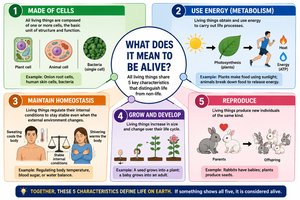
Characteristics of Life
Shared Features of Living Organisms
All living organisms share certain characteristics that distinguish them from nonliving things:
Composed of one or more cells
Obtain and use energy (metabolism)
Respond to environmental stimuli
Maintain homeostasis (stable internal conditions)
Grow and develop
Reproduce
Contain genetic information (DNA)
Evolve over generations
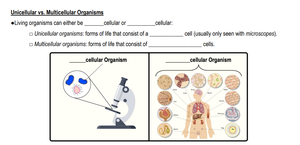
Unicellular vs. Multicellular Life
Cellular Organization
Living organisms can be unicellular (single-celled) or multicellular (many-celled). Unicellular organisms perform all life functions within one cell, while multicellular organisms have specialized cells for different functions.
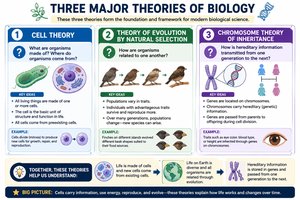
Three Major Theories of Biology
Foundational Concepts
Modern biology is built on three major theories:
Cell Theory: All living things are composed of cells; cells are the basic unit of life; all cells come from preexisting cells.
Theory of Evolution by Natural Selection: Species change over time through natural selection; all species are related by common ancestry.
Chromosome Theory of Inheritance: Genes are located on chromosomes and are passed from parents to offspring.
Life Processes: Information and Energy
Genetic Information and Heredity
Genes, made of DNA, carry the instructions for building proteins. DNA is replicated and passed to new cells and offspring, ensuring continuity of life. Mutations in DNA can lead to genetic variation, which is the raw material for evolution.
Central Dogma:
Proteins determine an organism’s traits and functions.
Energy Flow
All organisms require energy to survive. Energy is obtained from sunlight (photosynthesis) or by consuming other organisms. ATP (adenosine triphosphate) is the main energy currency in cells.
Producers (autotrophs): Make their own food from sunlight.
Consumers (heterotrophs): Obtain energy by eating other organisms.
Homeostasis and Response to Environment
Maintaining Internal Balance
Homeostasis is the maintenance of stable internal conditions. Organisms use feedback systems to monitor and adjust their internal environment in response to changes.
Negative feedback is a common mechanism that returns a variable to its set point (e.g., body temperature regulation).
Reproduction and Development
Passing on Genetic Information
All living things reproduce, passing genetic information to the next generation. Reproduction can be asexual (one parent, identical offspring) or sexual (two parents, genetic variation in offspring). Development involves growth and differentiation of cells.
Evolution and Natural Selection
Change Over Time
Evolution is the change in the characteristics of populations over generations. Natural selection is the process by which traits that improve survival and reproduction become more common in a population.
Fitness: The ability to produce viable offspring.
Adaptation: A heritable trait that increases fitness in a particular environment.
The Tree of Life and Classification
Phylogeny and Taxonomy
The tree of life depicts evolutionary relationships among organisms. Taxonomy is the science of naming and classifying organisms. The main taxonomic ranks are: species, genus, family, order, class, phylum, kingdom, and domain.
The Process of Science
Scientific Method
The scientific method is a systematic approach to understanding the natural world. It involves observation, hypothesis formation, prediction, experimentation, data collection, and drawing conclusions. Variables in experiments include independent (manipulated), dependent (measured), and controlled (kept constant).
Summary Table: Levels of Biological Organization
Level | Description | Example |
|---|---|---|
Cell | Basic unit of life | Neuron |
Tissue | Group of similar cells | Muscle tissue |
Organ | Structure with specific function | Heart |
Organ System | Group of organs | Digestive system |
Organism | Individual living thing | Human |
Population | Group of same species | Herd of elephants |
Community | All populations in area | Forest community |
Ecosystem | Community + environment | Pond ecosystem |
Biosphere | All ecosystems on Earth | Earth |
Key Terms
Biology: Study of life
Cell: Basic unit of life
Homeostasis: Maintenance of stable internal conditions
Evolution: Change in populations over time
Natural Selection: Process driving evolution
Taxonomy: Science of classification
DNA: Molecule carrying genetic information
