 Indietro
Biomes and the Biosphere: Structure, Dynamics, and Distribution
Guida di studio - Note intelligenti
 Appunti personalizzati basati sui tuoi materiali, ampliati con definizioni chiave, esempi e contesto.
The Biosphere and Levels of Ecological Study
Definition and Scope of the Biosphere
The biosphere is the global sum of all ecosystems, encompassing every region of Earth inhabited by life. It extends from the atmosphere several kilometers above the surface to the depths of the oceans.
Biosphere: All regions of Earth where life exists, including land, water, and the atmosphere.
Ecology: The scientific study of interactions between organisms and their environment.
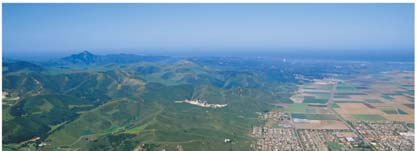
Ecologists study landscapes, which are arrays of ecosystems visible as distinctive patches from the air.
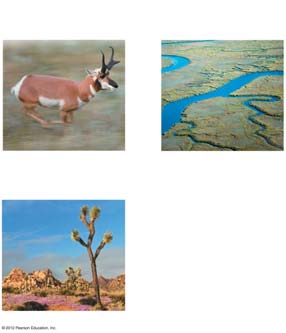
Levels of Ecological Organization
Ecologists analyze environmental interactions at several hierarchical levels:
Organism: An individual living thing.
Population: A group of individuals of the same species living in a specific area.
Community: All populations of organisms living close enough for potential interaction.
Ecosystem: Both abiotic (nonliving) and biotic (living) components of the environment.


Biotic and Abiotic Factors
Components of the Environment
Organisms are influenced by a variety of environmental variables, grouped into two main types:
Biotic factors: All living organisms in an area.
Abiotic factors: Physical and chemical nonliving components, such as temperature, water, nutrients, oxygen, wind, and fire.
Habitat: The environment where an organism lives, including both biotic and abiotic factors.
Human Impact and Environmental Problems
Ecology and Environmental Awareness
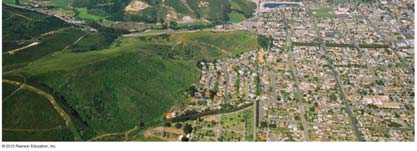
Human activities, such as urbanization, agriculture, and chemical use, affect all parts of the biosphere.
Landscape changes from cities, farms, and highways.
Widespread use of chemicals (fertilizers, pesticides) poses risks to organisms.
Evolution of pesticide resistance and environmental awareness (e.g., Rachel Carson's Silent Spring).
Abiotic Factors and Climate
Key Abiotic Factors
The structure and dynamics of the biosphere are determined by:
Energy source (usually solar energy)
Temperature
Water abundance and type
Nutrients
Oxygen availability (aquatic)
Wind and fire (terrestrial)
Global and Regional Climate Patterns
Climate determines the distribution of communities.
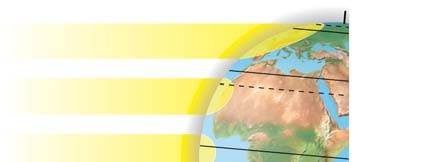
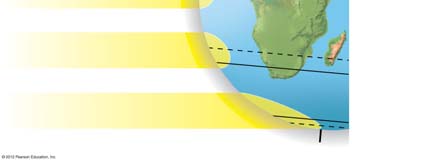
Solar radiation varies with latitude: equatorial regions receive direct sunlight, higher latitudes receive sunlight at a slant.
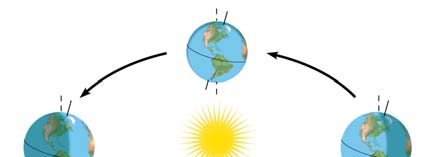
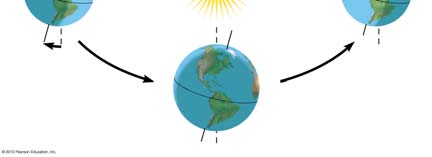
Earth's tilt (23.5°) causes seasons.
Biomes: Major Ecological Associations
Definition and Distribution
Biomes are major types of ecological associations occupying broad geographic regions of land or water, characterized by organisms adapted to each environment.
Abiotic factors and climate control the global distribution of organisms.
Biomes are defined by predominant vegetation and climate.
Aquatic Biomes
Marine and Freshwater Biomes
Aquatic biomes are shaped by light and nutrient availability.
Marine biomes: Saltwater, covering about 75% of Earth's surface.
Freshwater biomes: Less than 1% of Earth's surface, but harbor 6% of all described species.
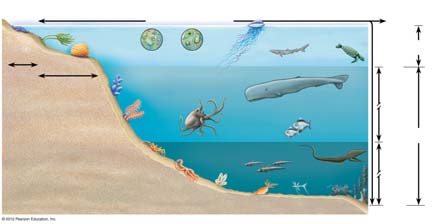
Zones of the Marine Environment
Intertidal zone: Where ocean meets land, affected by tides.
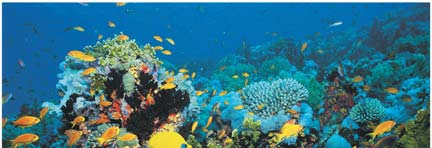
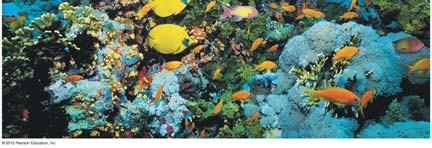
Coral reefs: Found in warm tropical waters, highly diverse.
Pelagic zone: Open ocean, supports motile animals and plankton.
Benthic zone: Ocean bottom, supports organisms based on depth and light.
Photic zone: Light penetrates, photosynthesis occurs.
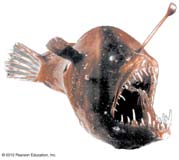
Aphotic zone: No light, but diverse populations exist.
Estuaries and Wetlands
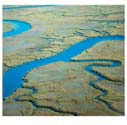
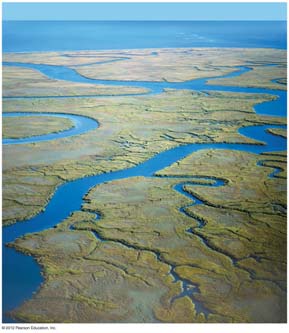
Estuaries: Where rivers meet the ocean, variable salinity, productive nursery areas.
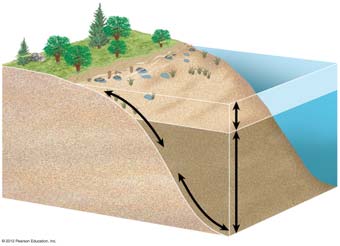
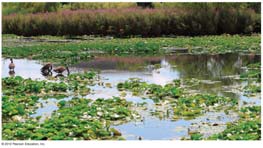
Wetlands: Transitional between aquatic and terrestrial ecosystems.
Freshwater Biomes
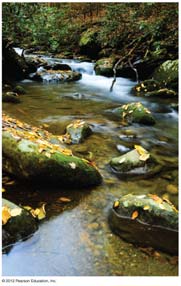
Include lakes, ponds (standing water), rivers, streams (flowing water), and wetlands.
Key abiotic factors: current, sunlight, nutrients.
Terrestrial Biomes
Overview and Climate Influence
Terrestrial biomes are grouped by predominant vegetation and climate. The same biome type may occur in distant places if climate is similar. 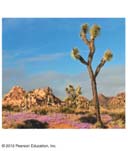
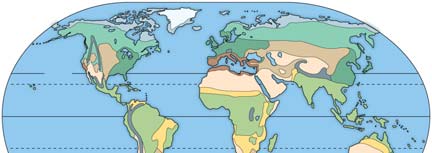
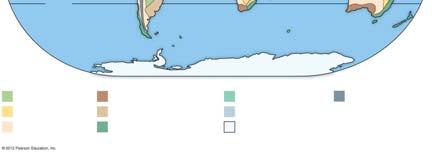
Major Terrestrial Biomes
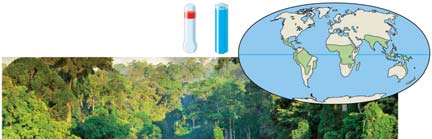
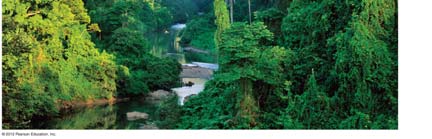
Tropical Forest: Near equator, warm, variable rainfall, high species diversity.
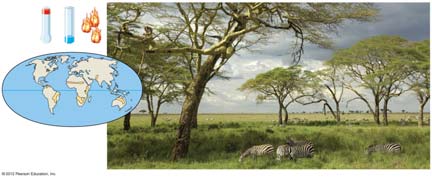
Savanna: Warm, seasonal rainfall, grasslands with scattered trees, large grazing mammals.
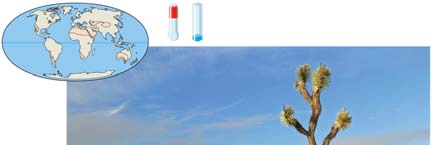
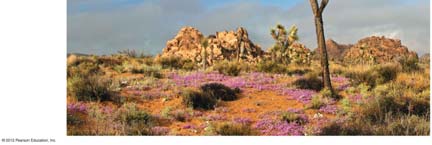
Desert: Driest biome, low and unpredictable rainfall, can result from rain shadows.
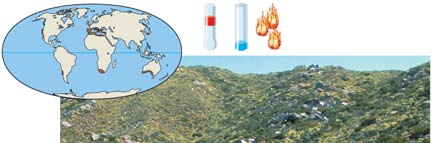
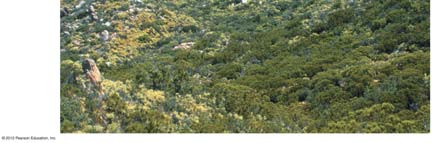
Chaparral: Shrubland, cool rainy winters, hot dry summers, vegetation adapted to fire.
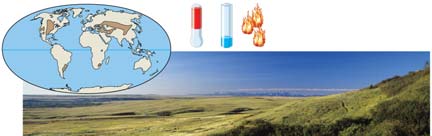
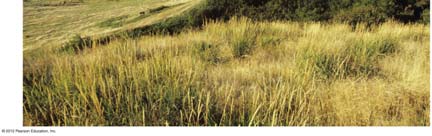
Temperate Grassland: Treeless except near water, moderate rainfall, periodic droughts, cold winters.
Temperate Broadleaf Forest: Sufficient moisture for large trees, wide temperature range, high precipitation.
Coniferous Forest (Taiga): Largest terrestrial biome, dominated by cone-bearing trees, long cold winters, short wet summers.
Arctic Tundra: Treeless, permafrost, little precipitation, bitter cold.
Polar Ice: Covers land at high latitudes, extremely cold, low precipitation, intertwined with marine biome.
The Global Water Cycle
Connection Between Biomes
Biomes are linked by nutrient cycles and the water cycle. Water moves between land, oceans, and atmosphere via precipitation and evaporation.
Evaporation exceeds precipitation over oceans.
Precipitation exceeds evaporation over land.
Human Impact on the Water Cycle
Destruction of tropical rain forests reduces atmospheric water vapor.
Pumping groundwater for irrigation increases evaporation over land.
Summary Table: Major Terrestrial Biomes
Biome | Climate | Vegetation | Key Animals |
|---|---|---|---|
Tropical Forest | Warm, variable rainfall | Diverse trees | Insects, birds, mammals |
Savanna | Warm, seasonal rainfall | Grasses, scattered trees | Grazing mammals, insects |
Desert | Dry, low rainfall | Cacti, shrubs | Reptiles, rodents |
Chaparral | Cool, rainy winters; hot, dry summers | Spiny shrubs | Small mammals, birds |
Temperate Grassland | Moderate rainfall, cold winters | Grasses | Bison, pronghorn |
Temperate Broadleaf Forest | Wide temp range, high precipitation | Broadleaf trees | Deer, squirrels |
Coniferous Forest (Taiga) | Long, cold winters | Evergreen trees | Moose, bears |
Arctic Tundra | Bitter cold, low precipitation | Mosses, lichens | Caribou, arctic fox |
Polar Ice | Extremely cold, low precipitation | None | Polar bears, penguins |
Key Equations
Solar Energy Input
The amount of solar energy received per unit area depends on latitude and angle of incidence.
Where I is the intensity, I_0 is the maximum intensity, and θ is the angle of incidence.
Water Cycle Balance
These equations summarize the net movement of water in the global water cycle.
Examples and Applications
Example: The North American prairie is a temperate grassland historically grazed by bison and pronghorn.
Example: Estuaries provide nursery habitats for oysters, crabs, and fish.
Example: Deserts, such as the southwestern United States, are characterized by low rainfall and specialized vegetation like cacti.
Additional info:
Biomes are dynamic and can shift in response to climate change and human activity.
Many biomes are threatened by habitat destruction, pollution, and invasive species.
