 Indietro
Biomolecules: Structure and Function (Proteins, Nucleic Acids, Carbohydrates, Lipids)
Guida di studio - Note intelligenti
 Appunti personalizzati basati sui tuoi materiali, ampliati con definizioni chiave, esempi e contesto.
Proteins: Structure and Function
Amino Acids: The Building Blocks of Proteins
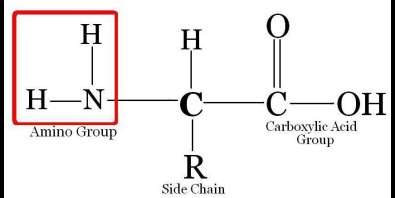
Proteins are polymers composed of amino acid monomers. Each amino acid consists of a central carbon atom bonded to a hydrogen atom, an amino group (NH2), a carboxyl group (COOH), and a unique side chain (R group) that determines its properties.
Amino Group: Acts as a base, accepting protons.
Carboxyl Group: Acts as an acid, donating protons.
R Group: Variable group, defines the identity and behavior of each amino acid.
Peptide Bonds and Protein Polymerization
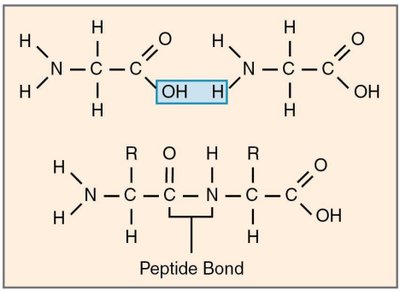
Amino acids are linked together by peptide bonds, formed through condensation reactions. The resulting chain of amino acids is called a polypeptide.
Peptide Bond: Covalent bond between the amino group of one amino acid and the carboxyl group of another.
Polypeptide: A chain of amino acids joined by peptide bonds.
Levels of Protein Structure
Proteins exhibit four levels of structural organization, each contributing to their function:
Primary Structure: Linear sequence of amino acids.
Secondary Structure: Local folding into alpha helices and beta pleated sheets stabilized by hydrogen bonds.
Tertiary Structure: Three-dimensional folding due to interactions among R groups (hydrogen bonds, ionic bonds, disulfide bridges, hydrophobic interactions).
Quaternary Structure: Association of multiple polypeptide chains.
Protein Function and Denaturation
The function of a protein depends on its structure. Molecular chaperones assist in proper folding. Denatured proteins lose their structure and function, often due to changes in temperature or pH.
Catalysis: Enzymes speed up chemical reactions.
Structure: Provide support to cells and tissues.
Movement: Enable cellular and organismal movement.
Signaling: Transmit signals between cells.
Transport: Move molecules within and between cells.
Defense: Protect against pathogens.
Nucleic Acids: DNA and RNA
Nucleotides: Monomers of Nucleic Acids
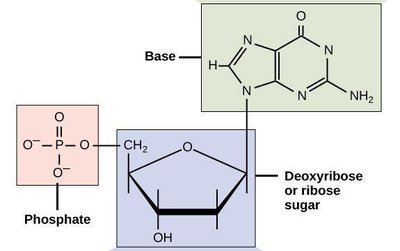
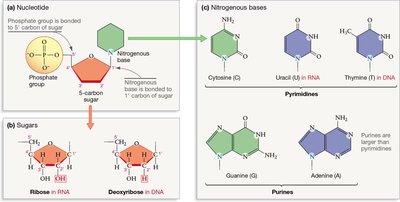
Nucleic acids are polymers made of nucleotide monomers. Each nucleotide consists of a five-carbon sugar (ribose or deoxyribose), a phosphate group, and a nitrogenous base (purine or pyrimidine).
DNA: Deoxyribonucleic acid, contains deoxyribose sugar.
RNA: Ribonucleic acid, contains ribose sugar.
Polymerization of Nucleic Acids
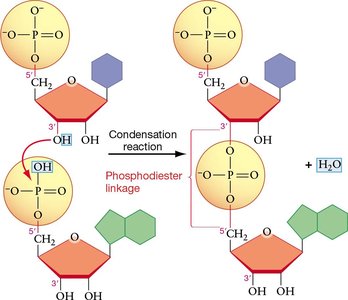
Nucleotides polymerize via condensation reactions, forming phosphodiester bonds between the phosphate group of one nucleotide and the sugar of another. This creates a sugar-phosphate backbone with directionality (5' to 3').
Phosphodiester Linkage: Covalent bond joining nucleotides.
Directionality: Nucleic acids have a 5' end (phosphate) and a 3' end (hydroxyl).
DNA Structure and Function
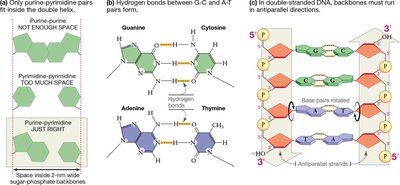
DNA consists of two antiparallel strands forming a double helix. The strands are held together by hydrogen bonds between complementary nitrogenous bases (A-T and C-G). The sequence of bases encodes genetic information.
Primary Structure: Sequence of nitrogenous bases.
Secondary Structure: Double helix with base pairing.
Tertiary Structure: DNA wraps around histones to form nucleosomes, which coil into chromatin and chromosomes.
RNA Structure and Function
RNA is typically single-stranded, but can form complex shapes through internal base pairing. RNA uses ribose sugar and uracil instead of thymine.
Versatility: RNA can act as a messenger, catalyst, or regulator in protein synthesis.
Carbohydrates: Structure and Function
Monosaccharides: Simple Sugars
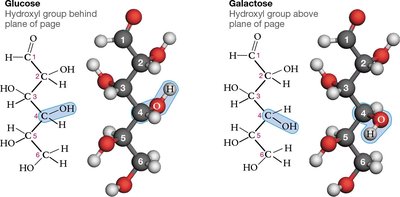
Carbohydrates are organic molecules with the formula (CH2O)n. Monosaccharides are the simplest form, varying in structure despite having the same formula.
Monosaccharides: Glucose, galactose, fructose, etc.
Structural Isomers: Same formula, different arrangement of atoms.
Polysaccharides: Complex Carbohydrates
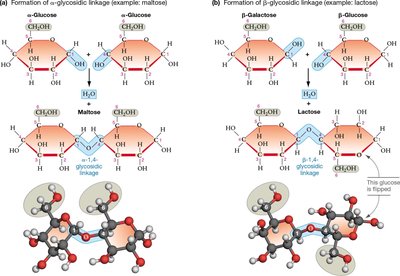
Monosaccharides polymerize via condensation reactions, forming glycosidic linkages. Polysaccharides serve as energy storage or structural support.
Glycosidic Linkage: Covalent bond between monosaccharides.
Examples: Starch, glycogen (energy); cellulose, chitin (structure).
Functions of Carbohydrates
Energy Storage: Starch in plants, glycogen in animals.
Structural Support: Cellulose in plants, chitin in fungi and arthropods.
Cell Recognition: Oligosaccharides act as cell ID badges.
Lipids: Structure and Function
Types of Lipids
Lipids are hydrophobic organic molecules, including fats, oils, waxes, and steroids. They are insoluble in water due to their hydrocarbon structure.
Fats: Composed of glycerol and fatty acids.
Saturated Fats: Maximum hydrogen, solid at room temperature.
Unsaturated Fats: Double bonds, fewer hydrogens, liquid at room temperature.
Steroids: Four-ring structure, includes cholesterol, testosterone, estrogen.
Phospholipids and Cell Membranes
Phospholipids have hydrophilic heads and hydrophobic tails. In water, they form bilayers or micelles, creating selectively permeable cell membranes.
Phospholipid Bilayer: Fundamental structure of cell membranes.
Selective Permeability: Allows passage of small, nonpolar molecules; restricts large, polar molecules and ions.
Permeability: Influenced by fatty acid saturation.
