 Indietro
Biotechnology: DNA Tools and Applications
Guida di studio - Note intelligenti
 Appunti personalizzati basati sui tuoi materiali, ampliati con definizioni chiave, esempi e contesto.
Biotechnology: DNA Tools and Applications
Introduction to DNA Technology and Genetic Engineering
Biotechnology involves the use of living organisms or their components to perform practical tasks, especially in the fields of medicine, agriculture, and environmental science. DNA technology refers to the set of techniques used to manipulate and analyze genetic material, enabling scientists to study genes, modify organisms, and develop new medical therapies.
Genetic engineering is the direct manipulation of genes for practical purposes.
Nucleic acid hybridization is the base pairing of one strand of nucleic acid to a complementary sequence on another strand, foundational for many molecular techniques.
DNA Sequencing Technologies
Traditional and Next-Generation Sequencing
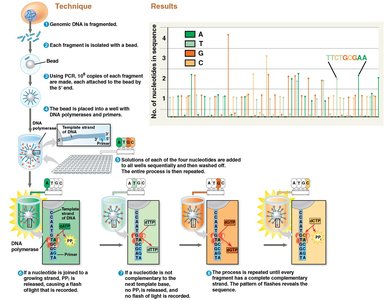
DNA sequencing determines the precise order of nucleotides in a DNA molecule. The development of sequencing technologies has revolutionized biological research and medicine.
Dideoxy (chain termination) sequencing was developed by Frederick Sanger and was the first automated sequencing method.
Next-generation sequencing allows rapid, parallel sequencing of thousands of DNA fragments, greatly increasing throughput and reducing cost.
Third-generation sequencing sequences single long DNA molecules as they pass through nanopores, identifying bases by their effect on electric current.
DNA Cloning and Recombinant DNA Technology
Plasmids and Cloning Vectors
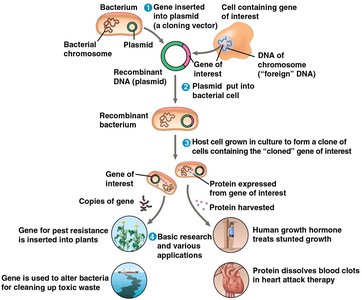
DNA cloning is the process of making multiple identical copies of a particular DNA segment. Plasmids, small circular DNA molecules found in bacteria, are commonly used as cloning vectors.
Recombinant DNA is DNA from two different sources combined into a single molecule.
Cloning vectors are DNA molecules that can carry foreign DNA into a host cell and replicate there.
Restriction Enzymes and DNA Ligation
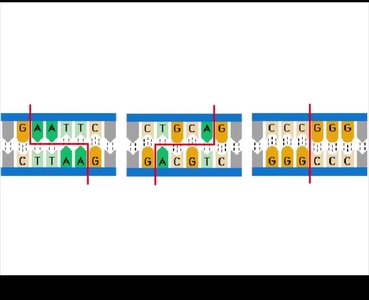
Restriction enzymes cut DNA at specific sequences called restriction sites, producing fragments with 'sticky ends' that can be joined with other DNA fragments using DNA ligase.
Sticky ends are single-stranded overhangs that can base pair with complementary sequences.
DNA ligase seals the sugar-phosphate backbone, joining DNA fragments together.
Gel Electrophoresis
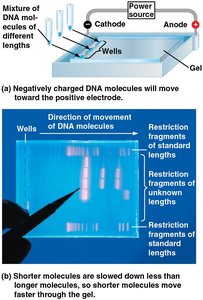
Gel electrophoresis separates DNA fragments by size using an electric field. Shorter fragments move faster through the gel matrix, allowing visualization and analysis of DNA samples.
Used to check recombinant plasmids and analyze restriction fragments.
Polymerase Chain Reaction (PCR)
Amplifying DNA
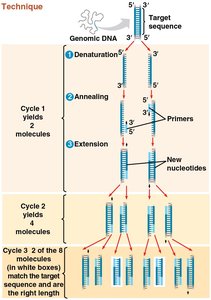
The polymerase chain reaction (PCR) is a technique used to amplify specific DNA sequences exponentially. It involves repeated cycles of denaturation, annealing, and extension.
Taq polymerase is a heat-stable enzyme used to synthesize new DNA strands during PCR.
Primers are short DNA sequences that initiate DNA synthesis at the target region.
Gene Expression and Analysis
Studying Gene Expression
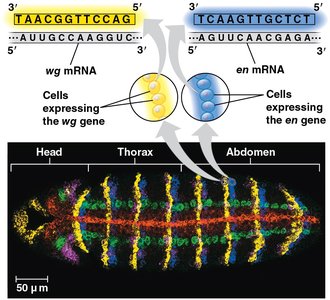
Understanding when and where genes are expressed helps reveal their function. Techniques include nucleic acid hybridization, in situ hybridization, and RT-PCR.
Nucleic acid probes are labeled DNA or RNA molecules that bind to complementary mRNA sequences.
In situ hybridization uses fluorescent probes to visualize gene expression in tissues or whole organisms.
Reverse Transcriptase PCR (RT-PCR) and Quantitative RT-PCR (qRT-PCR)
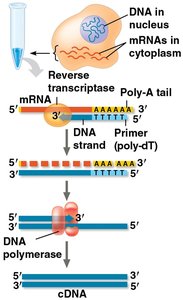
RT-PCR converts mRNA into complementary DNA (cDNA) using reverse transcriptase, then amplifies specific genes to compare expression levels. qRT-PCR quantifies gene expression using fluorescent dyes.
Allows comparison of gene expression across different samples or conditions.
RNA Sequencing (RNA-seq)
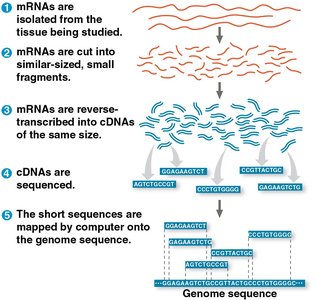
RNA-seq is a high-throughput method for analyzing the expression of thousands of genes simultaneously. It involves sequencing cDNA derived from mRNA and mapping the sequences to the genome.
Provides quantitative and qualitative data on gene expression.
Gene Editing and Functional Analysis
CRISPR-Cas9 and Other Gene Editing Tools
Gene editing technologies like CRISPR-Cas9 allow precise modification of DNA in living cells. These tools are used to knock out genes, repair mutations, or introduce new genetic material.
CRISPR-Cas9 uses a guide RNA to direct the Cas9 enzyme to a specific DNA sequence, where it introduces a double-strand break.
Gene function can be studied by observing the effects of gene knockout or mutation.
RNA Interference (RNAi)
RNAi is a method for silencing gene expression by introducing double-stranded RNA molecules that target specific mRNAs for degradation.
Used to study gene function and as a potential therapeutic tool.
Cloning and Stem Cells
Organismal Cloning and Stem Cells
Cloning produces genetically identical organisms from a single cell. Stem cells are undifferentiated cells capable of giving rise to various cell types.
Totipotent cells can generate an entire organism (e.g., plant cells).
Pluripotent stem cells (e.g., embryonic stem cells) can differentiate into many cell types.
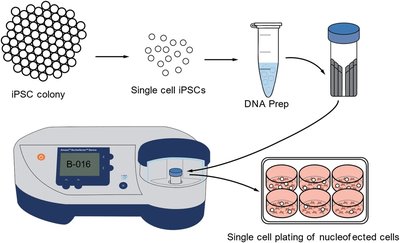
Induced pluripotent stem cells (iPSCs) are reprogrammed differentiated cells that behave like embryonic stem cells.
Applications of Biotechnology
Medicine, Agriculture, and Forensics
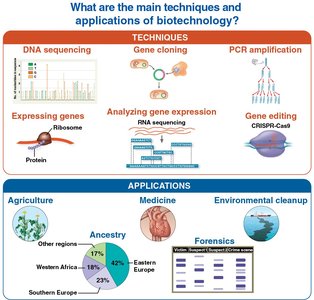
Biotechnology has numerous applications, including the production of pharmaceuticals, genetically modified crops, environmental cleanup, and forensic analysis.
Gene therapy introduces functional genes into patients to treat genetic disorders.
Forensic analysis uses DNA profiling (e.g., STR analysis) to identify individuals with high accuracy.
Summary Table: Main Techniques and Applications of Biotechnology
Technique | Application |
|---|---|
DNA Sequencing | Genomics, ancestry, medicine |
Gene Cloning | Protein production, research |
PCR Amplification | Forensics, diagnostics |
Gene Editing (CRISPR-Cas9) | Gene therapy, research |
RNA Sequencing | Gene expression analysis |
Additional info: This summary integrates foundational concepts from Chapter 20 (DNA Tools and Biotechnology) and related chapters, providing a comprehensive overview suitable for General Biology students preparing for exams.
