 Indietro
Bryophytes: Evolution, Structure, and Ecological Roles
Guida di studio - Note intelligenti
 Appunti personalizzati basati sui tuoi materiali, ampliati con definizioni chiave, esempi e contesto.
Bryophytes: An Overview
Introduction to Bryophytes
Bryophytes are a group of non-vascular land plants that include mosses, liverworts, and hornworts. They represent an important evolutionary stage in plant history, bridging aquatic ancestors and terrestrial ecosystems. - Bryophytes lack true vascular tissue, which limits their size and structural complexity. - They play crucial roles in ecosystem formation and maintenance. 
Bryophyte Evolution and Diversity
Character Evolution within Bryophyta
Bryophytes are divided into three main lineages: hornworts, mosses, and liverworts. Each lineage has evolved distinct morphological and ecological traits. - Hornworts: Unique sporophyte structure, persistent green sporophyte, and specialized internal anatomy. - Mosses: Complex gametophyte architecture, specialized reproductive structures, and internal conduction tissues. - Liverworts: Simple thalloid or leafy gametophytes, oil bodies, and unique reproductive adaptations. 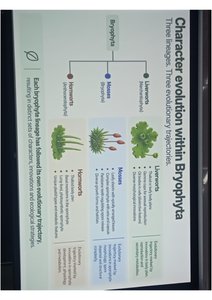
Evolution of the Gametophyte
The gametophyte is the dominant life stage in bryophytes, showing increasing morphological complexity across lineages. - Liverworts: Simple, flat thalloid structure. - Mosses: Upright leafy shoots with specialized reproductive organs. - Hornworts: Thalloid structure with unique internal anatomy. 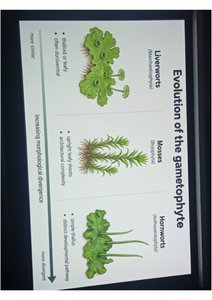
Bryophytes Are Not Evolutionarily Stagnant
Contrary to common misconceptions, bryophytes have undergone significant evolutionary innovation after their initial divergence. - Each lineage has developed unique adaptations for survival and reproduction. - Complex evolution continued beyond the original bryophyte forms. 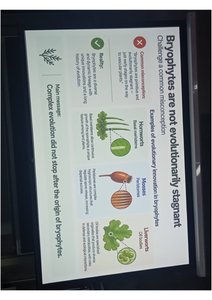
Bryophyte Structure and Physiology
Internal Conduction Before Vascular Tissue
Bryophytes exhibit internal conduction mechanisms that predate the evolution of true vascular tissue. - Diffusion: Movement of water and nutrients through cells. - Specialized Cells: Some bryophytes have cells adapted for internal transport. - Primitive Conduction: Mosses and hornworts show primitive conduction tissues, but lack true xylem and phloem. 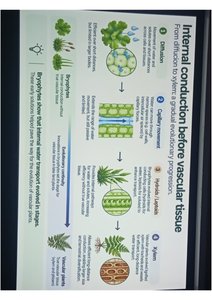
Water Relations and Poikilohydry
Bryophytes are poikilohydric, meaning their water content fluctuates with environmental conditions. This limits their size and distribution. - Diffusion Constraints: Water and solute movement is limited by diffusion, restricting plant size. - Desiccation Tolerance: Many bryophytes can survive drying and rehydration. - Microhabitat Trade-offs: Bryophytes occupy moist microhabitats to avoid desiccation. 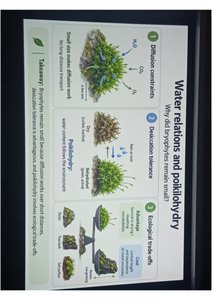
Bryophyte Ecology and Ecosystem Roles
Bryophytes as Ecosystem Engineers
Bryophytes significantly influence ecosystem structure and function. - Water Retention: Bryophytes absorb and retain water, stabilizing soil and microclimates. - Carbon Storage: They contribute to carbon sequestration, especially in peatlands. - Habitat Creation: Bryophytes provide habitat for microorganisms and invertebrates. 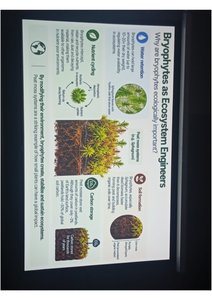
Bryophytes and Ecosystem Evolution
Bryophytes played a foundational role in the development of terrestrial ecosystems. - Early terrestrial ecosystems were shaped by bryophyte colonization. - Modern ecosystems still rely on bryophytes for soil formation, water regulation, and nutrient cycling. 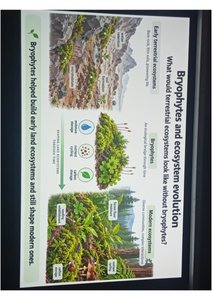
Bryophyte Lineages: Unique Features
Hornworts: The Unusual Bryophytes
Hornworts are distinguished by their persistent, green sporophyte and unique internal anatomy. - Persistent Sporophyte: Remains photosynthetic and grows continuously. - Specialized Cells: Unique internal structure for conduction and storage. 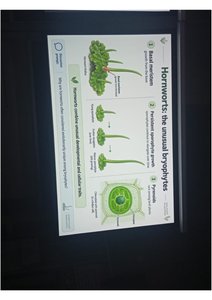
Mosses: Innovation Through Architectural Complexity
Mosses exhibit complex gametophyte architecture and specialized reproductive structures. - Leafy Shoots: Upright, branched gametophytes. - Capsule Formation: Specialized spore dispersal mechanisms. - Primitive Conduction: Internal tissues for water and nutrient movement. 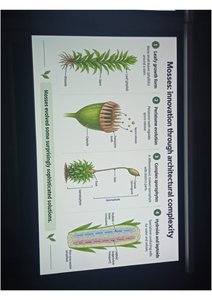
Liverworts: Three Evolutionary Experiments
Liverworts show diverse forms and reproductive strategies, representing early evolutionary experiments in land plant adaptation. - Thalloid and Leafy Forms: Variation in gametophyte structure. - Oil Bodies: Unique cellular structures for storage and defense. 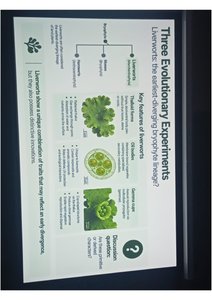
Bryophyte Evolutionary Success
The Evolutionary Success of Bryophytes
Bryophytes have persisted and diversified through evolutionary time, adapting to a wide range of habitats. - Adaptation: Ability to colonize diverse environments. - Innovation: Evolution of unique reproductive and physiological traits. 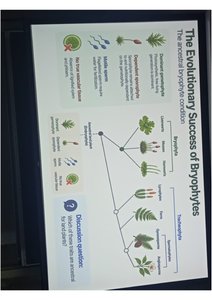
The Evolutionary Question
Bryophytes pose important questions about plant evolution, particularly regarding the persistence of ancestral traits and the emergence of new adaptations. - Ancestral Traits: Many bryophytes retain features from early land plants. - Derived Traits: Evolution of new structures and functions. - Evolutionary Processes: Ongoing adaptation and diversification. 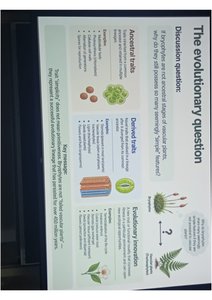
Summary Table: Bryophyte Lineages and Key Features
Lineage | Key Features | Ecological Role |
|---|---|---|
Mosses | Leafy shoots, capsule formation, primitive conduction tissues | Water retention, habitat creation, carbon storage |
Liverworts | Thalloid/leafy forms, oil bodies, simple structure | Soil formation, microhabitat stabilization |
Hornworts | Persistent green sporophyte, unique internal anatomy | Photosynthetic contribution, nutrient cycling |
Conclusion
Bryophytes are essential for understanding plant evolution and ecosystem development. Their unique adaptations, evolutionary innovations, and ecological roles make them a foundational group in the study of biology. Additional info: Bryophytes are often used as model organisms in studies of plant development, physiology, and evolutionary biology.
