 Indietro
Carbon and the Molecular Diversity of Life
Guida di studio - Note intelligenti
 Appunti personalizzati basati sui tuoi materiali, ampliati con definizioni chiave, esempi e contesto.
Carbon and the Molecular Diversity of Life
Introduction to Carbon Chemistry
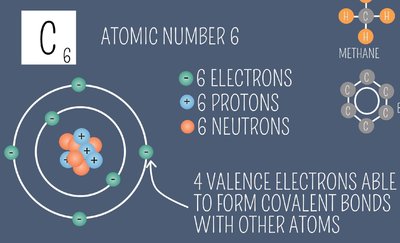
Carbon is a fundamental element in biological molecules due to its unique ability to form four covalent bonds, allowing for a diversity of stable compounds. The versatility of carbon enables the formation of complex molecules essential for life.
Valence Electrons: Carbon has four electrons in its outer shell, allowing it to form up to four covalent bonds with other atoms.
Bond Types: Carbon can form single, double, or triple bonds, contributing to the diversity of organic molecules.
Carbon Skeletons: The backbone of organic molecules can vary in length and shape, including straight chains, branched chains, and rings.
Hydrocarbons
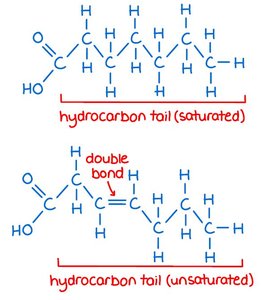
Hydrocarbons are organic molecules composed exclusively of hydrogen and carbon atoms. They are nonpolar and hydrophobic, making them insoluble in water. Hydrocarbons are the primary components of many biological molecules, such as the tails of fats.
Covalent Bonds: Hydrocarbons form strong covalent bonds between carbon and hydrogen.
Hydrophobicity: The nonpolar nature of hydrocarbons causes them to repel water.
Isomers
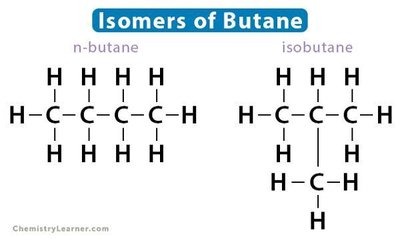
Isomers are compounds with the same molecular formula but different structural arrangements, resulting in distinct properties. There are three main types of isomers relevant to biology:
Structural Isomers: Differ in the covalent arrangement of their atoms (e.g., straight vs. branched chains).
Geometric (Cis-Trans) Isomers: Have the same covalent arrangements but differ in spatial arrangements due to the inflexibility of double bonds.
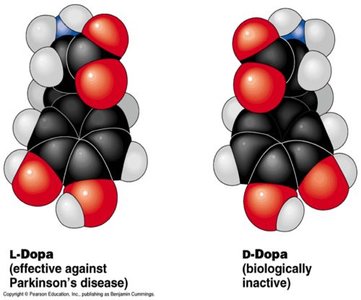
Enantiomers: Molecules that are mirror images of each other; often, only one enantiomer is biologically active.
Enantiomers and Biological Activity
Enantiomers are a special type of isomer where molecules are non-superimposable mirror images. In biological systems, typically only one enantiomer is functional. For example, the drug thalidomide had one enantiomer that was effective, while the other caused severe birth defects.
Example: L-Dopa is effective against Parkinson's disease, while D-Dopa is biologically inactive.
Functional Groups
Functional groups are specific groups of atoms attached to carbon skeletons that confer distinct chemical properties to molecules. They are commonly involved in chemical reactions and determine the behavior of organic molecules.
Hydroxyl (-OH): Forms alcohols; names often end in -ol.
Methyl (-CH3): Found in fatty acid chains; not soluble in water.
Carbonyl (-C=O): Forms aldehydes (at the end of a chain) or ketones (within a chain).
Carboxyl (-COOH): Characteristic of carboxylic acids; can donate H+ ions.
Amino (-NH2): Forms amines; can act as bases by attracting H+.
Phosphate (-PO42-): Forms organic phosphates; important in energy transfer.
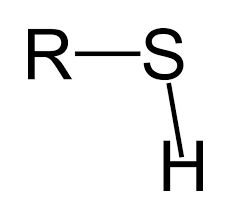
Sulfhydryl (-SH): Forms thiols; can stabilize protein structures via disulfide bonds.
Functional Group | Formula | Facts |
|---|---|---|
Hydroxyl | -OH | Forms alcohols; names often end in -ol |
Methyl | -CH3 | Found in fatty acid chains; not soluble in water |
Carbonyl | -C=O | Forms aldehydes (end) or ketones (within chain) |
Carboxyl | -COOH | Carboxylic acids; donate H+ |
Amino | -NH2 | Forms amines; acts as a base |
Phosphate | -PO42- | Organic phosphates; energy transfer |
Sulfhydryl | -SH | Stabilizes proteins via disulfide bonds |

Additional info: Functional groups are critical in determining the reactivity and interactions of biomolecules, influencing processes such as enzyme activity, DNA structure, and cell signaling.
