 Indietro
Carbon and the Molecular Diversity of Life: Structure, Isomerism, and Functional Groups
Guida di studio - Note intelligenti
 Appunti personalizzati basati sui tuoi materiali, ampliati con definizioni chiave, esempi e contesto.
Carbon and the Molecular Diversity of Life
Introduction to Carbon Chemistry
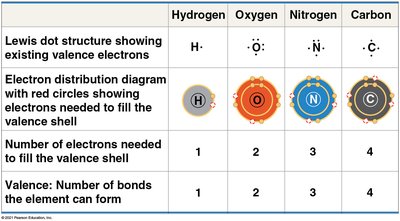
Carbon is the foundational element of organic molecules, making up the backbone of biological macromolecules. Its unique electron configuration allows it to form stable covalent bonds with many elements, enabling the diversity of organic compounds essential for life.
Valence Electrons: Carbon has four valence electrons, allowing it to form four covalent bonds.
Bonding Partners: The most common elements bonded to carbon in biological molecules are hydrogen, oxygen, and nitrogen.
Carbon Bonding and Molecular Geometry
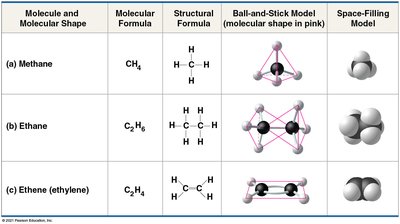
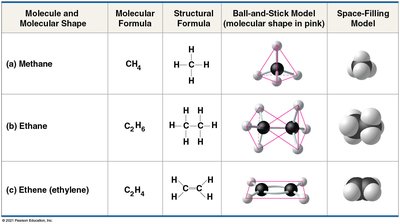
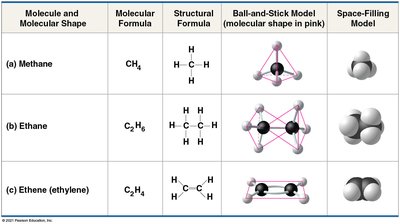
When carbon forms four single covalent bonds, the resulting geometry is tetrahedral, with bond angles of 109.5°. This geometry is crucial for the three-dimensional structure of organic molecules.
Tetrahedral Shape: Each carbon atom bonded to four other atoms forms a tetrahedral structure.
Double Bonds: When two carbons are joined by a double bond, the atoms attached to them lie in the same plane, creating a planar structure.
Variation in Carbon Skeletons
Carbon skeletons can vary in several ways, contributing to the diversity of organic molecules:
Length: Chains can be short or long.
Branching: Chains may be unbranched or branched.
Double Bond Position: Double bonds can be located at different positions along the skeleton.
Rings: Carbon chains can form rings.
These variations are the basis for the structural diversity of organic molecules, including hydrocarbons, which consist only of carbon and hydrogen and can release large amounts of energy during reactions.
Isomerism in Organic Molecules
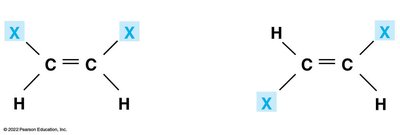
Isomers are compounds with the same molecular formula but different structures and properties. There are three main types:
Structural Isomers: Differ in the covalent arrangement of atoms.
Cis-Trans Isomers (Geometric Isomers): Have the same covalent bonds but differ in spatial arrangements due to inflexible double bonds.
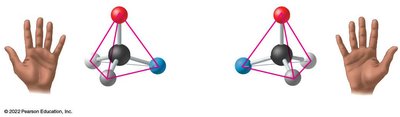
Enantiomers: Are mirror images of each other and differ in spatial arrangement around an asymmetric carbon.
Biological Importance of Enantiomers
Enantiomers are significant in biology because organisms are sensitive to molecular shape. Often, only one enantiomer is biologically active. This is especially important in pharmaceuticals, where different enantiomers of a drug can have different effects.
Drug | Effects | Effective Enantiomer | Ineffective Enantiomer |
|---|---|---|---|
Ibuprofen | Reduces inflammation and pain | S-Ibuprofen | R-Ibuprofen |
Albuterol | Relaxes bronchial muscles, improving airflow in asthma patients | R-Albuterol | S-Albuterol |
Functional Groups and Chemical Properties
The properties of organic molecules depend on their carbon skeletons and the chemical groups attached to them. Functional groups are specific groups of atoms that participate in chemical reactions and confer specific properties to molecules.
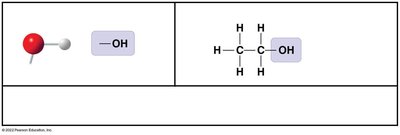
Hydroxyl Group (–OH): Polar, forms hydrogen bonds, found in alcohols.
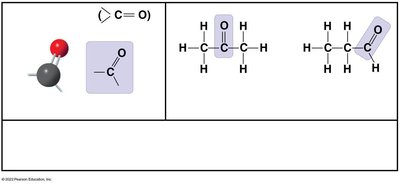
Carbonyl Group (C=O): Found in ketones (within skeleton) and aldehydes (at end).
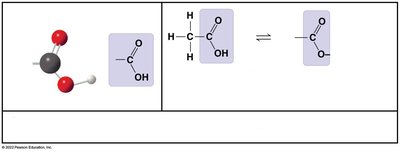
Carboxyl Group (–COOH): Acts as an acid, found in carboxylic acids.
Amino Group (–NH2): Acts as a base, found in amino acids.
Sulfhydryl Group (–SH): Found in thiols, can form disulfide bonds.
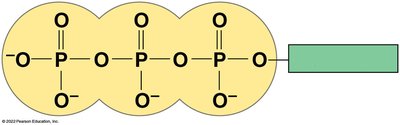
Phosphate Group (–OPO32–): Involved in energy transfer (e.g., ATP).
Methyl Group (–CH3): Affects gene expression, not reactive but serves as a marker.
Hydrophilic and Hydrophobic Substances
Functional groups often determine whether a molecule is hydrophilic (water-loving) or hydrophobic (water-fearing). Hydrophilic groups increase solubility in water, while hydrophobic molecules, such as oils, do not mix well with water due to nonpolar covalent bonds.

Phosphate Groups and ATP
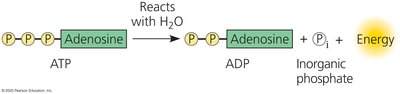
Phosphate groups are critical for energy transfer in cells. Adenosine triphosphate (ATP) is the primary energy currency of the cell, consisting of adenosine attached to three phosphate groups. Hydrolysis of ATP releases energy used for cellular work.
Summary Table: Functional Groups in Biological Molecules
Chemical Group | Compound Name | Examples |
|---|---|---|
Hydroxyl (–OH) | Alcohol | Ethanol |
Carbonyl (C=O) | Ketone/Aldehyde | Acetone/Propanal |
Carboxyl (–COOH) | Carboxylic acid | Acetic acid |
Amino (–NH2) | Amine | Glycine |
Sulfhydryl (–SH) | Thiol | Cysteine |
Phosphate (–OPO32–) | Organic phosphate | Glycerol phosphate |
Methyl (–CH3) | Methylated compound | 5-Methylcytosine |
Key Equations
ATP Hydrolysis:
Additional info: Understanding the structure and function of carbon-based molecules is essential for grasping the chemical basis of life. The diversity of organic molecules arises from the versatility of carbon and the functional groups attached to its skeleton.
