 Indietro
Carbon and the Molecular Diversity of Life: Biological Macromolecules
Guida di studio - Note intelligenti
 Appunti personalizzati basati sui tuoi materiali, ampliati con definizioni chiave, esempi e contesto.
Carbon: The Backbone of Life
Importance of Carbon in Biological Molecules
Carbon is a fundamental element in all living organisms, forming the backbone of biological macromolecules such as proteins, DNA, carbohydrates, and lipids. Its unique ability to form four covalent bonds allows for the creation of large, complex, and diverse molecules essential for life.
Key Point 1: Carbon atoms can form stable covalent bonds with up to four other atoms, enabling molecular complexity.
Key Point 2: Carbon-based compounds are the foundation of organic chemistry and are present in all living matter.
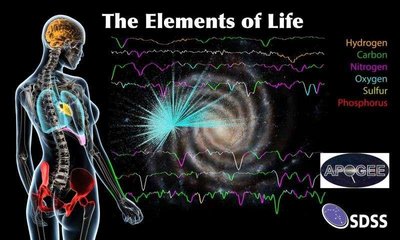
Example: The abundance of elements like hydrogen, carbon, nitrogen, oxygen, sulfur, and phosphorus in the human body is mapped across stars in the Milky Way, highlighting the cosmic origins of life's building blocks.
Organic Chemistry and Carbon Compounds
Organic Molecules and Their Structure
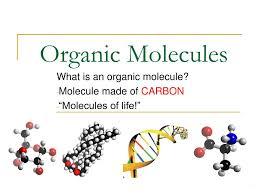
Organic chemistry is the study of carbon-containing compounds, which range from simple molecules to complex macromolecules. Most organic compounds also contain hydrogen atoms, and their diversity arises from variations in carbon skeletons.
Key Point 1: Organic molecules are defined by the presence of carbon atoms.
Key Point 2: The structure and function of organic molecules are inseparable, as molecular shape determines biological activity.
Example: DNA, proteins, and carbohydrates are all organic molecules essential for life.
Formation and Geometry of Carbon Bonds
Tetrahedral Geometry and Bonding
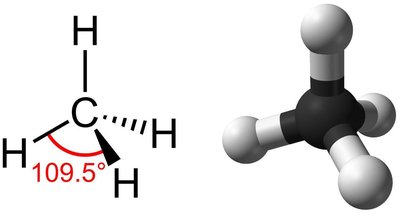
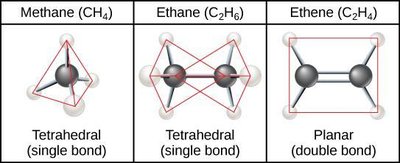
Carbon's four valence electrons allow it to form four covalent bonds, resulting in a tetrahedral geometry. This geometry is seen in molecules like methane (CH4), where the hydrogen atoms are spaced 109.5° apart.
Key Point 1: Methane exhibits a tetrahedral shape due to carbon's bonding capacity.
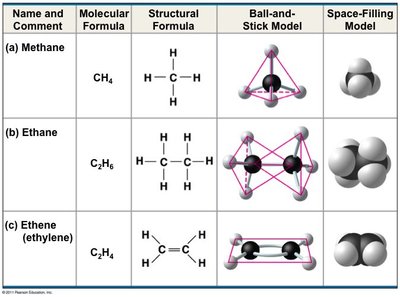
Key Point 2: In molecules with multiple carbons, each carbon bonded to four other atoms maintains a tetrahedral shape.
Example: Methane, ethane, and ethene demonstrate different bonding and molecular geometries.
Molecular Diversity from Carbon Skeleton Variation
Carbon Chains and Rings
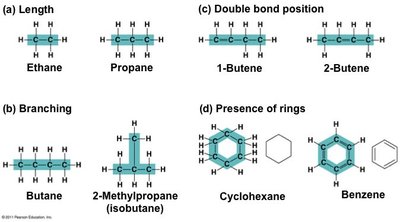
Carbon chains form the skeletons of most organic molecules, varying in length, branching, and the presence of rings. These variations contribute to the molecular diversity necessary for biological function.
Key Point 1: Carbon skeletons can be straight, branched, or form rings.
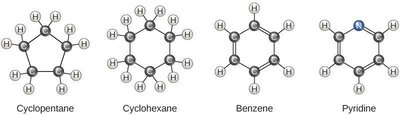
Key Point 2: Hydrocarbon rings, such as benzene, are important in amino acids, cholesterol, and other biological molecules.
Example: Cyclopentane, cyclohexane, benzene, and pyridine are examples of carbon rings.
Isomers: Structural, Geometric, and Enantiomers
Types of Isomers and Their Biological Significance
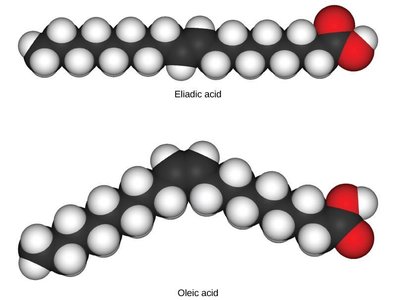
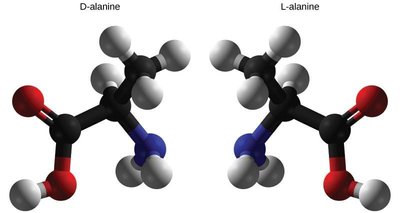
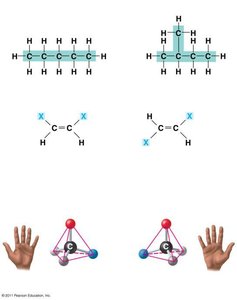
Isomers are molecules with the same chemical formula but different arrangements of atoms or bonds. Structural isomers differ in covalent arrangement, geometric isomers differ around double bonds, and enantiomers are mirror images with different biological activity.
Key Point 1: Structural isomers have different atom arrangements; geometric isomers differ in spatial arrangement around double bonds; enantiomers are non-superimposable mirror images.
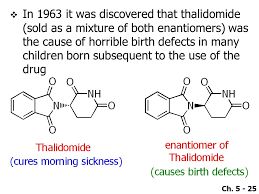
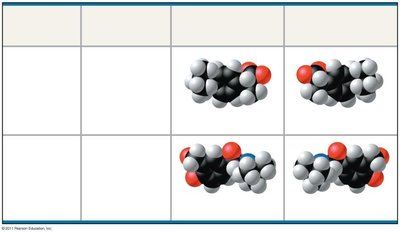
Key Point 2: Only one enantiomer of amino acids is used in protein synthesis; enantiomers can have drastically different effects in pharmaceuticals.
Example: D-alanine and L-alanine are enantiomers; thalidomide enantiomers have different biological effects.
Functional Groups in Biological Molecules
Role and Properties of Functional Groups
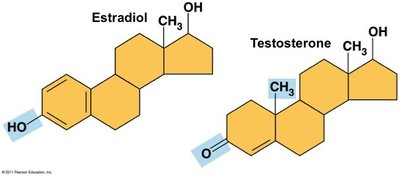
Functional groups are specific groups of atoms within molecules that confer distinct chemical properties and reactivity. They are critical in the structure and function of biological macromolecules.
Key Point 1: Functional groups include hydroxyl, methyl, carbonyl, carboxyl, amino, phosphate, and sulfhydryl.
Key Point 2: The number and arrangement of functional groups determine molecular properties and interactions.
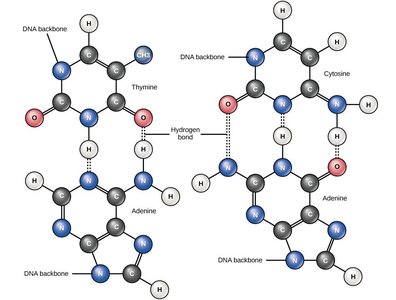
Example: Hydrogen bonds between functional groups stabilize DNA's double helix structure.
Biological Macromolecules: Classes and Structure
The Four Major Classes of Macromolecules
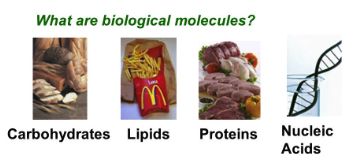
All living things are composed of four classes of large biological molecules: carbohydrates, lipids, proteins, and nucleic acids. Macromolecules are polymers made from monomers, except for lipids, which are not true polymers.
Key Point 1: Carbohydrates, proteins, and nucleic acids are polymers; lipids are not.
Key Point 2: Monomers are the building blocks of polymers; polymers are long chains of monomers.
Example: Starch (carbohydrate), DNA (nucleic acid), and proteins are all polymers.

Synthesis and Breakdown of Polymers
Condensation (Dehydration) and Hydrolysis Reactions
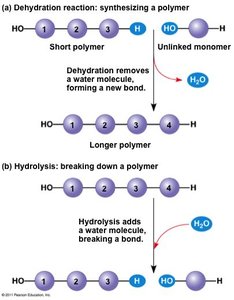
Polymers are synthesized by condensation (dehydration) reactions, where monomers are joined and water is released. Hydrolysis reactions break polymers into monomers by adding water.
Key Point 1: Dehydration reactions form polymers by removing water.
Key Point 2: Hydrolysis reactions break polymers by adding water.
Example: Formation and breakdown of starch and proteins involve these reactions.
Carbohydrates: Structure and Function
Types of Carbohydrates
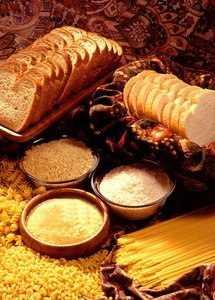
Carbohydrates are found in grains, fruits, and vegetables, providing energy in the form of glucose. They are classified as monosaccharides, disaccharides, and polysaccharides.
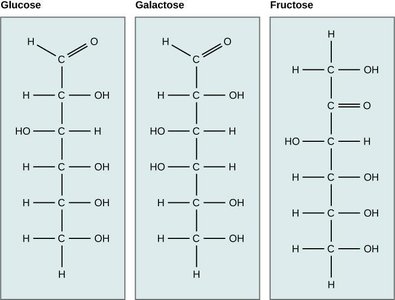
Key Point 1: Monosaccharides are simple sugars (3-7 carbons), ending in -ose.
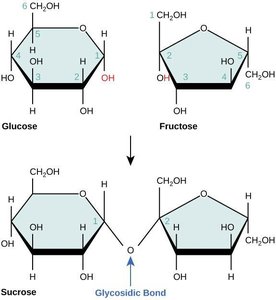
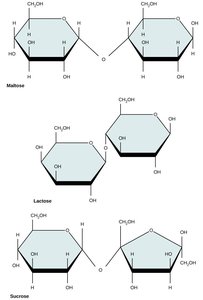
Key Point 2: Disaccharides are formed by joining two monosaccharides via glycosidic bonds.
Key Point 3: Polysaccharides are long chains of monosaccharides, serving storage and structural roles.
Example: Glucose, galactose, and fructose are structural isomers of hexose monosaccharides.
Polysaccharides: Storage and Structural Roles
Starch, Glycogen, Cellulose, and Chitin
Polysaccharides serve as energy storage and structural components. Starch and glycogen are storage polysaccharides in plants and animals, respectively. Cellulose and chitin are structural polysaccharides found in plant cell walls and arthropod exoskeletons.
Key Point 1: Starch is composed of amylose (unbranched) and amylopectin (branched) with α 1-4 and α 1-6 glycosidic bonds.
Key Point 2: Cellulose has β 1-4 glycosidic linkages, making it indigestible to humans.
Key Point 3: Chitin contains nitrogen and forms the exoskeleton of arthropods.
Example: Glycogen is stored in liver and muscle cells; cellulose forms plant cell walls.
Lipids: Structure and Function
Types and Roles of Lipids
Lipids are hydrophobic molecules that serve as energy stores, insulation, hormone precursors, and membrane components. Types include fats, oils, waxes, phospholipids, and steroids.
Key Point 1: Fats are composed of glycerol and fatty acids, joined by ester linkages.
Key Point 2: Saturated fats have no double bonds; unsaturated fats have one or more double bonds.
Key Point 3: Phospholipids are amphipathic and form cell membranes; steroids have a four-ring structure.
Example: Omega-3 fatty acids are essential and must be obtained from the diet.
Proteins: Structure and Function
Amino Acids and Protein Structure
Proteins are polymers of amino acids, each with a central carbon, amino group, carboxyl group, and side chain (R-group). Protein structure is determined by the sequence and chemistry of amino acids, which dictate folding and function.
Key Point 1: Amino acids are grouped by the properties of their R-groups: nonpolar, polar, charged, aromatic.
Key Point 2: Peptide bonds form between amino acids via dehydration synthesis.
Key Point 3: Protein structure has four levels: primary, secondary, tertiary, and quaternary.
Example: Sickle cell anemia results from a single amino acid change in hemoglobin.
Nucleic Acids: DNA and RNA
Structure and Function of Nucleic Acids
Nucleic acids are polymers of nucleotides, which consist of a nitrogenous base, pentose sugar, and phosphate group. DNA and RNA store and transmit genetic information, with DNA forming a double helix stabilized by hydrogen bonds.
Key Point 1: DNA is double-stranded and remains in the nucleus; RNA is single-stranded and involved in protein synthesis.
Key Point 2: Base pairing in DNA: adenine with thymine, guanine with cytosine.
Key Point 3: The central dogma describes the flow of genetic information: DNA → RNA → Protein.
Example: mRNA, tRNA, and rRNA play distinct roles in protein synthesis.
Summary Table: Functional Groups
Comparison of Functional Groups
Functional Group | Structure | Properties |
|---|---|---|
Hydroxyl | R-OH | Polar |
Methyl | R-CH3 | Nonpolar |
Carbonyl | R-CO | Polar |
Carboxyl | R-COOH | Charged, ionizes to release H+, acidic |
Amino | R-NH2 | Charged, accepts H+ to form NH3+, basic |
Phosphate | R-PO4 | Charged, ionizes to release H+, acidic |
Sulfhydryl | R-SH | Polar |
Summary Table: DNA vs. RNA
Comparison of DNA and RNA
Feature | DNA | RNA |
|---|---|---|
Function | Carries genetic information | Involved in protein synthesis |
Location | Remains in the nucleus | Leaves the nucleus |
Structure | Double helix | Usually single-stranded |
Sugar | Deoxyribose | Ribose |
Pyrimidines | Cytosine, thymine | Cytosine, uracil |
Purines | Adenine, guanine | Adenine, guanine |
Additional info: The notes above expand on the original content by providing definitions, examples, and academic context for each topic, ensuring completeness and clarity for General Biology students.
