 Indietro
Carbon and the Molecular Diversity of Life
Guida di studio - Note intelligenti
 Appunti personalizzati basati sui tuoi materiali, ampliati con definizioni chiave, esempi e contesto.
Carbon: The Backbone of Life
Importance of Carbon in Biological Molecules
Carbon is a fundamental element in all living organisms, forming the backbone of the major macromolecules such as proteins, DNA, and carbohydrates. Its unique chemical properties allow it to form large, complex, and diverse molecules essential for life.
Organic chemistry is the study of carbon-containing compounds, regardless of their origin.
Organic compounds can range from simple molecules to very large, complex structures.
Carbon's versatility is due to its ability to form four covalent bonds, allowing for a variety of molecular shapes and sizes.
Electron Configuration and Bonding
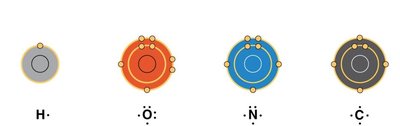
The electron configuration of carbon determines its bonding behavior and compatibility with other elements, especially hydrogen, oxygen, and nitrogen. The number of unpaired electrons in the valence shell equals the number of covalent bonds an atom can form (its valence).
Carbon has four valence electrons, enabling it to form four covalent bonds.
This property allows carbon to act as a central building block for complex biological molecules.
Molecular Diversity Arising from Variation in Carbon Skeletons
Carbon Skeletons
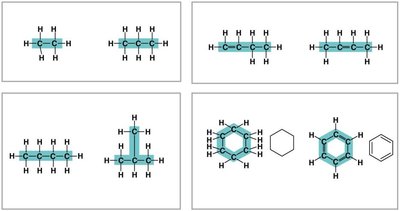
Carbon chains form the skeletons of most organic molecules. These skeletons can vary in length, branching, double bond position, and the presence of rings, contributing to the diversity of organic molecules.
Carbon skeletons can be straight, branched, or arranged in rings.
The diversity in carbon skeletons leads to a wide variety of molecular structures and functions.
Hydrocarbons
Definition and Biological Importance
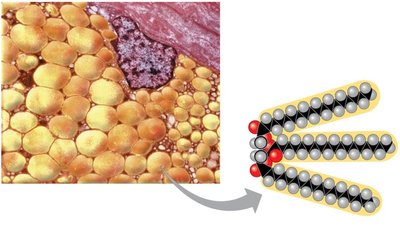
Hydrocarbons are organic molecules consisting entirely of carbon and hydrogen. They are found in many biological molecules, such as fats, and can undergo reactions that release significant amounts of energy.
Hydrocarbons are nonpolar and hydrophobic.
They serve as important energy storage molecules in living organisms.
Isomers
Types of Isomers
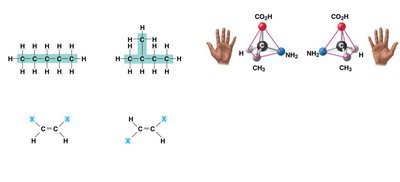
Isomers are compounds with the same molecular formula but different structures and properties. The three main types of isomers are:
Structural isomers: Differ in the covalent arrangement of atoms.
Cis-trans isomers (geometric isomers): Have the same covalent bonds but differ in spatial arrangement around a double bond or ring structure.
Enantiomers: Are mirror images of each other and cannot be superimposed, often due to an asymmetric carbon atom.
Functional Groups
Role of Functional Groups in Organic Molecules
Functional groups are specific groups of atoms attached to carbon skeletons that are most commonly involved in chemical reactions. They determine the unique properties and reactivity of organic molecules.
The number and arrangement of functional groups give each molecule its unique chemical behavior.
Small differences in functional groups can lead to significant differences in biological activity (e.g., estradiol vs. testosterone).
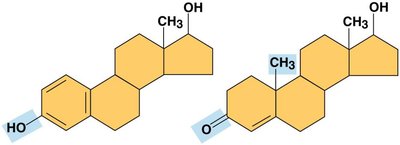
The Seven Most Important Functional Groups in Biology
The following functional groups are most important in the chemistry of life:
Hydroxyl group (—OH): Found in alcohols; makes molecules polar and can form hydrogen bonds.
Carbonyl group (C=O): Found in ketones and aldehydes; increases molecule reactivity.
Carboxyl group (—COOH): Acts as an acid; found in amino acids and fatty acids.
Amino group (—NH2): Acts as a base; found in amino acids.
Sulfhydryl group (—SH): Found in thiols; important for protein structure (disulfide bonds).
Phosphate group (—OPO32−): Found in nucleic acids and ATP; involved in energy transfer.
Methyl group (—CH3): Affects gene expression and molecular recognition.
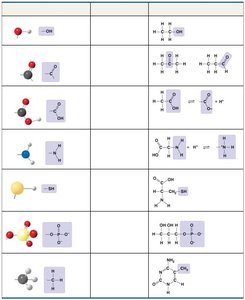
Functional Group | Properties | Example |
|---|---|---|
Hydroxyl (—OH) | Alcohol; polar; forms hydrogen bonds | Ethanol |
Carbonyl (C=O) | Ketone or aldehyde; increases reactivity | Acetone, Propanal |
Carboxyl (—COOH) | Carboxylic acid; acts as an acid | Acetic acid |
Amino (—NH2) | Amine; acts as a base | Glycine |
Sulfhydryl (—SH) | Thiol; forms disulfide bonds | Cysteine |
Phosphate (—OPO32−) | Organic phosphate; energy transfer | Glycerol phosphate |
Methyl (—CH3) | Methylated compound; affects gene expression | 5-Methylcytosine |
Additional info: Functional groups are critical for the structure and function of biomolecules, influencing solubility, reactivity, and interactions with other molecules. Understanding these groups is essential for studying biochemistry and molecular biology.
