 Indietro
Carbon and the Molecular Diversity of Life: Study Notes
Guida di studio - Note intelligenti
 Appunti personalizzati basati sui tuoi materiali, ampliati con definizioni chiave, esempi e contesto.
Carbon and the Molecular Diversity of Life
Organic Molecules and the Origin of Life on Earth
Organic chemistry is the study of compounds containing carbon, which forms the basis of all life. The evolution of complex organic molecules from inorganic compounds was a critical step in the origin of life on Earth. Early Earth’s atmosphere contained various inorganic compounds, such as carbon dioxide, ammonia, nitrogen gas, carbon monoxide, water vapor, nitrogen oxides, methane, and hydrogen sulfides.
Organic compounds: Contain carbon-carbon (C–C) bonds.
Inorganic compounds: Do not contain C–C bonds.
Prebiotic conditions: Earth formed ~4.6 billion years ago; seas formed after bombardment ceased (~3.8 billion years ago).
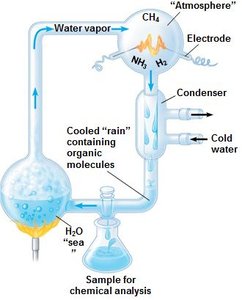
Example: The Miller-Urey experiment demonstrated that organic molecules could be synthesized abiotically under conditions thought to resemble those of early Earth.
Carbon’s Valence Electrons and Bonding Ability
Carbon is uniquely suited to form a wide variety of molecules due to its four valence electrons, allowing it to form four covalent bonds with other atoms. This property enables carbon to create large, complex molecules essential for life.
Valence electrons: Electrons in the outermost shell.
Valence: The atom’s bonding capacity (number of covalent bonds).
Bonding versatility: Carbon can form single, double, or triple bonds.
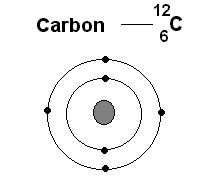
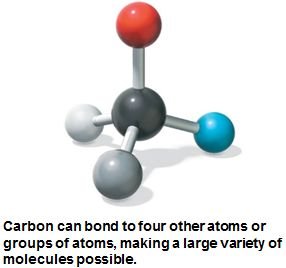
Example: Carbon’s ability to bond with itself and other elements (such as hydrogen, oxygen, and nitrogen) allows for the formation of diverse molecular structures.
Why is Carbon the Basis for All Organic Molecules?
Carbon is the foundation of organic molecules because it forms strong covalent bonds, is small in atomic size, and its bonds remain stable in water. Although silicon can also form four covalent bonds, its larger atomic size and weaker bonds make it less suitable for life’s chemistry.
Strength of C–C bonds: Carbon-carbon bonds are stable in aqueous environments.
Abundance: Carbon is less abundant than silicon, but more chemically versatile.
Comparison: Silicon compounds break apart in water, unlike carbon compounds.
Carbon’s Bonding Diversity
Carbon atoms can form molecules that vary in length, branching, double bond position, and ring structures. This diversity is essential for the complexity of biological molecules.
Hydrocarbon chains: Linear arrangements of carbon atoms.
Branching: Carbon chains can branch at various points.
Rings: Carbon atoms can form cyclic structures.
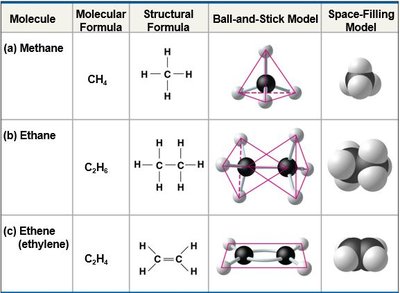
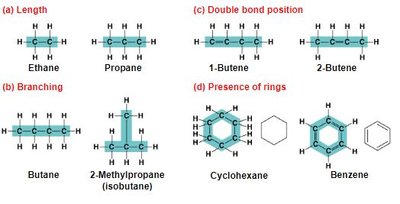
Example: The structure of hydrocarbons can be modified to create different molecules, such as ethane, propane, cyclohexane, and benzene.
Isomers
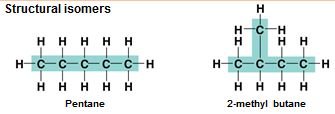
Isomers are compounds with the same molecular formula but different structural arrangements, resulting in distinct physical and chemical properties. There are three main types of isomers: structural, geometric (cis/trans), and enantiomers.
Structural isomers: Differ in the arrangement of atoms.
Geometric isomers (cis/trans): Differ in spatial arrangement around a double bond.
Enantiomers: Mirror images due to an asymmetric carbon.
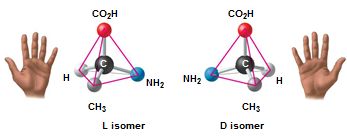
Example: Enantiomers are important in pharmaceuticals, as one enantiomer may be effective while the other is not or may cause harmful effects.
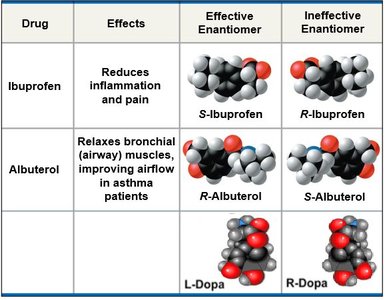

Additional info: Thalidomide exists as two enantiomers; one causes sedative effects, while the other causes severe birth defects.
Functional Groups
Functional groups are specific groups of atoms within molecules that are responsible for the characteristic chemical reactions of those molecules. The unique properties of organic molecules depend on the carbon skeleton and the arrangement of functional groups.
Hydroxyl group (–OH): Found in alcohols; polar and forms hydrogen bonds.
Carbonyl group (–C=O): Found in ketones and aldehydes.
Carboxyl group (–COOH): Found in organic acids.
Amino group (–NH2): Found in amines and amino acids.
Sulfhydryl group (–SH): Found in thiols; forms disulfide bridges in proteins.
Phosphate group (–PO4): Found in nucleotides and ATP; contributes negative charge and energy transfer.
Methyl group (–CH3): Affects gene expression and hormone function.
Ester group (–COOR): Formed during dehydration synthesis in lipids.
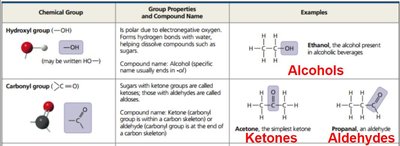
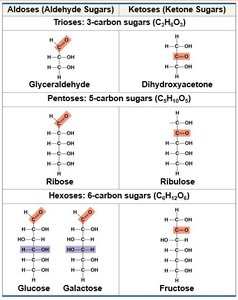
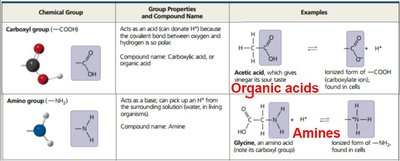
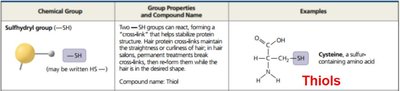

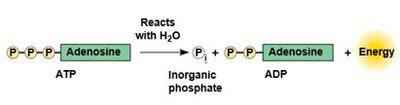
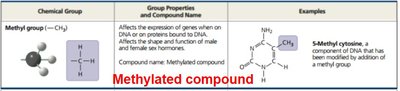
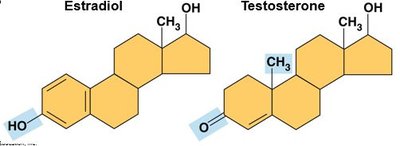
Example: The presence and arrangement of functional groups determine the reactivity and function of biomolecules, such as amino acids, nucleotides, and hormones.
Pattern Matching Organic Molecules
Recognizing functional groups and molecular patterns is essential for understanding the structure and function of organic molecules in biological systems.
Activity: Identify functional groups in various biomolecules to predict their chemical properties and biological roles.
Summary Table: Functional Groups and Their Properties
Chemical Group | Properties | Examples |
|---|---|---|
Hydroxyl (–OH) | Polar, forms hydrogen bonds | Ethanol (alcohol) |
Carbonyl (–C=O) | Polar, found in ketones and aldehydes | Acetone, propanal |
Carboxyl (–COOH) | Acidic, can donate H+ | Acetic acid |
Amino (–NH2) | Basic, can accept H+ | Glycine |
Sulfhydryl (–SH) | Forms disulfide bonds | Cysteine |
Phosphate (–PO4) | Contributes negative charge, energy transfer | ATP, DNA |
Methyl (–CH3) | Affects gene expression | 5-methyl cytosine |
Ester (–COOR) | Formed in lipids | Triglycerides |
Key Equations and Concepts
ATP Hydrolysis: The reaction releases energy for cellular processes.
Isomerism: Structural, geometric, and enantiomeric isomers have the same molecular formula but different arrangements.
Conclusion
Carbon’s unique chemical properties enable the formation of diverse organic molecules essential for life. Understanding isomers and functional groups is fundamental to predicting the structure, function, and reactivity of biomolecules in biological systems.
