 Indietro
Carbon-Based Molecules: Structure, Properties, and Biological Functions
Guida di studio - Note intelligenti
 Appunti personalizzati basati sui tuoi materiali, ampliati con definizioni chiave, esempi e contesto.
Carbon-Based Molecules
Properties of Carbon
Carbon is a fundamental element in living organisms due to its versatile bonding properties, which allow it to form a vast array of compounds. These compounds are essential for life and are classified as macromolecules, including lipids, proteins, carbohydrates, and nucleic acids (DNA/RNA).
Key Point 1: Carbon atoms can form millions of different compounds, making them the basis of biological diversity.
Key Point 2: Macromolecules are large carbon-based compounds crucial for life.
Example: Carbon is present in food, clothing, electronics, and biological molecules.
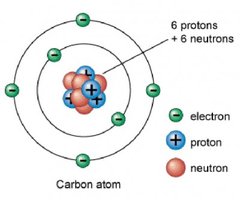
Structure of Carbon-Based Molecules
The atomic structure of carbon enables it to form covalent bonds by sharing electrons. Carbon has four valence electrons, allowing it to bond with other elements such as hydrogen, oxygen, nitrogen, and phosphorus. It can form single, double, or triple bonds, contributing to the diversity of organic molecules.
Key Point 1: Covalent bonding allows carbon to create stable and diverse molecules.
Key Point 2: Carbon's bonding versatility is central to organic chemistry.
Example: Organic molecules often contain C-H, C-O, C-N, and C-P bonds.
Monomers, Polymers, and Isomers
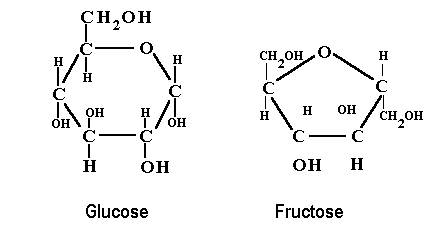
Monomers are small molecules that serve as building blocks for polymers. Polymers are long chains of repeating monomers. Isomers are molecules with the same chemical formula but different structural arrangements or bonding patterns.
Key Point 1: Monomers join to form polymers, which are essential for biological structure and function.
Key Point 2: Isomers demonstrate the structural diversity possible with carbon-based molecules.
Example: Glucose and fructose are isomers with the same formula but different structures.
Carbohydrates
Carbohydrate Structure and Function
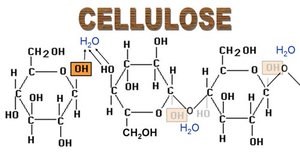
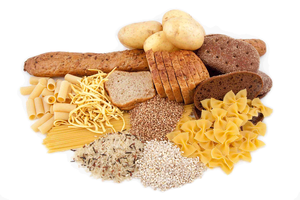
Carbohydrates are composed of carbon, hydrogen, and oxygen. They are classified as monosaccharides (simple sugars), disaccharides, and polysaccharides (complex carbohydrates). Simple carbohydrates are quickly broken down and absorbed, while complex carbohydrates are digested more slowly and may contain indigestible cellulose.
Key Point 1: Monosaccharides like glucose are the simplest carbohydrates.
Key Point 2: Polysaccharides such as cellulose and starch provide structural support and energy storage.
Example: Cellulose is a polysaccharide found in plant cell walls.
Lipids
Lipid Structure and Function
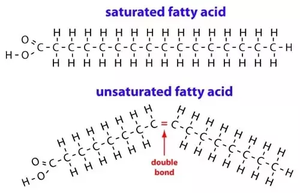
Lipids are nonpolar molecules composed of carbon, hydrogen, and oxygen. They include fats, oils, waxes, phospholipids, and steroids. Fatty acids are the simplest lipids, and their linkage forms more complex lipids.
Key Point 1: Lipids are essential for energy storage, cell membrane structure, and signaling.
Key Point 2: Lipids are hydrophobic, making them insoluble in water.
Example: Saturated and unsaturated fatty acids differ in their chemical structure and physical properties.
Fats and Oils
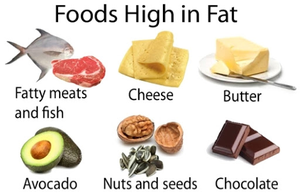
Fats are a major energy source, providing more energy per gram than carbohydrates. They are important for vitamin absorption, cell membrane repair, and physiological processes such as blood clotting and inflammation.
Key Point 1: Fats are required for building and repairing cell membranes.
Key Point 2: Fats play a role in myelin sheath formation and other cellular functions.
Example: Foods high in fat include butter, cheese, nuts, and fatty meats.
Phospholipids
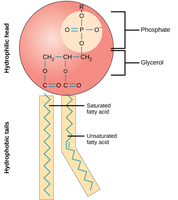
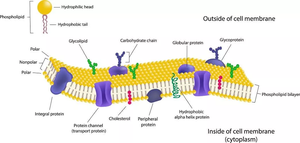
Phospholipids are lipids consisting of a glycerol backbone, two fatty acids, and a phosphate group. They have a polar, hydrophilic head and nonpolar, hydrophobic tails. Phospholipids are the main component of cell membranes, creating a barrier and passageways for molecules.
Key Point 1: The amphipathic nature of phospholipids is crucial for membrane structure.
Key Point 2: Proteins embedded in the membrane facilitate transport and communication.
Example: The phospholipid bilayer forms the foundation of biological membranes.
Proteins
Protein Structure and Function
Proteins are macromolecules made of amino acids. They serve as enzymes, structural components, and signaling molecules. The sequence of amino acids determines a protein's structure and function. Denaturation refers to the loss of protein structure due to environmental changes.
Key Point 1: Proteins are essential for catalyzing biochemical reactions and maintaining cellular structure.
Key Point 2: The primary, secondary, and tertiary structures of proteins are critical for their function.
Example: Enzymes are proteins that speed up chemical reactions in cells.
Nucleic Acids
Nucleic Acid Structure and Function
Nucleic acids (DNA and RNA) are polymers made of nucleotide monomers. Each nucleotide consists of a sugar, a phosphate group, and a nitrogenous base. The sugar-phosphate backbone forms the structure of DNA, while nitrogenous bases pair via hydrogen bonds. DNA and RNA differ in structure and function.
Key Point 1: DNA stores genetic information; RNA is involved in protein synthesis.
Key Point 2: The sequence of nucleotides determines the sequence of amino acids in proteins.
Example: DNA is double-stranded, while RNA is usually single-stranded.
Homework Questions
Which bond (single, double, triple) do you think is the strongest? Explain your answer.
The hydrophobic tails of phospholipids keep water from passing directly through the cell membrane. How might this be beneficial for the maintenance of homeostasis?
Waxes are the main component of the cuticle found on the upper surface of some plant leaves. Why might the leaves of these plants have a waxy cuticle?
How do the terms polymer and monomer apply to the structure of protein molecules?
Compare and contrast RNA and DNA in terms of structure and nitrogenous bases.
Why does it take longer for your body to break down complex carbohydrates than simple carbohydrates? How is this related to their molecular structure?
Otters have a gland that secretes oil onto their fur. How does secreting oil onto their fur help otters maintain homeostasis?
Excess cholesterol has been linked to heart disease so the labels on some food products advertise its 'cholesterol free'. Is it necessary to eat a completely cholesterol-free diet? Explain your answer.
Which would probably have the greatest effect on a protein's function- a change to the primary, secondary or tertiary structure? Explain your answer.
Additional info: Academic context was added to clarify the structure and function of macromolecules, the importance of carbon, and the biological relevance of lipids, carbohydrates, proteins, and nucleic acids. Images were included only when directly relevant to the explanation of the paragraph.
