 Indietro
Carbon: The Basis of Molecular Diversity in Life
Guida di studio - Note intelligenti
 Appunti personalizzati basati sui tuoi materiali, ampliati con definizioni chiave, esempi e contesto.
Carbon: The Backbone of Life
Importance of Carbon in Biological Molecules
Carbon is the central element in the chemistry of life, forming the backbone of the major biological macromolecules. Its unique properties allow it to form a vast array of complex and diverse molecules essential for life.
Carbon-based compounds make up proteins, DNA, carbohydrates, and other molecules that distinguish living matter.
Other common elements in these compounds include hydrogen (H), oxygen (O), nitrogen (N), sulfur (S), and phosphorus (P), but carbon's versatility is unparalleled.
Carbon enters the biosphere primarily through the action of producers (e.g., plants) that fix atmospheric CO2 into organic molecules.
Properties That Make Carbon the Basis of All Life
Bonding Capabilities and Molecular Diversity
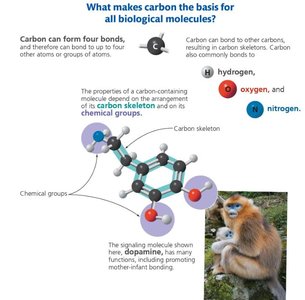
Carbon's electron configuration allows it to form four covalent bonds, enabling the construction of large, complex, and varied molecules. This property is fundamental to the diversity of organic molecules found in living organisms.
Carbon can bond to other carbons, forming chains and rings, and to other elements such as hydrogen, oxygen, and nitrogen.
The arrangement of carbon skeletons and attached chemical groups determines the properties of organic molecules.
Organic Chemistry and the Origin of Life
Definition and Historical Experiments
Organic chemistry is the study of carbon-containing compounds, regardless of their origin. The field encompasses molecules ranging from simple to highly complex structures.
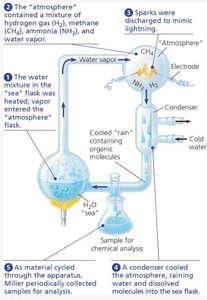
Stanley Miller's classic experiment demonstrated the abiotic synthesis of organic compounds, supporting the hypothesis that life's building blocks could form under prebiotic conditions.
Experiments suggest that organic molecules could have formed near volcanoes or in the early Earth's atmosphere, contributing to the origin of life.
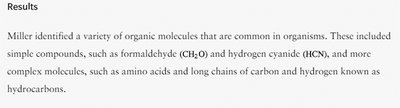
Results: Miller identified simple organic molecules such as formaldehyde (CH2O) and hydrogen cyanide (HCN), as well as more complex molecules like amino acids and hydrocarbons.
Formation of Bonds with Carbon
Electron Configuration and Molecular Geometry
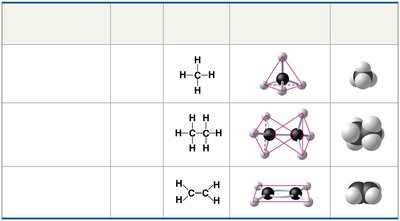
The electron configuration of carbon (1s2 2s2 2p2) allows it to form four covalent bonds, resulting in a tetrahedral geometry when bonded to four other atoms. This geometry is crucial for the three-dimensional structure of organic molecules.
Single bonds create tetrahedral shapes; double bonds result in planar (flat) molecules.
The number of unpaired electrons in the valence shell determines the number of covalent bonds an atom can form (its valence).
Diversity of Carbon Skeletons
Structural Variations in Organic Molecules
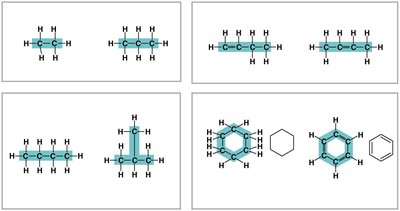
Carbon chains form the skeletons of most organic molecules. These skeletons can vary in length, branching, double bond position, and the presence of rings, contributing to molecular complexity and diversity.
Skeletons may be straight, branched, or arranged in rings.
Double bonds can vary in location, affecting molecular properties.
Hydrocarbons
Structure and Biological Importance
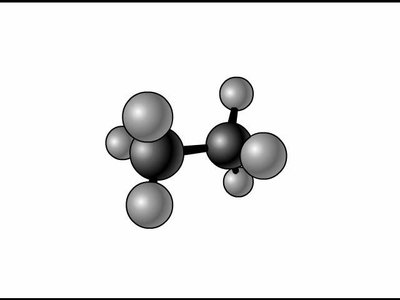
Hydrocarbons are organic molecules consisting entirely of carbon and hydrogen. They are found in many biological molecules, such as fats, and can store significant amounts of energy.
Hydrocarbons are nonpolar and hydrophobic.
They can undergo reactions that release large amounts of energy (e.g., in cellular respiration).
Isomers
Types and Biological Significance
Isomers are compounds with the same molecular formula but different structures and properties. The three main types are structural isomers, cis-trans (geometric) isomers, and enantiomers.
Structural isomers: Differ in the covalent arrangement of atoms.
Cis-trans isomers: Have the same covalent bonds but differ in spatial arrangement due to inflexible double bonds.
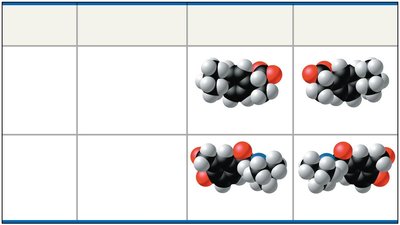
Enantiomers: Are mirror images of each other and often differ in biological activity.
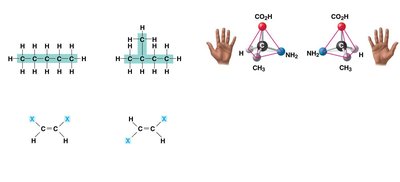
Biological Relevance: Enantiomers are especially important in pharmaceuticals, as only one form is usually biologically active.
Chemical Groups and Molecular Function
Functional Groups in Organic Molecules
The distinctive properties of organic molecules depend on the carbon skeleton and the chemical groups attached to it. Functional groups are the components most commonly involved in chemical reactions and confer specific properties to molecules.
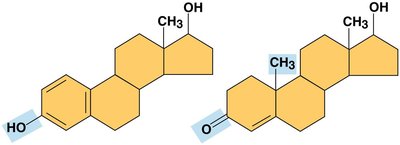
Estradiol and testosterone are examples of molecules with the same carbon skeleton but different functional groups, resulting in different biological activities.
The Seven Most Important Functional Groups
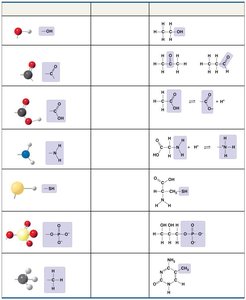
The following functional groups are most important in the chemistry of life:
Hydroxyl group (–OH): Alcohols; polar, forms hydrogen bonds with water.
Carbonyl group (C=O): Ketones and aldehydes; found in sugars.
Carboxyl group (–COOH): Carboxylic acids; acts as an acid.
Amino group (–NH2): Amines; acts as a base.
Sulfhydryl group (–SH): Thiols; helps stabilize protein structure.
Phosphate group (–OPO32−): Organic phosphates; involved in energy transfer.
Methyl group (–CH3): Methylated compounds; affects gene expression.
ATP: The Energy Currency of the Cell
Structure and Function
Adenosine triphosphate (ATP) is a key organic phosphate that stores and transfers energy within cells. ATP consists of adenosine attached to three phosphate groups. Hydrolysis of ATP releases energy used for cellular processes.
ATP hydrolysis:

Summary: The Chemical Elements of Life
Carbon's Versatility and Biological Diversity
The versatility of carbon enables the formation of a vast diversity of organic molecules, which underlies the complexity and diversity of life on Earth. Variation at the molecular level is foundational to biological diversity.
