 Indietro
Cell-Cell Connections and Communication: Structure and Function in Animal and Plant Cells
Guida di studio - Note intelligenti
 Appunti personalizzati basati sui tuoi materiali, ampliati con definizioni chiave, esempi e contesto.
Cell-Cell Connections and Communications
Overview of Cell Junctions
Cells in multicellular organisms are often in close contact and develop specialized intercellular junctions. These junctions connect cells, prevent the passage of materials, or establish rapid communication between adjacent cells. Most junctions are found between animal cells, but plants have their own unique structures.
Anchoring junctions: Connect cells and distribute mechanical stress.
Tight junctions: Prevent passage of materials between cells.
Gap junctions: Allow rapid communication between cells.
Plasmodesmata: Channels in plant cells for communication.
Anchoring Junctions
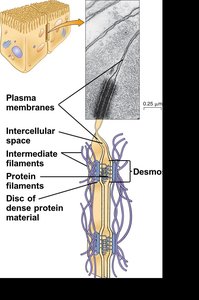
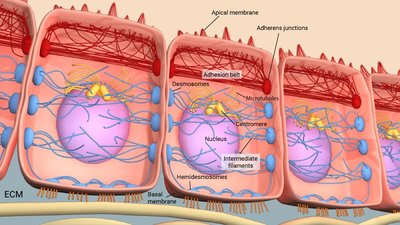
Anchoring junctions are specialized structures that cement cells together and help tissues withstand mechanical stress. They are composed of dense protein plaques and connect to protein filaments that cross the intercellular space. Inside the cell, these plaques anchor to intermediate filaments, connecting the cytoskeletons of adjacent cells.
Desmosomes: Made of cadherin proteins, cement cells together, and distribute mechanical stress.
Adherens junctions: Cadherins connect to actin microfilaments, forming adhesion belts around cells.
Tight Junctions
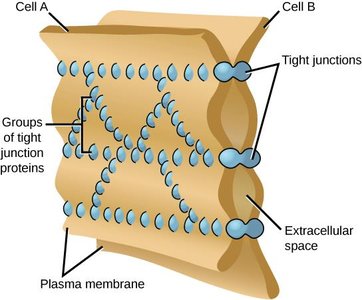
Tight junctions are areas of tight connections between the membranes of adjacent cells. They prevent substances from leaking between cells and help seal off body cavities. Tight junctions are not continuous but are located intermittently along the plasma membrane.
Function: Prevent unwanted materials from crossing over, e.g., in the small intestine and blood-brain barrier.
Gap Junctions
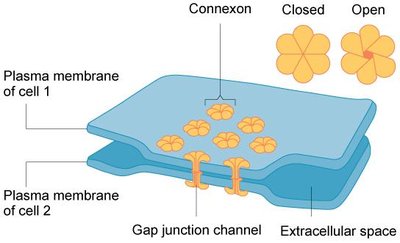
Gap junctions are communicating junctions that connect both plasma membranes and cytoplasms of adjacent cells. They are composed of clusters of six connexin proteins (connexons) that form a channel across the cells, allowing rapid electrical and chemical communication.
Function: Provide rapid communication, e.g., in heart cells.
Plasmodesmata in Plant Cells
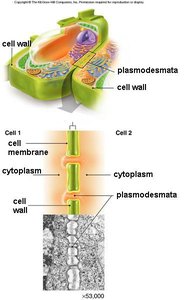
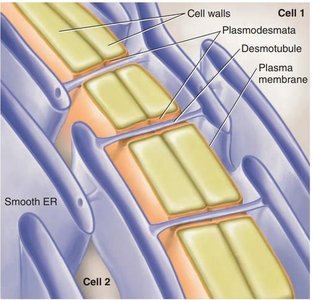
Plasmodesmata are channels that pass through the cell walls of adjacent plant cells, connecting their cytoplasms. The plasma membranes of adjacent cells are continuous through the plasmodesmata, which contain a narrow cylindrical structure called the desmotubule that connects the smooth ER of the two cells.
Function: Allow molecules and ions (but not organelles) to pass through, enabling slow electrical signaling and communication.
Additional info: Certain proteins, RNA, and some plant viruses can also pass through plasmodesmata.
Cell Communication and Signaling
Importance of Cell Communication
To maintain homeostasis, cells of multicellular organisms must continuously communicate. Organisms also communicate with members of their own species by secreting chemical signals. For example, bacterial populations use quorum sensing to activate specific processes based on signal concentration.
Mechanisms of Cell Communication
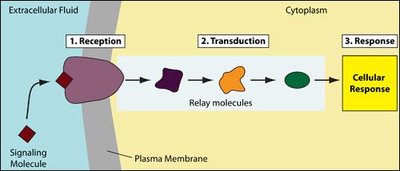
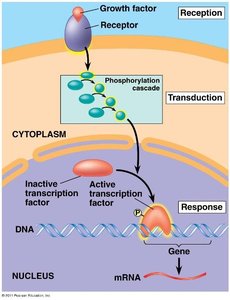
Cells communicate by sending chemical signals to other cells, either near or far. Communication must be precisely regulated and involves a sequence of four main processes:
Transmission
Reception
Transduction
Response to signal
Direct Contact Communication
Cells in direct contact can communicate via cell junctions (e.g., gap junctions in cardiac muscle, plasmodesmata in plants), electrical signals, temporary cell-to-cell contact, and chemical signals.
Communication Without Direct Contact
Electrical signals: E.g., neurotransmitters in nerves.
Chemical signals released into blood (endocrine secretion): E.g., hormones.
Chemical signals released locally (paracrine secretion): E.g., histamine, nitrous oxide, prostaglandins.
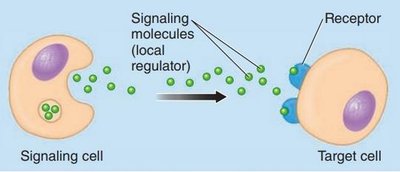
Signal Reception
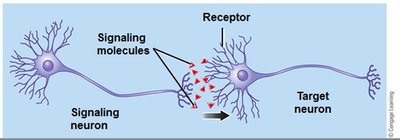
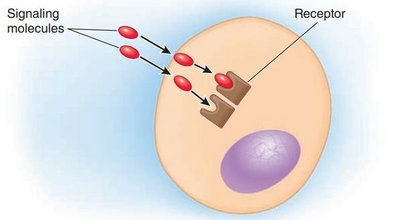
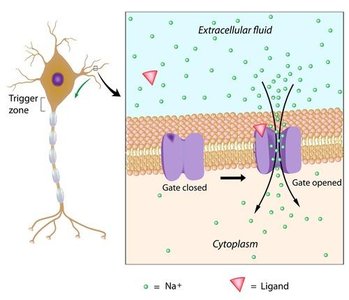
The signals a cell responds to depend on its receptors, which are macromolecules that bind signaling molecules (ligands). A ligand activates the receptor and triggers a biological response. Hydrophilic molecules bind to protein receptors on the cell surface, while hydrophobic molecules move through the plasma membrane and bind to intracellular receptors.
Hydrophilic ligands: Bind to surface receptors.
Hydrophobic ligands: Bind to intracellular receptors.
Signal Transduction
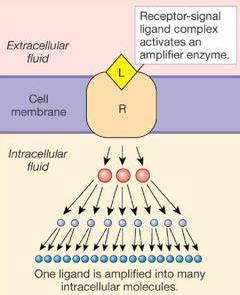
Signal transduction is the mechanism by which an extracellular signal is converted into an intracellular signal. A signaling molecule binds to a cell-surface receptor and activates its cytoplasmic end. The signal is transmitted by relay molecules, creating a signaling pathway that amplifies the signal. Each component acts as a molecular switch (active or inactive).
Amplification: One ligand can activate many intracellular molecules.
Cellular Response and Termination
Cellular responses to signals include opening or closing ion channels, altering enzyme activity, and turning specific gene activity on or off. After the response, the receptor and components of the signal transduction pathway return to their inactive states.
Ion channels: Example: neurotransmitters open or close channels.
Enzyme activity: Example: receptors on white blood cells.
Gene expression: Example: steroid hormones regulate gene activity.
Summary Table: Types of Cell Junctions
Junction Type | Structure | Function | Location |
|---|---|---|---|
Anchoring (Desmosomes, Adherens) | Protein plaques, cadherins, actin/intermediate filaments | Mechanical strength, adhesion | Animal cells (skin, epithelia) |
Tight Junctions | Groups of tight junction proteins | Seal spaces, prevent leakage | Animal cells (intestine, brain) |
Gap Junctions | Connexons (clusters of connexin proteins) | Rapid communication | Animal cells (heart, nerves) |
Plasmodesmata | Channels, desmotubule, continuous membrane | Communication, transport | Plant cells |
Review Questions
Name various cell-cell connections found in animal cells.
What are anchoring junctions and what’s their role in cells?
What are the types of anchoring junctions? Where do you find them?
Where do you find tight and gap junctions and what's their role?
What kind of connections are found in plant cells? What is their role?
How do cells signal or communicate with one another?
Name and describe the steps involved in cell signaling.
