 Indietro
Cell-Cell Interactions and Signal Transduction in Plants and Animals
Guida di studio - Note intelligenti
 Appunti personalizzati basati sui tuoi materiali, ampliati con definizioni chiave, esempi e contesto.
Cell-Cell Interactions
Extracellular Material: Structure and Function
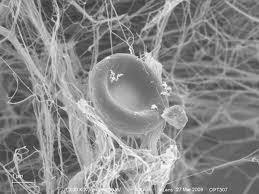
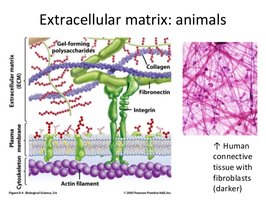
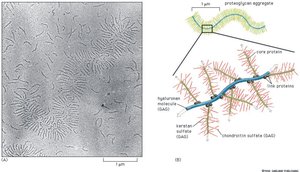
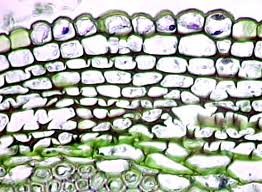
The extracellular material surrounding cells is essential for structural support, tissue segregation, and regulation of intercellular communication. In animals, this material is known as the extracellular matrix (ECM), while in plants, it is primarily the cell wall.
Extracellular Matrix (ECM): Found in animal tissues, composed mainly of collagen and proteoglycans.
Functions: Provides support, segregates tissues, and regulates intercellular communication.
Cell Walls: Found in plants, bacteria, fungi, and some protists. Main component is cellulose in plants.
Functions: Protection, maintenance of cell shape, and prevention of excess water uptake.
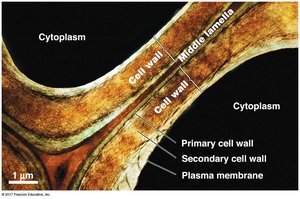
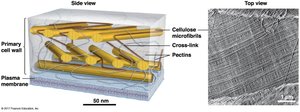
Cell-Cell Attachments and Communication
Cells in multicellular organisms are connected and communicate through specialized structures. These attachments and gaps are crucial for tissue integrity and signaling.
Tight Junctions: Form water-tight seals between cells, restricting passive movement and maintaining tissue boundaries.
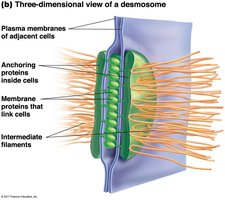
Desmosomes: Bind the cytoskeletons of adjacent cells together using cadherin proteins. Provide mechanical strength and selective adhesion.
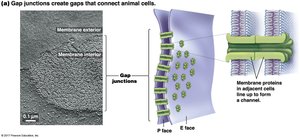
Gap Junctions (Animals): Membrane proteins form channels allowing passage of ions and small molecules between cells.
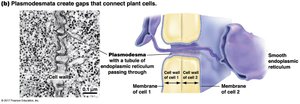
Plasmodesmata (Plants): Membrane-lined channels through cell walls connect adjacent plant cells, facilitating communication.
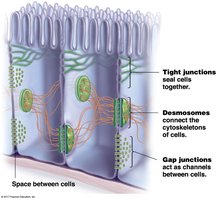
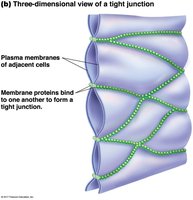
Cell Signaling and Signal Transduction
Long-Distance Signaling
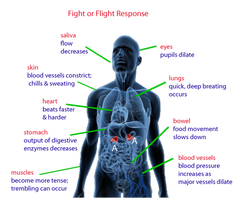
Cells communicate over long distances using hormones (endocrine signaling). Hormones travel through the bloodstream and elicit responses in target cells that possess specific receptors.
Example: Adrenaline (epinephrine) triggers the fight-or-flight response.
Stages of Cell Signaling
Cell signaling involves three main stages: reception, transduction, and response.
Reception: Signal is detected by a receptor protein on the cell surface or inside the cell.
Transduction: Signal is converted into a form that can cause a cellular response, often involving multiple steps and second messengers.
Response: The cell responds, such as by changing gene expression or protein activity.
Reception: Membrane Receptors
Three main types of membrane receptors mediate signal reception:
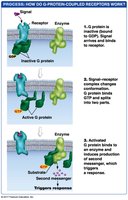
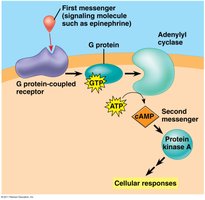
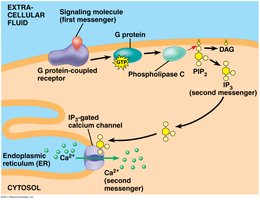
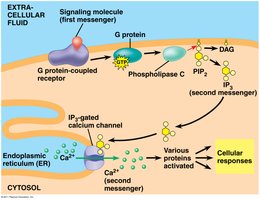
G Protein-Coupled Receptors (GPCRs): Plasma membrane receptors associated with G proteins, which act as on/off switches depending on whether GTP or GDP is bound.
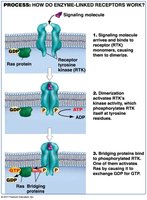
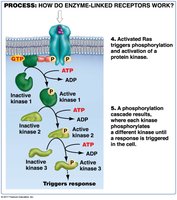
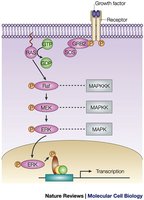
Receptor Tyrosine Kinases (RTKs): Membrane receptors with enzymatic activity that attach phosphates to tyrosine residues, activating downstream signaling pathways.
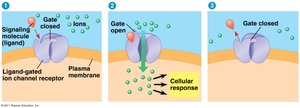
Ion Channel Receptors: Ligand binding causes conformational change, opening a gate for specific ions to pass through.
Intracellular Receptors
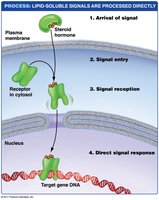
Some signaling molecules, such as steroid hormones, thyroid hormones, and nitric oxide, can pass through the membrane and bind to intracellular receptors. These complexes often regulate gene expression directly.
Transduction: Relay and Amplification of Signals
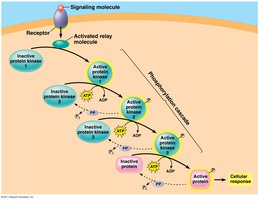
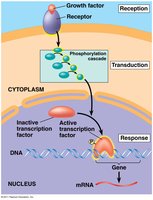
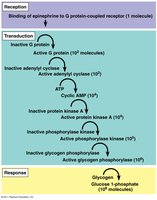
Signal transduction involves the relay of signals from receptors to target molecules, often through phosphorylation cascades and second messengers.
Phosphorylation: Addition of phosphate groups to proteins by kinases, activating them.
Dephosphorylation: Removal of phosphate groups by phosphatases, deactivating proteins.
Second Messengers: Small, water-soluble molecules such as cyclic AMP (cAMP) and calcium ions (Ca2+) that amplify and spread the signal within the cell.
cAMP as a Second Messenger
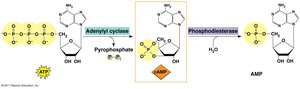
cAMP is produced from ATP by adenylyl cyclase and activates protein kinase A, leading to various cellular responses.
Formula:
Calcium Ions (Ca2+) as Second Messengers
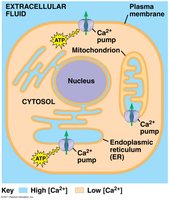
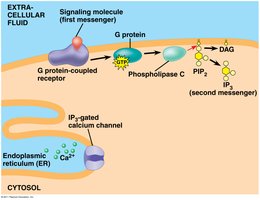
Ca2+ is used as a second messenger in both GPCR and RTK pathways. Its concentration is tightly regulated, being much higher outside the cell or in organelles like the ER.
Functions: Muscle contraction, secretion, cell division.
Response: Cellular Outcomes
The final stage of cell signaling is the cellular response, which can involve changes in gene expression or regulation of protein activity.
Nuclear Response: Activation of transcription factors and gene expression.
Cytoplasmic Response: Regulation of protein activity, such as opening ion channels.
Specificity, Coordination, and Crosstalk
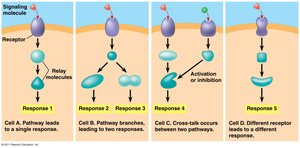
Cells respond differently to the same signal depending on their protein composition and gene expression. Multiple signaling pathways can interact (crosstalk) to modify responses.
Specificity: Different cell types express different receptors and proteins, leading to varied responses.
Crosstalk: Interaction between multiple pathways allows for coordinated and regulated cellular responses.
Termination of the Signal
Signals must be terminated to allow cells to respond to new stimuli. This involves the return of messengers to their inactive forms and removal of signaling molecules.
GTP hydrolyzes to GDP
cAMP is converted to AMP
Phosphatases remove phosphates
Signaling in Unicellular Organisms
Unicellular organisms use similar mechanisms for reception and signal transduction, often to sense environmental conditions or population density (quorum sensing).
Biofilms and slime molds: Examples of coordinated behavior in unicellular organisms.
Summary Table: Cell-Cell Connections and Signaling
Structure | Function | Location |
|---|---|---|
Tight Junctions | Seal cells, restrict movement | Animal tissues |
Desmosomes | Bind cytoskeletons, selective adhesion | Animal tissues |
Gap Junctions | Channel for ions/small molecules | Animal tissues |
Plasmodesmata | Channel through cell wall | Plant tissues |
ECM | Support, communication | Animal tissues |
Cell Wall | Protection, shape, water regulation | Plant, bacteria, fungi, protists |
Key Terms and Definitions
Extracellular Matrix (ECM): Network of proteins and carbohydrates outside animal cells.
Cell Wall: Rigid structure outside plant, bacterial, fungal, and some protist cells.
Tight Junction: Seal between animal cells preventing leakage.
Desmosome: Cell junction binding cytoskeletons of adjacent cells.
Gap Junction: Channel allowing communication between animal cells.
Plasmodesmata: Channel connecting plant cells through cell walls.
Signal Transduction: Process of converting an external signal into a cellular response.
Second Messenger: Small molecule that amplifies and relays signals inside cells.
Phosphorylation Cascade: Series of protein activations by phosphorylation.
Example: Aberrant Signaling
Abnormal activation of RTKs is associated with many types of cancer, highlighting the importance of regulated cell signaling.
Additional info:
Cell signaling pathways are highly conserved across eukaryotes, and disruptions can lead to disease.
Quorum sensing in bacteria is a classic example of unicellular signaling.
