 Indietro
Cell Communication and Signal Transduction in Biology
Guida di studio - Note intelligenti
 Appunti personalizzati basati sui tuoi materiali, ampliati con definizioni chiave, esempi e contesto.
Cell Communication and Signaling
Introduction to Cell Signaling
Cell signaling is the process by which cells detect and respond to external signals, allowing them to coordinate activities and adapt to changing environments. This process is essential for multicellular organisms, enabling communication between cells for growth, development, and homeostasis.
Signal transduction refers to the series of steps by which a signal on a cell's surface is converted into a specific cellular response.
Signals can be chemical (hormones, neurotransmitters) or physical (light, touch).
Biological Example: The Impala's Flight Response
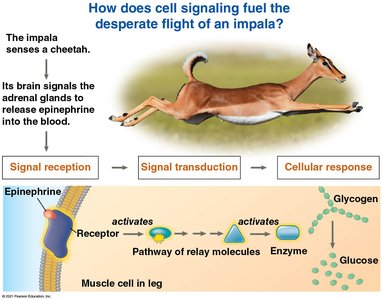
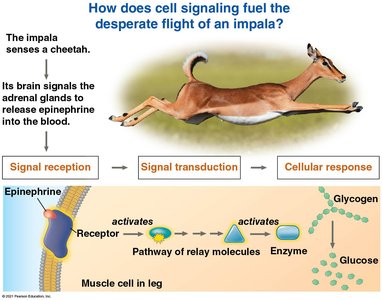
When an impala senses a predator, such as a cheetah, its body initiates a rapid signaling cascade. The brain signals the adrenal glands to release epinephrine (adrenaline) into the bloodstream, which triggers the breakdown of glycogen to glucose in muscle cells, providing energy for escape.
Types of Cell Signaling
Local signaling: Communication between neighboring cells.
Long-distance signaling: Hormones travel through the bloodstream to reach distant target cells.
Local Signaling: Direct Contact
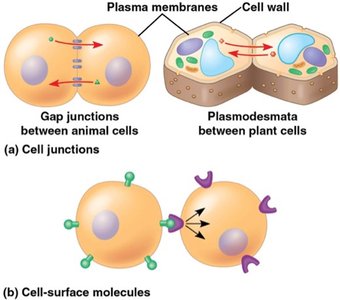
Cells can communicate by direct contact through specialized structures:
Gap junctions (animals): Channels that connect the cytoplasm of adjacent cells.
Plasmodesmata (plants): Channels that allow molecules to pass between plant cells.
Cell–cell recognition: Surface molecules on one cell bind to receptors on another, important in development and immune response.
Local Signaling: Secreted Messengers
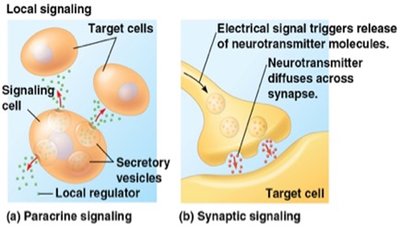
Paracrine signaling: Cells secrete local regulators that affect nearby cells (e.g., growth factors).
Synaptic signaling: Neurons release neurotransmitters across synapses to target cells.
Long-Distance Signaling: Hormones
Endocrine signaling: Specialized cells release hormones into the bloodstream, affecting distant target cells.
Only cells with the appropriate receptor respond to a given hormone.
Classes of Chemical Messengers
Chemical messengers are classified by structure, solubility, and mechanism of action:
Type | Examples | Structure | Solubility | Transport | Receptor Location |
|---|---|---|---|---|---|
Peptide/Protein | Insulin, glucagon | Chain of amino acids | Water-soluble | Free in plasma | Plasma membrane |
Steroid | Aldosterone, cortisol | Lipid (from cholesterol) | Lipid-soluble | Carrier proteins | Intracellular |
Amine | Epinephrine, thyroid hormone | Modified amino acid | Epinephrine: water-soluble Thyroid hormone: lipid-soluble | Epinephrine: free Thyroid hormone: carrier proteins | Epinephrine: membrane Thyroid hormone: nuclear |
Stages of Cell Signaling
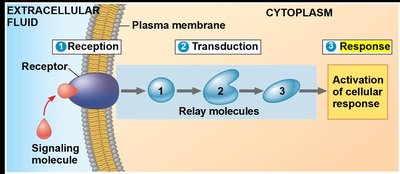
Cell signaling involves three main stages:
Reception: A signaling molecule (ligand) binds to a receptor protein.
Transduction: The receptor changes shape, initiating a cascade of molecular events (signal transduction pathway).
Response: The cell carries out a specific activity, such as gene expression or enzyme activation.
Signal Reception: Receptors and Ligands
Types of Receptors
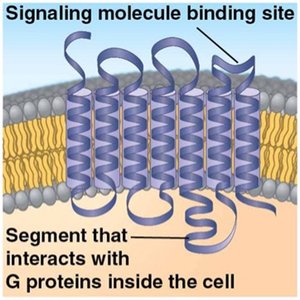
G protein-coupled receptors (GPCRs): Bind hormones and neurotransmitters; activate G proteins inside the cell.
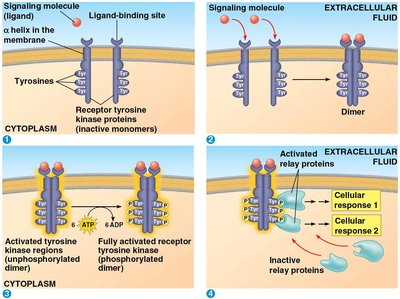
Receptor tyrosine kinases (RTKs): Bind growth factors; trigger phosphorylation cascades.
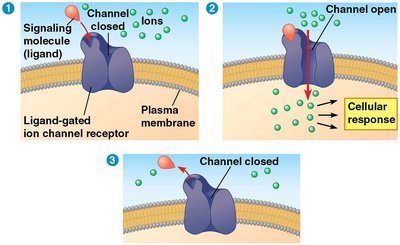
Ion channel receptors: Ligand binding opens or closes ion channels.
Intracellular receptors: Located in the cytoplasm or nucleus; bind lipid-soluble messengers.
G Protein-Coupled Receptors (GPCRs)
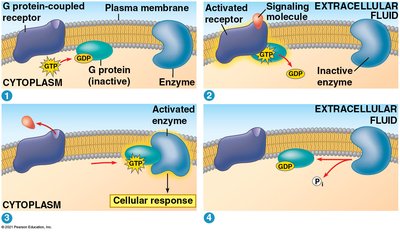
GPCRs are the largest family of cell-surface receptors. They transmit signals by activating G proteins, which bind GTP and relay the signal to other proteins.
G Proteins: Molecular Switches
G proteins alternate between active (GTP-bound) and inactive (GDP-bound) states. When activated by a GPCR, they trigger downstream enzymes and cellular responses.
Receptor Tyrosine Kinases (RTKs)
RTKs are membrane receptors that transfer phosphate groups from ATP to tyrosine residues on proteins. They can activate multiple signaling pathways and are often involved in cell growth and division.
Ligand-Gated Ion Channel Receptors
These receptors open or close in response to ligand binding, allowing specific ions to flow across the membrane and rapidly change the cell's electrical state.
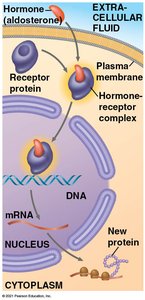
Intracellular Receptors
Found in the cytoplasm or nucleus, these receptors bind small or hydrophobic messengers (e.g., steroid hormones). The hormone–receptor complex often acts as a transcription factor, regulating gene expression.
Signal Transduction Pathways
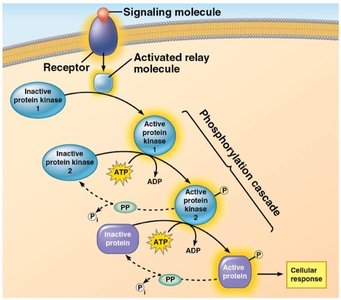
Phosphorylation Cascades
Signal transduction often involves a cascade of protein kinases, each activating the next by phosphorylation. This amplifies the signal and allows for precise regulation.
Second Messengers
Second messengers are small, nonprotein molecules or ions that relay signals inside the cell. Common examples include cyclic AMP (cAMP) and calcium ions (Ca2+).
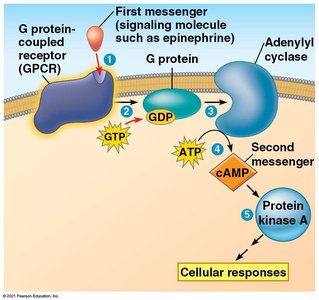
Adenylyl cyclase converts ATP to cAMP.
Phosphodiesterase converts cAMP to AMP, terminating the signal.

cAMP in G Protein Pathways
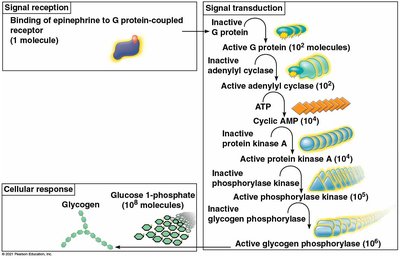
In many pathways, a first messenger (e.g., epinephrine) activates a GPCR, which then activates adenylyl cyclase via a G protein. The resulting cAMP activates protein kinase A, leading to cellular responses.
Cellular Responses to Signals
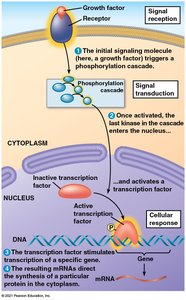
Nuclear Responses
Some signaling pathways regulate gene expression by activating transcription factors, which turn specific genes on or off. This can lead to the synthesis of new proteins.
Cytoplasmic Responses
Other pathways regulate the activity of enzymes or other proteins in the cytoplasm, such as the breakdown of glycogen to glucose in response to epinephrine.
Signal Amplification
A single signaling molecule can trigger a large cellular response due to amplification at each step of the pathway. For example, one epinephrine molecule can lead to the production of millions of glucose-1-phosphate molecules.
Specificity of Cell Signaling
Only cells with the appropriate receptor respond to a given signal. Different cell types may respond differently to the same signal due to variations in their internal proteins and pathways.
Resetting the Signal: Termination
To respond to new signals, activated components must be switched off:
Ligand dissociates from the receptor.
G proteins hydrolyze GTP to GDP.
cAMP is degraded to AMP.
Protein phosphatases remove phosphate groups.
Ion channels close and ions are pumped out.
Insulin Signaling and Diabetes
Insulin Function
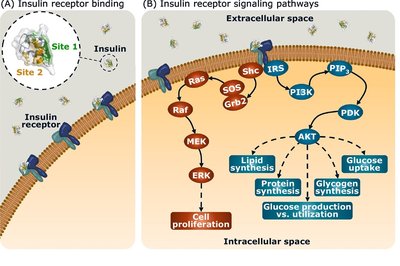
Insulin is a peptide hormone produced by the pancreas. It facilitates the uptake of glucose into muscle and liver cells, where glucose is stored as glycogen. Proper insulin signaling is essential for maintaining blood glucose levels.
Diabetes
Diabetes results from insufficient insulin production or impaired insulin signaling, leading to elevated blood glucose levels. This can cause serious health complications if not managed properly.
Summary Table: Messenger Classes and Receptor Types
Messenger | Solubility | Transport | Receptor Location | Example |
|---|---|---|---|---|
Peptide/Protein | Water-soluble | Free in plasma | Plasma membrane | Insulin |
Steroid | Lipid-soluble | Carrier proteins | Intracellular | Cortisol |
Amine | Varies | Varies | Membrane or nuclear | Epinephrine, thyroid hormone |
Key Concepts and Review Questions
Describe the steps of signal transduction: reception, transduction, response, and reset.
Compare peptide, steroid, and amine messengers in terms of structure, solubility, transport, and receptor interaction.
Explain why only certain cells respond to a specific messenger.
Describe how amplification allows a small signal to produce a large response.
