 Indietro
Cell Communication and Signal Transduction in Biology
Guida di studio - Note intelligenti
 Appunti personalizzati basati sui tuoi materiali, ampliati con definizioni chiave, esempi e contesto.
Cell Communication
Introduction to Cell Signaling
Cell signaling is the process by which cells detect and respond to external signals, allowing them to coordinate activities and adapt to changing environments. This process is essential for multicellular organisms, enabling cells to communicate both locally and over long distances.
External signals are converted into specific cellular responses through a series of steps known as signal transduction pathways.
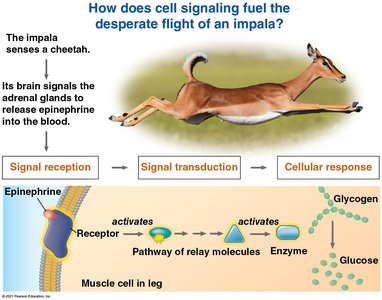
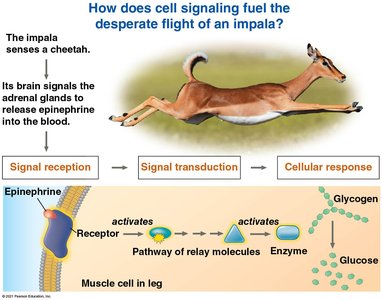
Epinephrine (adrenaline) is a hormone that exemplifies how external signals can trigger rapid physiological responses, such as the breakdown of glycogen in muscle and liver cells during a 'fight or flight' response.
Types of Cell Signaling
Local Signaling
Cells can communicate with their neighbors through direct contact or by releasing signaling molecules that affect nearby cells.
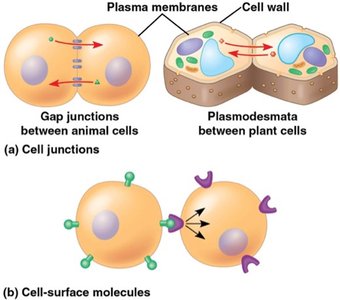
Direct contact: Involves cell junctions (gap junctions in animals, plasmodesmata in plants) or cell-surface molecules that allow communication between adjacent cells.
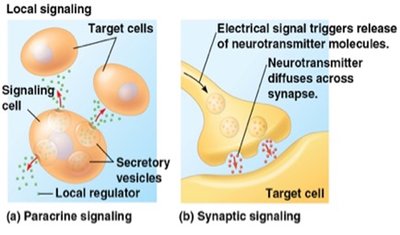
Paracrine signaling: Cells secrete local regulators (e.g., growth factors) that influence nearby target cells.
Synaptic signaling: Neurons release neurotransmitters across synapses to target cells, enabling rapid communication in the nervous system.
Long-Distance Signaling
Hormones are used for long-distance communication, traveling through the bloodstream to reach target cells throughout the body.
Endocrine signaling: Specialized cells release hormones that affect distant target cells.
Only cells with the appropriate receptor can respond to a specific hormone.
Chemical Messengers: Classes and Properties
Types of Chemical Messengers
Chemical messengers are classified based on their structure, solubility, and mechanism of action:
Peptide/Protein hormones: Chains of amino acids, water-soluble, bind to cell-surface receptors (e.g., insulin, oxytocin).
Steroid hormones: Lipids derived from cholesterol, lipid-soluble, bind to intracellular receptors (e.g., cortisol, estrogen).
Amine hormones: Modified amino acids; can be water- or lipid-soluble (e.g., epinephrine is water-soluble, thyroid hormone is lipid-soluble).
Solubility determines how messengers are transported in the blood and where their receptors are located:
Water-soluble messengers travel freely in plasma and bind to cell-surface receptors.
Lipid-soluble messengers travel bound to carrier proteins and diffuse through membranes to bind intracellular receptors.
The Three Stages of Cell Signaling
Overview of Signal Transduction
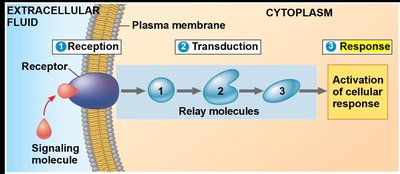
Cell signaling involves three main stages:
Reception: A signaling molecule (ligand) binds to a specific receptor protein on or in the target cell.
Transduction: The receptor changes shape, initiating a cascade of intracellular events (signal transduction pathway).
Response: The cell carries out a specific activity, such as gene expression or metabolic change.
Signal Reception: Receptors and Specificity
Types of Receptors
Receptors are proteins that recognize and bind specific signaling molecules. The main types include:
G protein-coupled receptors (GPCRs): Bind many hormones and neurotransmitters; activate G proteins inside the cell.
Receptor tyrosine kinases (RTKs): Bind growth factors and insulin; trigger phosphorylation cascades.
Ion channel receptors: Ligand-gated channels that open or close in response to signaling molecules, allowing ions to flow across the membrane.
Intracellular receptors: Located in the cytoplasm or nucleus; bind lipid-soluble messengers like steroid and thyroid hormones.
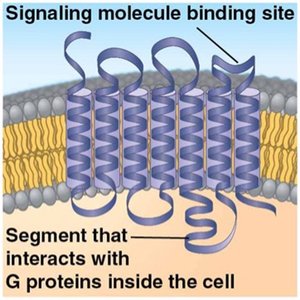
G Protein-Coupled Receptors (GPCRs)
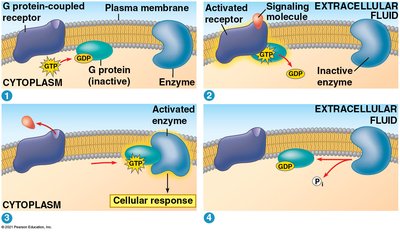
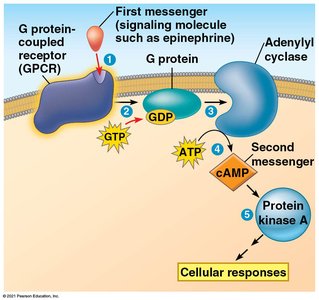
GPCRs are the largest family of cell-surface receptors. They transmit signals by activating G proteins, which act as molecular switches inside the cell.
Inactive G proteins bind GDP; when activated by a receptor, GTP replaces GDP, and the G protein can activate downstream enzymes.
The pathway is reset when GTP is hydrolyzed to GDP.
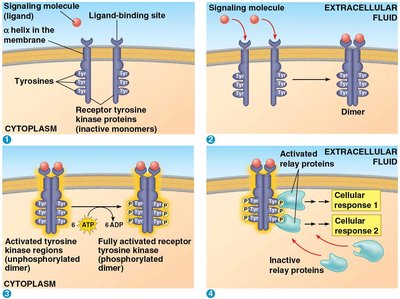
Receptor Tyrosine Kinases (RTKs)
RTKs are membrane receptors that transfer phosphate groups from ATP to tyrosine residues on proteins. They can activate multiple signaling pathways simultaneously and are important in growth and development.
Abnormal RTK function is linked to various cancers.
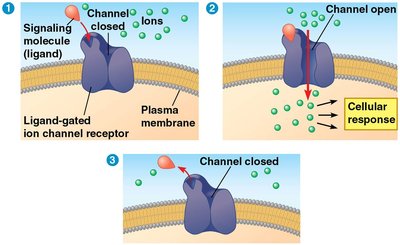
Ligand-Gated Ion Channel Receptors
These receptors act as gates that open or close in response to ligand binding, allowing specific ions to flow into or out of the cell, rapidly changing the cell's internal environment.
Intracellular Receptors
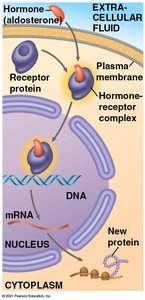
Intracellular receptors bind small or hydrophobic messengers that can cross the plasma membrane. The hormone–receptor complex often acts as a transcription factor, regulating gene expression.
Example: Aldosterone regulates salt and water balance by activating genes in target cells.
Signal Transduction: Cascades and Second Messengers
Phosphorylation Cascades
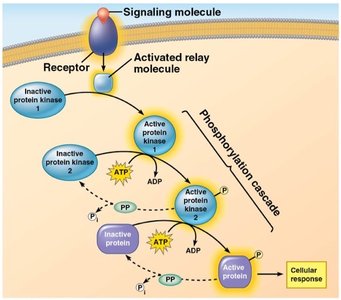
Signal transduction often involves a series of protein kinases that activate each other by phosphorylation, amplifying the signal at each step. Protein phosphatases reverse this process, turning off the signal.
Second Messengers
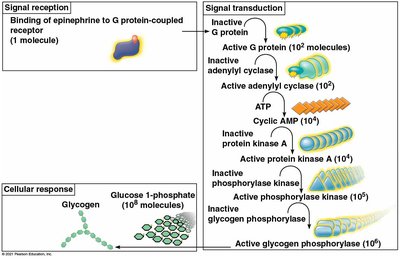
Second messengers are small, nonprotein molecules or ions that relay signals inside the cell. Common examples include cyclic AMP (cAMP) and calcium ions (Ca2+).
Adenylyl cyclase converts ATP to cAMP, which activates protein kinase A and triggers further responses.
Phosphodiesterase converts cAMP to AMP, terminating the signal.

Cellular Responses to Signals
Nuclear Responses
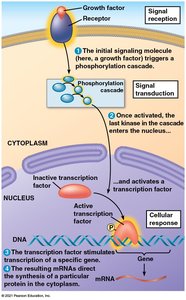
Many signaling pathways regulate gene expression by activating transcription factors in the nucleus, leading to the synthesis of specific proteins.
Example: Growth factors can activate genes involved in cell division.
Cytoplasmic Responses
Other pathways regulate the activity of enzymes or structural proteins in the cytoplasm, leading to rapid changes in cell metabolism or movement.
Example: Epinephrine stimulates the breakdown of glycogen to glucose in muscle cells, providing energy for rapid movement.
Signal Amplification
A single signaling molecule can trigger a large cellular response due to amplification at each step of the pathway. For example, one epinephrine molecule can lead to the production of millions of glucose-1-phosphate molecules.
Specificity and Termination of Signaling
Only cells with the appropriate receptor respond to a given signal. Different cell types may respond differently to the same signal due to variations in their internal proteins. Signaling is terminated by mechanisms such as ligand dissociation, GTP hydrolysis, cAMP breakdown, protein dephosphorylation, and ion pumping.
Case Study: Insulin and Diabetes
Insulin Signaling
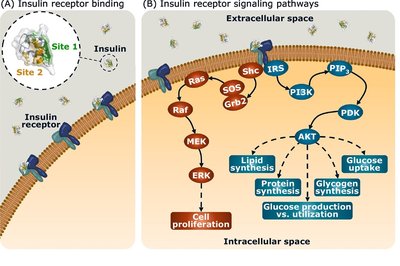
Insulin is a peptide hormone that regulates blood glucose levels by promoting glucose uptake into muscle and liver cells, where it is stored as glycogen. Diabetes results from insufficient insulin production or impaired insulin signaling, leading to elevated blood glucose levels.
Summary Table: Classes of Chemical Messengers
Class | Examples | Structure | Solubility | Transport in Blood | Receptor Location |
|---|---|---|---|---|---|
Peptide/Protein | Insulin, glucagon, oxytocin | Chain of amino acids | Water-soluble | Free in plasma | Plasma membrane |
Steroid | Aldosterone, cortisol, estrogen | Lipid (from cholesterol) | Lipid-soluble | Bound to carrier proteins | Intracellular |
Amine | Epinephrine, norepinephrine, thyroid hormone | Modified amino acid | Epinephrine: water-soluble Thyroid hormone: lipid-soluble | Epinephrine: free Thyroid hormone: carrier-bound | Epinephrine: membrane Thyroid hormone: nuclear |
Key Equations
cAMP formation:
cAMP breakdown:
Review Questions
Which would cause the most problems for a cell-signaling pathway involving a G protein-coupled receptor?
A steroid hormone is bound by an intracellular receptor. The resulting complex is most likely to do what?
Which gives the most complete and correct description of a signal transduction pathway?
There is a lack of ATP present as a signal transduction cascade begins to form. How is this process most likely going to be affected?
