 Indietro
Cell Communication and Signal Transduction: Modes, Mechanisms, and Pathways
Guida di studio - Note intelligenti
 Appunti personalizzati basati sui tuoi materiali, ampliati con definizioni chiave, esempi e contesto.
Cell Communication and Signal Transduction
Introduction to Cell-Cell Signaling
Cell-to-cell signaling is essential for the function and survival of cells, especially in multicellular organisms. It governs processes such as growth, development, and response to environmental stimuli. Communication occurs through the transmission of signals from a sending cell to a receiving cell, utilizing various modes and molecular mechanisms.
Modes of Cell Communication
Direct Contact
Direct contact involves communication between adjacent cells through physical connections or recognition of cell-surface molecules.
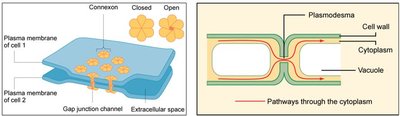
Direct channels of communication: Signaling substances are exchanged directly between the cytoplasms of two adjacent cells via channels.
Animal cells: Use gap junctions (connexons) for direct exchange.
Plant cells: Use plasmodesmata for direct exchange.
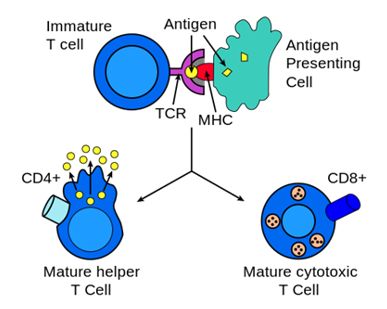
Cell-cell recognition: Complementary cell-surface molecules between adjacent cells interact and bind, facilitating recognition and signaling. Example: receptor/antigen interaction in the immune system.
Local Signaling
Local signaling involves the release of chemical messages that affect nearby cells.
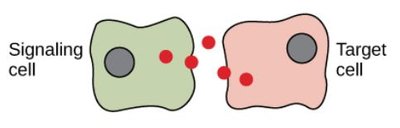
Paracrine signaling: A signaling cell releases local regulators (ligands) that travel a short distance through extracellular fluid to cause a response in a nearby target cell.
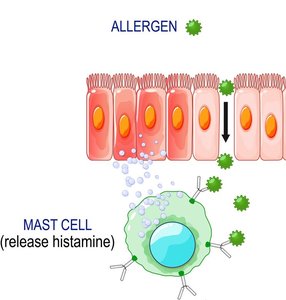
Example: Mast cells release histamine upon exposure to allergens, triggering an inflammatory response in nearby cells.
Synaptic signaling: Occurs in animal nervous systems, where neurons secrete neurotransmitters that diffuse across the synaptic cleft and bind to receptors on the target cell, causing a chemical change.
Autocrine signaling: A cell releases a ligand that binds to receptors on the same cell, allowing self-regulation through feedback mechanisms.
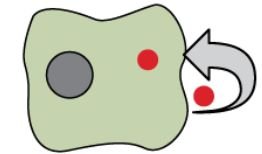
Example: Macrophage cells release cytokines that signal to themselves to regulate activity.
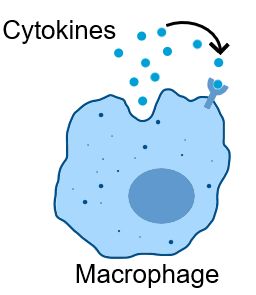
Note: Many signaling molecules can act locally in both paracrine and autocrine pathways.
Long-Distance Signaling
Long-distance signaling utilizes hormones to produce responses in target cells far from the signaling cell.
Plants: Release hormones that travel through vascular tissue (xylem and phloem) or air to reach target tissues.
Animals: Use endocrine signaling, where specialized cells release hormones into the circulatory system to reach distant target cells. Example: Insulin released by the pancreas circulates in the bloodstream and binds to target cells.
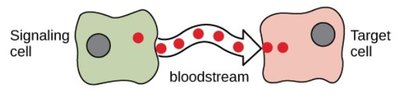
Cell Signaling: Overview
Ligands and Receptors
Cell signaling begins with the interaction between a ligand (chemical messenger) and a receptor (protein that recognizes and binds to the ligand). This binding initiates signaling cascades, which are highly specific and can be found either embedded in the plasma membrane or inside the cell.
Types of Receptors
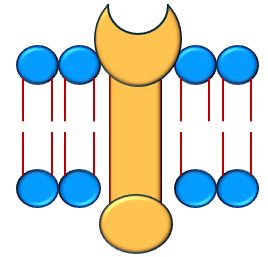
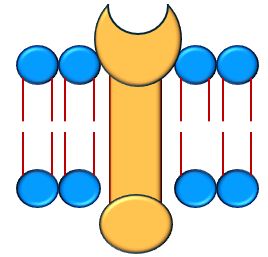
Cell-surface receptors: Located in the plasma membrane; bind to polar, water-soluble, or large ligands. Examples include G protein coupled receptors (GPCRs) and ligand-gated ion channels.
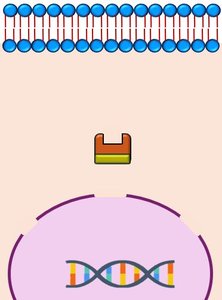
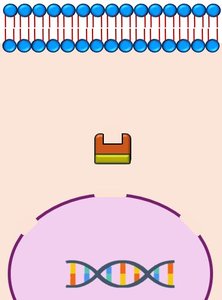
Intracellular receptors: Located in the cytoplasm or nucleus; bind to small, hydrophobic ligands such as steroid hormones and gasses. Most function as transcription factors.
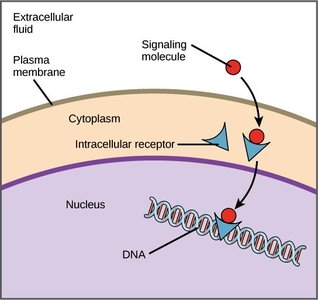
Receptor Domains
Cell-surface receptors: Have three domains: ligand-binding domain, transmembrane domain, and intracellular domain.
Intracellular receptors: Have two domains: ligand-binding domain and DNA-binding domain.
Stages of Cell Signaling
Reception, Transduction, and Response
Cell signaling is divided into three stages:
Reception: Ligand binds to receptor.
Transduction: Extracellular signal is converted into an intracellular response.
Response: A cell process is altered.
The specifics of each stage differ depending on whether the receptor is in the plasma membrane or inside the cell.
Intracellular Receptor Signaling
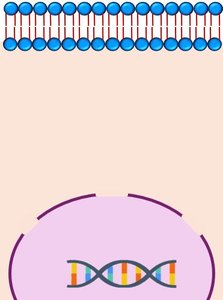
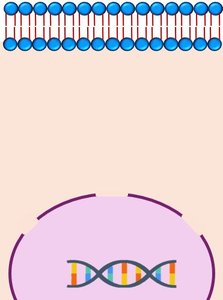
Reception: Ligand (usually a steroid hormone) diffuses across the plasma membrane and binds to an intracellular receptor.
Transduction: Activates the DNA-binding domain of the receptor.
Response: Ligand-receptor complex binds to control regions of target genes, turning genes on or off and altering cell activity.
Cell-Surface Receptor Signaling
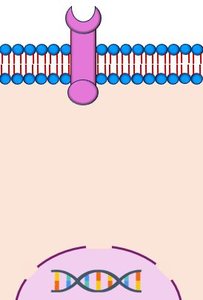
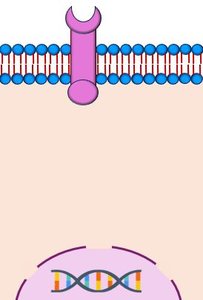
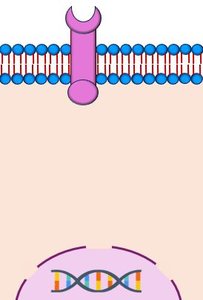
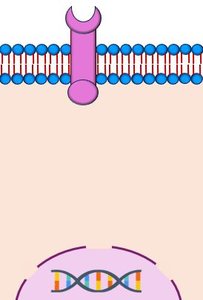
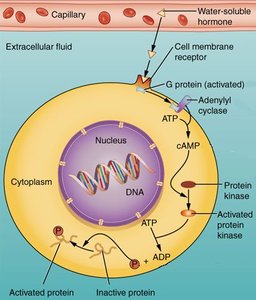
Reception: Ligand binds to the specific cell-surface receptor on the target cell.
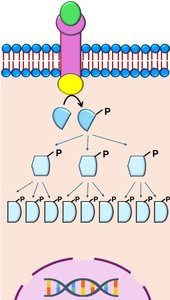
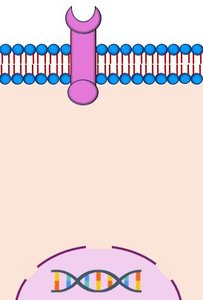
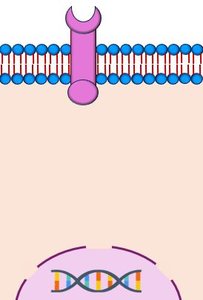
Transduction: Ligand binding activates the receptor via a conformational change, initiating a signaling cascade. Enzymes and second messengers relay and amplify the signal.
Response: The final molecule in the pathway converts the signal to a response that alters a cellular process (e.g., cell growth, secretion, gene expression).
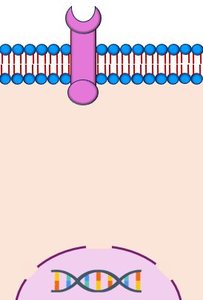
Cross Talk in Signaling Pathways
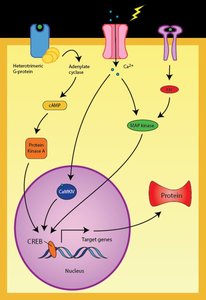
Signaling pathways often interact, a phenomenon known as cross talk. Proteins in one pathway may affect another, and some cellular responses require multiple signals. This interconnectedness allows for complex regulation and integration of cellular activities.
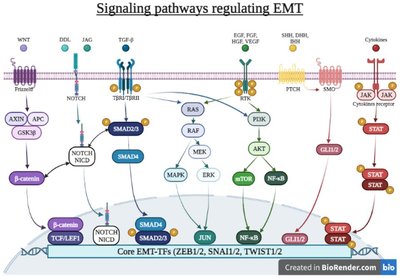
Signal Transduction Pathways and Cellular Responses
Signal transduction pathways influence how a cell responds to its environment, including changes in gene expression, cell function, phenotype, or cell death (apoptosis). Mutations in receptor proteins or pathway components can alter signal transduction, leading to diseases such as cancer and diabetes.
Important Cell-Surface Receptors
G Protein Coupled Receptors (GPCRs)
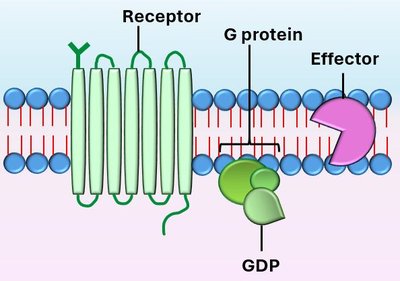
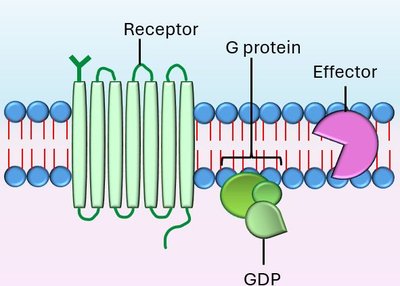
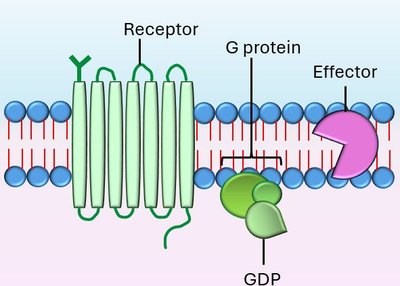
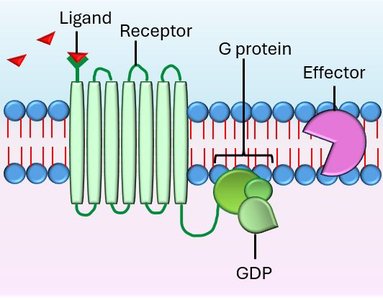
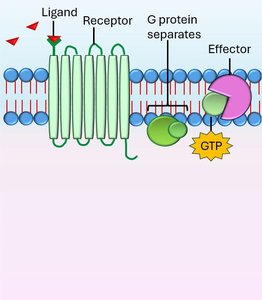
GPCRs are the largest category of cell surface receptors and are crucial in animal sensory systems. They activate G proteins, which relay signals to effectors and produce second messengers, leading to cellular responses.
Receptor Tyrosine Kinases (RTKs)
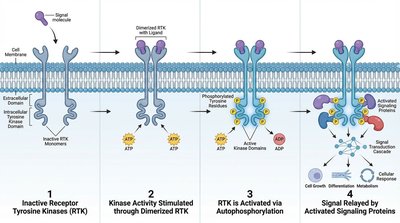
RTKs are a major class of receptors with enzymatic activity. They activate multiple signal transduction pathways simultaneously, regulating cell growth and reproduction. Ligand binding causes dimerization and autophosphorylation, triggering downstream signaling.
Ion Channels
Ligand-gated ion channels are plasma membrane receptors that act as gates for ions. Ligand binding opens or closes the channel, allowing ion diffusion and initiating cellular responses. These channels are especially important in the nervous system.
Summary Table: Modes of Cell Communication
Mode | Mechanism | Example |
|---|---|---|
Direct Contact | Gap junctions (animals), plasmodesmata (plants), cell-surface recognition | Immune cell antigen recognition |
Local Signaling | Paracrine, synaptic, autocrine | Histamine release, neurotransmitter signaling, cytokine feedback |
Long-Distance Signaling | Hormones via circulatory system | Insulin signaling |
Key Terms and Concepts
Ligand: A molecule that binds to a receptor to initiate a signal.
Receptor: A protein that recognizes and binds to a ligand.
Signal transduction: The process of converting an extracellular signal into an intracellular response.
Second messenger: Small molecules or ions that relay and amplify signals inside the cell (e.g., cAMP, Ca2+).
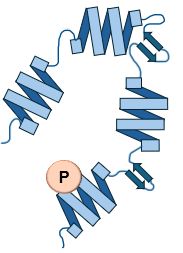
Protein kinase: Enzyme that transfers phosphate groups to proteins, altering their activity.
Protein phosphatase: Enzyme that removes phosphate groups, resetting protein activity.
Important Equations
Phosphorylation reaction:
Dephosphorylation reaction:
Summary
Cell communication is a fundamental process in biology, involving direct contact, local, and long-distance signaling. The mechanisms of signal transduction are highly regulated and involve a variety of receptors, enzymes, and second messengers. Understanding these pathways is crucial for comprehending cellular responses, development, and disease.
