 Indietro
Cell Communication and Signal Transduction: Modes, Mechanisms, and Pathways
Guida di studio - Note intelligenti
 Appunti personalizzati basati sui tuoi materiali, ampliati con definizioni chiave, esempi e contesto.
Cell Communication and Signal Transduction
Introduction to Cell Signaling
Cell-to-cell signaling is essential for the function and survival of cells, especially in multicellular organisms. It governs growth, development, and responses to environmental cues by transmitting signals from a sending cell to a receiving cell.
Cell communication is responsible for coordinating activities such as tissue development, immune responses, and homeostasis.
Signals can be transmitted via direct contact, local signaling, or long-distance signaling.
Modes of Cell Communication
Direct Contact
Direct contact involves communication between adjacent cells through physical connections or recognition of cell-surface molecules.
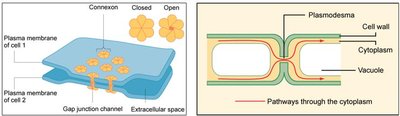
Direct channels of communication: Signaling substances exchange directly between the cytoplasms of two adjacent cells via channels.
Animal cells use gap junctions (connexons), while plant cells use plasmodesmata.
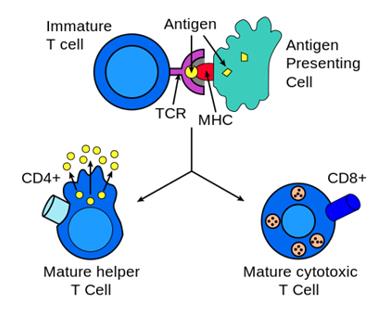
Cell-cell recognition: Complementary cell-surface molecules interact and bind, such as receptor/antigen interactions in the immune system.
Local Signaling
Local signaling occurs when cells communicate over short distances.
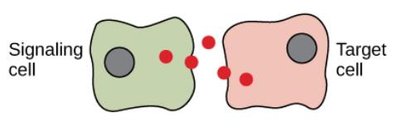
Paracrine signaling: A signaling cell releases chemical messages (local regulators/ligands) that travel a short distance and cause a response in a nearby target cell.
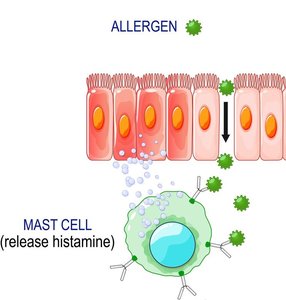
Example: Mast cells release histamine upon exposure to allergens, triggering an inflammatory response in nearby cells.
Synaptic signaling: Specialized paracrine signaling in animal nervous systems. Neurons secrete neurotransmitters that diffuse across the synaptic cleft and bind to receptors on the target cell, causing a chemical change.
Autocrine signaling: A cell releases a ligand that binds to receptors on the same cell, allowing self-regulation through feedback mechanisms.
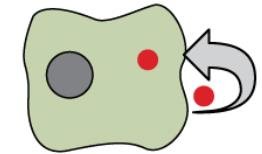
Example: Macrophages release cytokines that can signal to themselves to regulate activity.
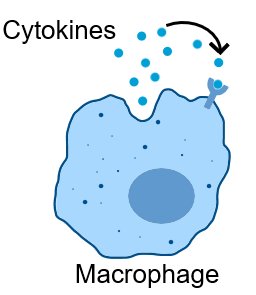
Long-Distance Signaling
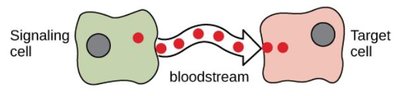
Long-distance signaling involves hormones that travel to target cells far from the signaling cell.
Plants: Hormones travel through vascular tissue (xylem and phloem) or air.
Animals: Endocrine signaling releases hormones into the circulatory system, reaching distant target cells.
Example: Insulin released by the pancreas circulates in the bloodstream and binds to target cells throughout the body.
Cell Signaling: Overview
Ligands and Receptors
Cell signaling begins with the interaction between a ligand (chemical messenger) and a receptor (protein that recognizes and binds the ligand).
Ligands: Can be peptides, small molecules, hormones, gases, or neurotransmitters.
Receptors: Highly specific proteins that initiate signaling cascades upon ligand binding.
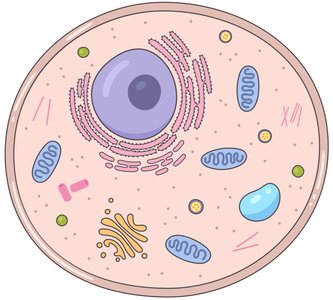
Receptors are located either in the plasma membrane (cell-surface receptors) or inside the cell (cytoplasm or nucleus).
Cell-Surface Receptors
Cell-surface receptors are the most common type involved in signal pathways.
Bind to ligands that are polar, water-soluble, or large.
Examples include G protein coupled receptors (GPCRs) and ligand-gated ion channels.
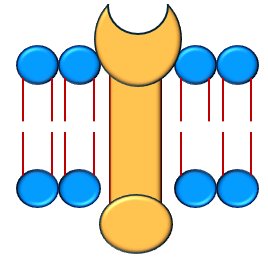
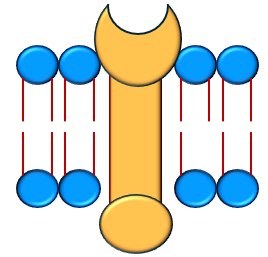
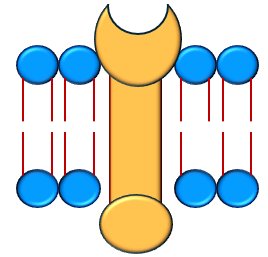
Surface receptors have three domains: ligand-binding domain, transmembrane domain, and intracellular domain.
Intracellular Receptors
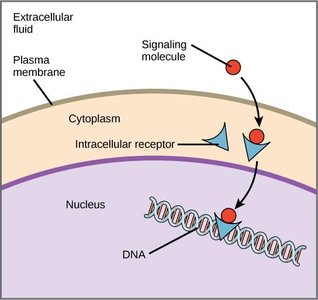
Intracellular receptors are found in the cytoplasm or nucleus and bind ligands that can pass through the plasma membrane, such as steroid hormones and gases.
Most function as transcription factors, directly affecting gene expression.
Intracellular receptors have two domains: ligand-binding domain and DNA-binding domain.
Stages of Cell Signaling
Reception, Transduction, and Response
Cell signaling is divided into three stages:
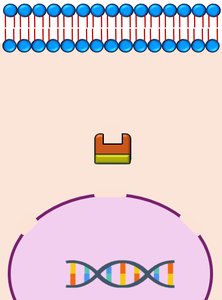
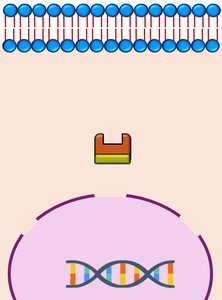
Reception: Ligand binds to receptor.
Transduction: Extracellular signal is converted into an intracellular response.
Response: A cell process is altered.
Intracellular Receptor Pathway
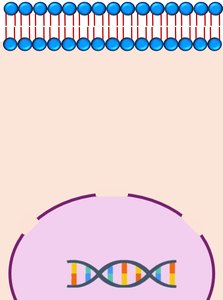
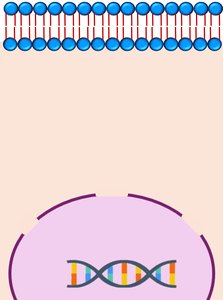
Ligand (often a steroid hormone) diffuses across the plasma membrane and binds to an intracellular receptor.
Binding activates the DNA-binding domain of the receptor.
The ligand-receptor complex binds to control regions of target genes, turning genes on or off and altering cell activity.
Cell-Surface Receptor Pathway
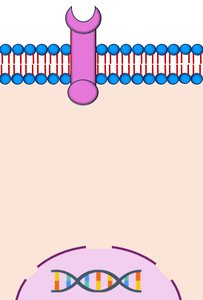
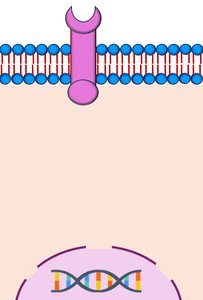
Reception: Ligand binds to the cell-surface receptor.
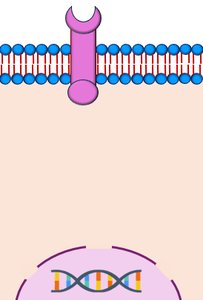
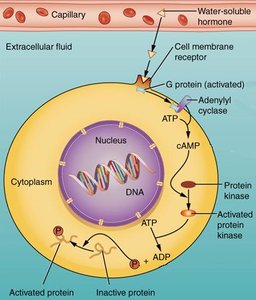
Transduction: Receptor activates via conformational change, initiating a signaling cascade. Enzymes and second messengers relay and amplify the signal.
Protein kinases: Enzymes that transfer phosphate groups from ATP to proteins, changing their shape and activity.
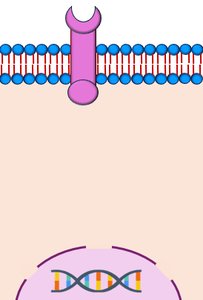
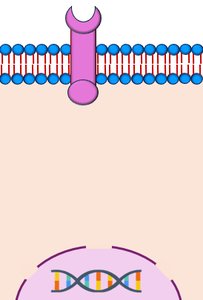
Protein phosphatases: Enzymes that remove phosphate groups, returning proteins to their baseline state and regulating kinase activity.
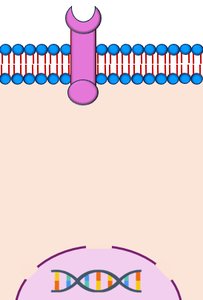
Phosphorylation acts as a molecular switch, altering protein function.
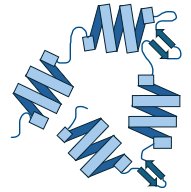
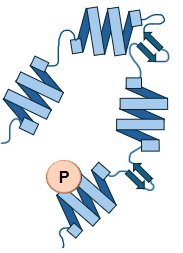
Activated kinases can amplify the signal by acting on many proteins.
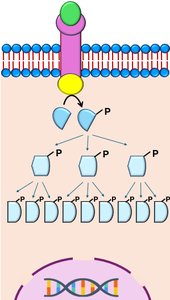
Second messengers (e.g., cyclic AMP, Ca2+) rapidly diffuse and amplify the signal.
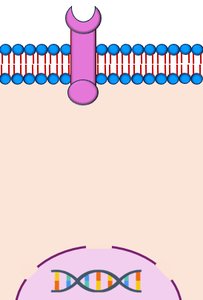
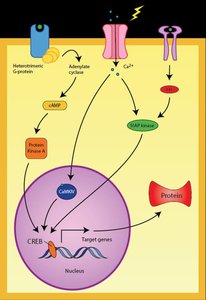
Response: The final molecule in the pathway alters a cellular process, such as cell growth, secretion, or gene expression.
Cross Talk in Signaling Pathways
Pathway Interactions
Signaling pathways often interact, a phenomenon known as cross talk.
Proteins in one pathway may affect proteins in another.
Gene transcription may require multiple signals.
Pathways form a complex network, similar to a city's interconnected roads.
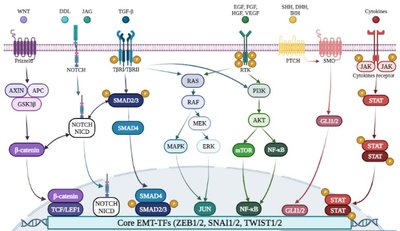
Signal Transduction Pathways and Cellular Responses
Influence on Cell Function
Signal transduction pathways determine how a cell responds to its environment, affecting gene expression, cell function, phenotype, and cell death (apoptosis).
Mutations in receptor proteins or pathway components can alter signal transduction, leading to diseases such as cancer and diabetes.
Important Cell-Surface Receptors
G Protein Coupled Receptors (GPCRs)
GPCRs are the largest category of cell-surface receptors and are crucial in animal sensory systems.
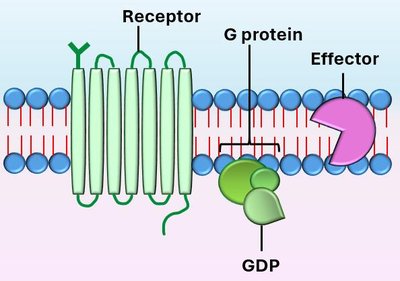
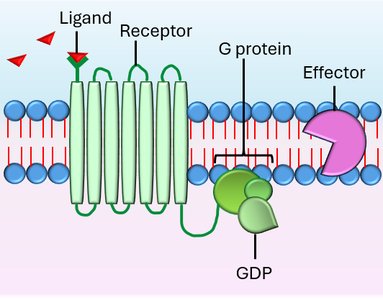
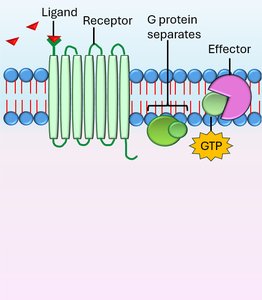
GPCRs activate G proteins, which regulate downstream effectors and produce second messengers.
Ligand binding activates the GPCR, causing a conformational change and exchange of GDP for GTP in the G protein.
The activated G protein binds to an effector, leading to the production of second messengers and activation of protein kinases, resulting in a cellular response.
Ion Channels
Ligand-gated ion channels are plasma membrane receptors that act as gates for ions.
Ligand binding opens or closes the gate, allowing diffusion of specific ions and initiating a cellular response.
These channels are especially important in the nervous system.
Summary Table: Modes of Cell Communication
Mode | Mechanism | Example |
|---|---|---|
Direct Contact | Gap junctions (animals), plasmodesmata (plants), cell-surface recognition | Immune cell antigen recognition |
Local Signaling | Paracrine, synaptic, autocrine | Histamine release, neurotransmitter signaling, cytokine feedback |
Long-Distance Signaling | Hormones via circulatory system | Insulin signaling |
Key Terms and Concepts
Ligand: A molecule that binds to a receptor to initiate signaling.
Receptor: Protein that recognizes and binds ligands.
Signal transduction: Conversion of an extracellular signal to an intracellular response.
Protein kinase: Enzyme that adds phosphate groups to proteins.
Protein phosphatase: Enzyme that removes phosphate groups from proteins.
Second messenger: Small molecules or ions that amplify the signal inside the cell.
GPCR: G protein coupled receptor, a major cell-surface receptor.
Ion channel: Membrane protein that allows ions to pass in response to ligand binding.
Practice Example
Question: How would a defective protein phosphatase affect a signal transduction pathway?
Answer: A defective protein phosphatase would fail to remove phosphate groups from proteins, resulting in prolonged or uncontrolled activation of signaling pathways, which could contribute to diseases such as cancer or diabetes.
Equations
Phosphorylation reaction:
Dephosphorylation reaction:
Additional info:
Cell signaling is a foundational concept in biology, underlying processes such as development, immunity, and homeostasis.
Understanding signaling pathways is critical for interpreting how cells respond to their environment and for medical applications.
