 Indietro
Cell Communication and Signal Transduction: Study Notes for General Biology
Guida di studio - Note intelligenti
 Appunti personalizzati basati sui tuoi materiali, ampliati con definizioni chiave, esempi e contesto.
Cell Communication and Signal Transduction
Overview of Cell Communication
Cell communication is essential for multicellular organisms to coordinate activities and respond to environmental changes. Cells communicate via signals that are detected by receptors, leading to a series of events known as signal transduction.
Signal: Usually a molecule (ligand), but can also be electrical (voltage change).
Receptor: Protein that detects the signal; can be located in the plasma membrane, cytoplasm, or nucleus.
Stages: Reception → Transduction → Response.
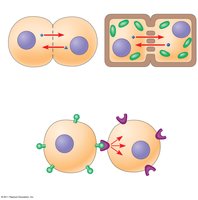
Direct Cell Communication
Cells can communicate directly through specialized structures.
Gap Junctions: Channels between animal cells allowing ions and small molecules to pass directly.
Plasmodesmata: Channels between plant cells for direct cytoplasmic exchange.
Cell-Cell Recognition: Surface proteins interact to transmit signals.
Local and Long-Distance Signaling
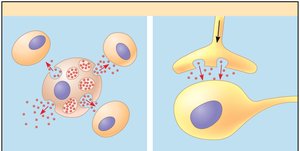
Cells can communicate locally or over long distances.
Paracrine Signaling: Local regulators diffuse to nearby cells.
Synaptic Signaling: Neurotransmitters released at synapses between nerve cells.
Endocrine Signaling: Hormones travel through the bloodstream to distant cells (not shown in images).
Types of Cell Surface Receptors
Receptors are classified based on their location and mechanism.
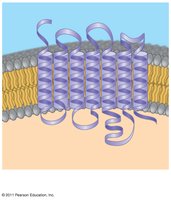
Transmembrane Receptors: Span the plasma membrane, linking extracellular and intracellular environments.
Major Types:
G protein-coupled receptors (GPCRs)
Receptor tyrosine kinases (RTKs)
Ion channel receptors
Intracellular Receptors: Located in cytoplasm or nucleus; bind hydrophobic ligands.
G Protein-Coupled Receptors (GPCRs)
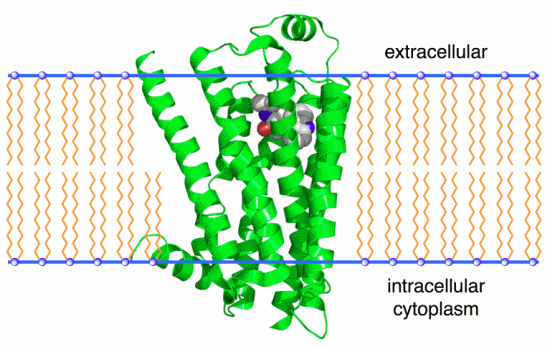
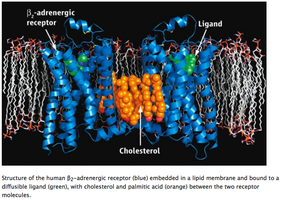
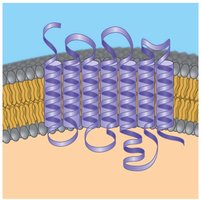
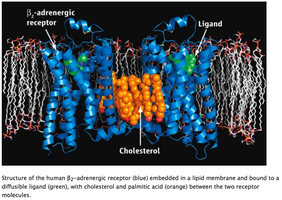
GPCRs are the largest family of cell-surface receptors, involved in many signaling pathways.
Structure: Seven transmembrane domains.
Function: Bind signaling molecules (ligands) and activate G proteins inside the cell.
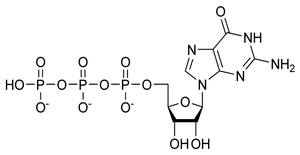
G Proteins: Bind GTP (active) or GDP (inactive); act as molecular switches.
GTP and GDP
GTP: Guanosine triphosphate, similar to ATP, used as energy source.
GDP: Guanosine diphosphate, inactive form.
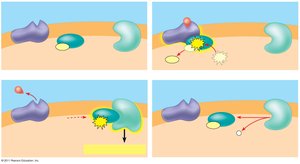
Signal Transduction via GPCRs
Ligand binds to GPCR, causing a conformational change.
Activated receptor interacts with G protein, exchanging GDP for GTP.
G protein activates target enzymes, leading to cellular responses.
Receptor Tyrosine Kinases (RTKs)
RTKs are another major class of membrane receptors.
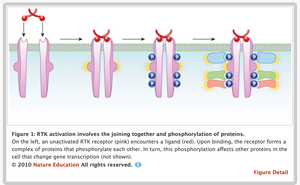
Structure: Single transmembrane helix; cytoplasmic domain contains tyrosine residues.
Activation: Ligand binding causes dimerization and autophosphorylation of tyrosines.
Function: Phosphorylated tyrosines serve as docking sites for relay proteins, triggering multiple cellular responses.
Kinase: Enzyme that transfers phosphate groups from ATP to proteins.
Ligand-Gated Ion Channel Receptors
Ligand binding opens or closes ion channels in the membrane.
Allows specific ions (e.g., Na+, K+, Ca2+) to flow into or out of the cell, altering cell activity.
Intracellular Receptors and Gene Regulation
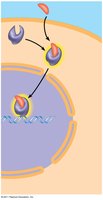
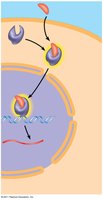
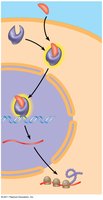
Located in cytoplasm or nucleus; bind hydrophobic ligands (e.g., steroid hormones).
Hormone-receptor complex acts as a transcription factor, regulating gene expression.
Transcription factors bind DNA to increase or decrease transcription of specific genes.
Signal Transduction Cascades
Signal transduction often involves cascades of molecular interactions, amplifying and regulating the response.
Phosphorylation Cascade: Series of kinases activate each other by phosphorylation.
Phosphatases: Enzymes that remove phosphate groups, turning off the signal.
Benefits: Amplification, coordination, and regulation of cellular responses.
Second Messengers
Second messengers are small, nonprotein molecules that relay signals inside the cell.
Common Second Messengers: Cyclic AMP (cAMP), calcium ions (Ca2+).
cAMP Formation: Adenylyl cyclase converts ATP to cAMP in response to external signals.
Calcium Ions: Concentration regulated by pumps; rapid changes trigger various cellular responses.
Examples of Signal Transduction Outcomes
Gene Expression
Signal transduction can activate transcription factors, leading to synthesis of new proteins.
Modification of Existing Proteins
Signal transduction can modify proteins already present in the cell, such as enzymes involved in glycogen breakdown.
Each step amplifies the signal, resulting in a large cellular response.
Summary Table: Types of Cell Signaling and Receptors
Type of Signaling | Distance | Example |
|---|---|---|
Direct (Gap Junctions/Plasmodesmata) | Adjacent cells | Heart muscle, plant cells |
Paracrine | Local | Growth factors |
Synaptic | Local | Neurotransmitters |
Endocrine | Long-distance | Hormones |
Receptor Type | Location | Ligand Type | Example |
|---|---|---|---|
GPCR | Membrane | Hydrophilic | Adrenaline |
RTK | Membrane | Hydrophilic | Insulin |
Ion Channel | Membrane | Hydrophilic | Acetylcholine |
Intracellular | Cytoplasm/Nucleus | Hydrophobic | Testosterone |
Key Terms and Definitions
Ligand: A molecule that binds to a receptor to initiate a signal.
Receptor: Protein that detects and responds to a signal.
Kinase: Enzyme that adds phosphate groups to proteins.
Phosphatase: Enzyme that removes phosphate groups from proteins.
Second Messenger: Small molecule that relays signals inside the cell.
Transcription Factor: Protein that regulates gene expression by binding DNA.
Additional info:
Cell signaling is covered in General Biology under chapters such as Ch.5 (Membrane Transport and Cell Signaling), Ch.37 (Neurons, Synapses, and Signaling), and Ch.14 (Gene Expression: From Gene to Protein).
Images included are directly relevant to the explanation of cell communication, receptor types, and signal transduction pathways.
