 Indietro
Cell Communication and Signaling (Chapter 11) - General Biology Study Notes
Guida di studio - Note intelligenti
 Appunti personalizzati basati sui tuoi materiali, ampliati con definizioni chiave, esempi e contesto.
Cell Communication
Introduction to Cell Signaling
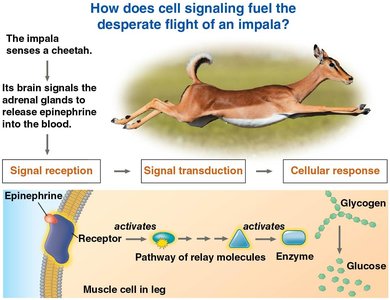
Cell communication is essential for the coordination of physiological processes in multicellular organisms. It allows cells to respond to external and internal signals, facilitating survival, development, and adaptation. - Cell signaling refers to the mechanisms by which cells detect, process, and respond to signals from their environment or other cells. - Fight-or-flight response is an example of cell signaling, where hormones trigger rapid physiological changes. 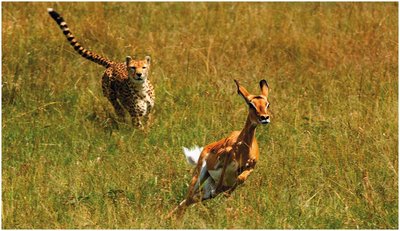
Evolution of Cell Signaling
Cell signaling mechanisms evolved early in prokaryotes and single-celled eukaryotes and were adapted for multicellular organisms. - Quorum sensing is a process where bacteria sense population density using signaling molecules. - Biofilms are aggregations of bacterial cells adhering to surfaces, often formed via quorum sensing. 
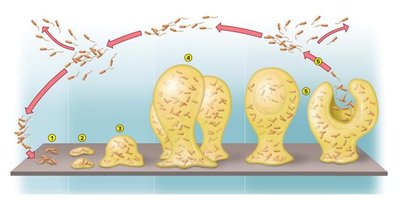 - Interfering with quorum sensing can be a strategy to combat bacterial infections.
Cell Signaling in Unicellular Eukaryotes
- Saccharomyces cerevisiae (yeast) uses signaling molecules to locate mating partners, initiating a signal transduction pathway. - Molecular details of signal transduction are conserved across yeasts and mammals. 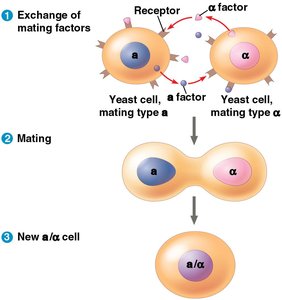
Types of Cell Signaling
Direct Contact Signaling
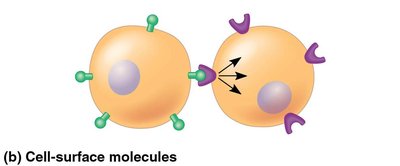
Cells can communicate via direct contact, using cell junctions or surface molecules. - Gap junctions (animal cells) and plasmodesmata (plant cells) allow free passage of substances between adjacent cells. - Direct contact is crucial in embryonic development, immune response, and stem cell maintenance. 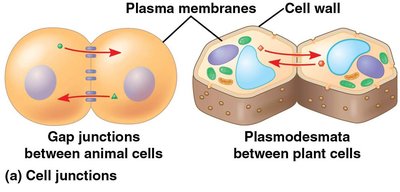 - Animal cells may also communicate via cell-surface molecules.
Local Signaling
Local signaling involves communication between nearby cells. - Paracrine signaling: Cells release local regulators (e.g., growth factors) that affect nearby cells. - Synaptic signaling: Involves neurotransmitters released in response to electrical signals, crucial in nervous system function.
Long-Distance Signaling
- Endocrine signaling: Specialized cells release hormones that travel through the bloodstream to distant target cells. - The ability of a cell to respond depends on the presence of specific receptors. 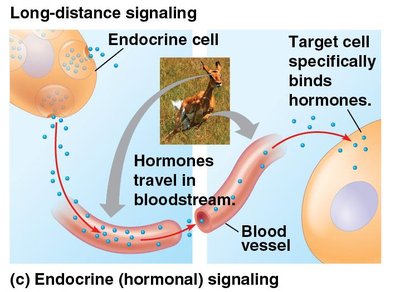
The Three Stages of Cell Signaling
Overview of Cell Signaling
Cell signaling typically involves three stages: 1. Signal Reception: Detection of a signaling molecule by a receptor. 2. Signal Transduction: Conversion of the signal into a form that can bring about a cellular response, often through a series of steps. 3. Cellular Response: The final action taken by the cell in response to the signal. 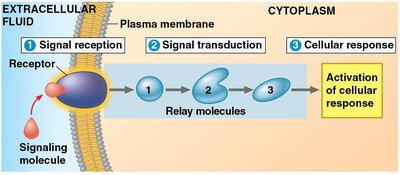
Reception: Signal Molecule Binding
- Ligand: A signaling molecule that binds specifically to a receptor. - Binding causes a shape change in the receptor, initiating signal transduction. - Most receptors are plasma membrane proteins; some are intracellular.
Types of Plasma Membrane Receptors
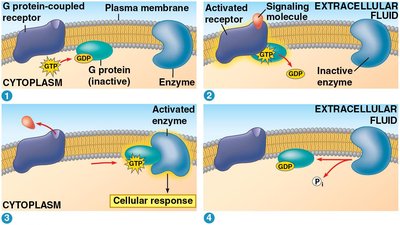
G protein-coupled receptors (GPCRs): Activated by binding GTP, involved in many signaling pathways.
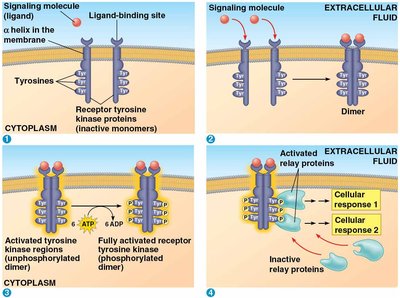
Receptor tyrosine kinases: Catalyze transfer of phosphate groups from ATP to proteins, triggering multiple pathways.
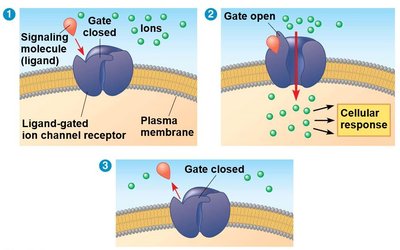
Ion channel receptors: Act as gates for ions, opening or closing in response to ligand binding.
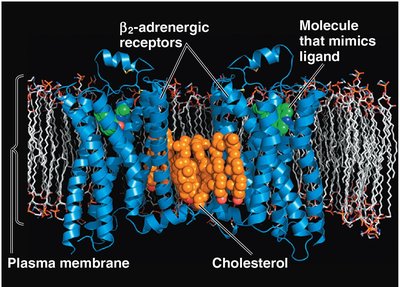
Intracellular Receptors
- Located in the cytosol or nucleus. - Activated by small or hydrophobic messengers (e.g., steroid and thyroid hormones). - The hormone-receptor complex acts as a transcription factor, regulating gene expression. 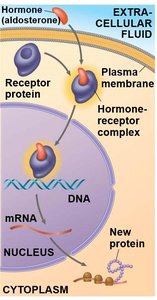
Transduction: Signal Relay and Amplification
Signal Transduction Pathways
- Signal transduction often involves multiple steps, amplifying the signal and allowing regulation. - Each step typically involves a shape change in a protein. 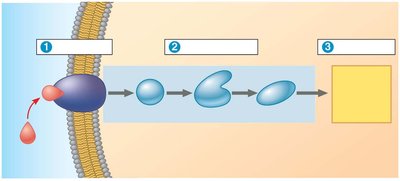
Protein Phosphorylation and Dephosphorylation
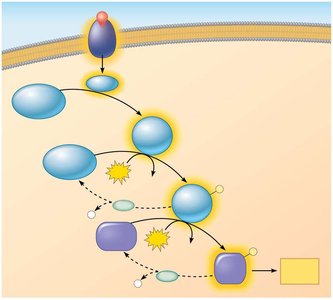
- Protein kinases add phosphate groups to proteins (phosphorylation), activating them. - Protein phosphatases remove phosphate groups (dephosphorylation), inactivating proteins. - This system acts as a molecular switch, regulating cellular activities.
Second Messengers
Second messengers are small, nonprotein, water-soluble molecules or ions that spread throughout the cell by diffusion. - Common second messengers: Cyclic AMP (cAMP) and calcium ions (Ca2+). 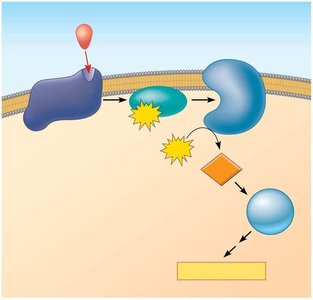

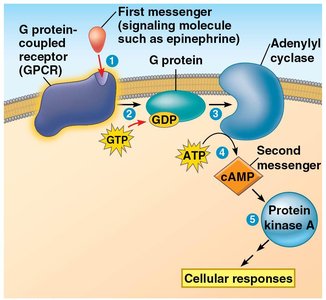
Cyclic AMP (cAMP)
- Produced from ATP by adenylyl cyclase. - Activates protein kinase A, which phosphorylates other proteins.
Role in Disease
- Vibrio cholerae toxin modifies G protein, causing continuous cAMP production, leading to excessive salt and water loss in intestinal cells. 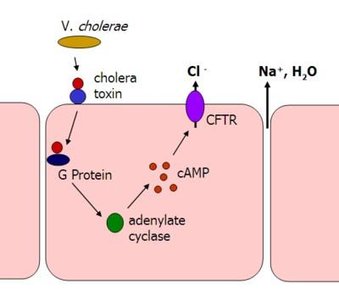
Calcium Ions and Inositol Triphosphate (IP3)
- Ca2+ is a widely used second messenger. - IP3 and diacylglycerol (DAG) are produced by cleavage of membrane phospholipids and help release Ca2+ from intracellular stores. 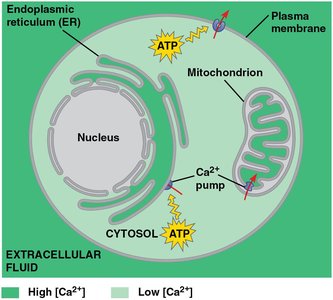
Cellular Response
Types of Output Responses
The cell's response to a signal is called the output response, which can be nuclear or cytoplasmic. - Nuclear response: Regulation of gene expression via transcription factors. - Cytoplasmic response: Regulation of protein activity or metabolic pathways.
Regulation of the Response
Four aspects of signal regulation: 1. Amplification: Each step increases the number of activated molecules. 2. Specificity: Different cells respond differently to the same signal due to unique protein collections. 3. Efficiency: Scaffolding proteins group pathway components, increasing efficiency. 4. Termination: Inactivation mechanisms ensure signals are not perpetuated indefinitely.
Apoptosis: Programmed Cell Death
Mechanism and Importance
- Apoptosis is programmed cell death, essential for development and maintenance. - Cells undergoing apoptosis fragment their DNA and organelles, shrink, and package their contents for digestion by other cells, preventing damage to neighbors.
- Apoptosis is triggered by internal signals (e.g., DNA damage) or external signals. - Interference with apoptosis can contribute to cancer. Additional info: Apoptosis is also crucial for immune system function and removal of damaged cells. ----------------------------------------
