 Indietro
Cell Communication and Signaling Pathways: Study Notes for General Biology
Guida di studio - Note intelligenti
 Appunti personalizzati basati sui tuoi materiali, ampliati con definizioni chiave, esempi e contesto.
Cell Communication
Overview of Cell Signaling
Cell communication is essential for multicellular life, enabling cells to coordinate activities and respond to environmental changes. Cells communicate through direct contact, local signals, or hormones, and signaling involves a sequence of reception, transduction, and response.
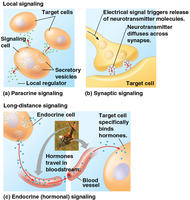
Direct Contact: Gap junctions (animals) and plasmodesmata (plants) allow exchange of molecules. Tight junctions and desmosomes physically hold cells together.
Local Signaling: Paracrine signaling affects nearby cells (e.g., growth factors), while synaptic signaling uses neurotransmitters across synapses.
Endocrine Signaling: Hormones travel long distances via the bloodstream to target cells with specific receptors.
Hormones and Receptors
Hormones are signaling ligands that bind to specific receptors on target cells, causing a change in receptor shape and triggering a cellular response. There are two major classes:
Lipid-soluble hormones: Cross the cell membrane and bind to intracellular receptors.
Lipid-insoluble hormones: Cannot cross the membrane; bind to cell-surface receptors.
Signal Transduction Pathways
Reception, Transduction, and Response
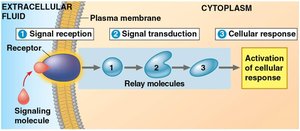
Cell signaling follows a pattern: reception (signal detected), transduction (signal relayed and amplified), and response (cellular change).
Reception: A signaling molecule binds to a receptor protein.
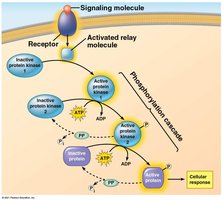
Transduction: Relay molecules transmit and amplify the signal inside the cell.
Response: Activation of cellular processes.
Example: Glycogen Breakdown by Epinephrine
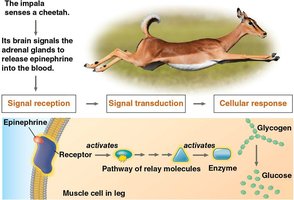
When an impala senses a cheetah, its brain signals the adrenal glands to release epinephrine. Epinephrine binds to receptors in muscle cells, triggering a cascade that results in glycogen breakdown and glucose release for energy.
Signal Amplification: One epinephrine molecule can cause the breakdown of many glycogen molecules.
G-Protein Coupled Receptor (GPCR) Signaling
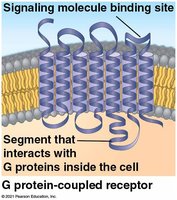
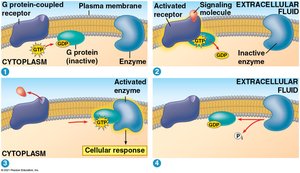
GPCRs are a major class of cell-surface receptors.
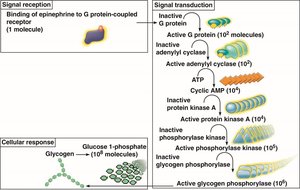
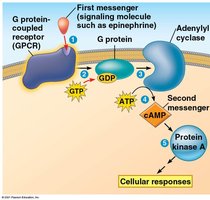
Reception: Ligand binds to GPCR.
Transduction: GPCR activates G protein, which then activates adenylyl cyclase.
Second Messenger: Adenylyl cyclase converts ATP to cAMP, which activates protein kinase A (PKA).
Response: Cellular changes such as glycogen breakdown.
Second Messengers
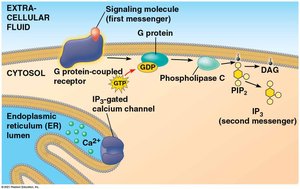
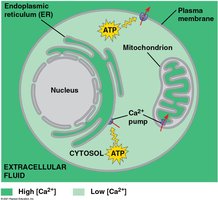
Second messengers are small, water-soluble molecules or ions that rapidly diffuse inside cells, amplifying the signal.
cAMP: Produced from ATP by adenylyl cyclase; activates downstream responses.
Other examples: Ca2+, IP3.

Cellular Responses and Signal Integration
Cell-Specific Responses
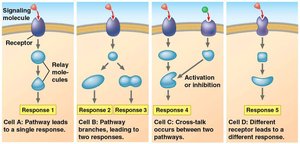
The response to a signal depends on the cell type and the receptors expressed. The same hormone can trigger different responses in different tissues. Pathway branching and cross-talk allow integration of multiple signals.
Modify Existing Proteins: Rapid response via phosphorylation.
Change Gene Expression: Slower response, alters protein synthesis.
Receptor Tyrosine Kinases (RTKs)
RTK Signaling in Cell Division
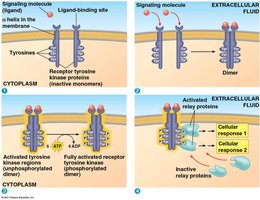
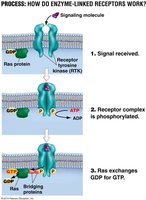
RTKs are enzyme-linked receptors involved in cell growth and division.
Reception: Ligand binding causes dimerization and autophosphorylation of tyrosines.
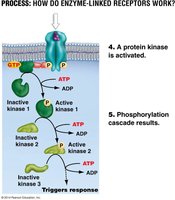
Transduction: Adaptor proteins link RTK to Ras, triggering a phosphorylation cascade.
Response: Cell division and growth.
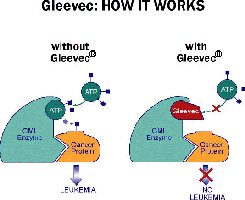
Dysregulation: Overactive RTKs can lead to uncontrolled cell division (cancer).
Other Signaling Mechanisms
Ligand-Gated Ion Channels
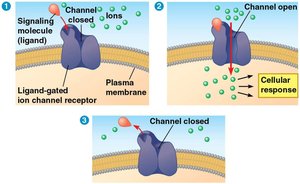
Ligand-gated ion channels open in response to ligand binding, allowing ions to flow across the membrane and rapidly converting chemical signals to electrical responses.
Example: Neuron-to-muscle signaling for contraction (Na+ / Ca2+ influx).
Intracellular Receptors
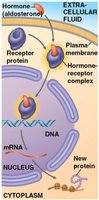
Intracellular receptors are located in the cytoplasm or nucleus and bind small or hydrophobic hormones. The hormone–receptor complex acts as a transcription factor, changing gene expression.
Example: Aldosterone regulates blood pressure.
Apoptosis: Programmed Cell Death
Mechanism and Importance
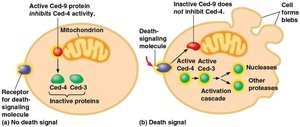
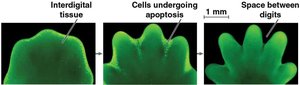
Apoptosis is a controlled process that removes infected, damaged, or aged cells, preventing harmful leakage and shaping tissues during development.
Reception: Cell senses external death signals or internal damage.
Transduction: Loss of survival signals activates caspases.
Response: Caspases and nucleases dismantle the cell.
Termination: Signals turn off; scavenger cells clear apoptotic bodies.
Dysregulation: Too little apoptosis can cause cancer; too much can cause neurodegenerative diseases.
Hormonal Regulation and Homeostasis
Insulin and Glucagon
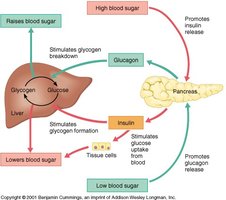
Insulin and glucagon regulate blood glucose levels through activation and termination of signaling.
Insulin: Activated when blood glucose is high; promotes glucose uptake and storage.
Glucagon: Activated when glucose is low; promotes glucose release from liver.
Termination: Signals turn off to prevent over-correction and maintain homeostasis.
Homeostasis
Homeostasis is the maintenance of stable internal conditions despite external changes, requiring precise activation and termination of hormonal signals. 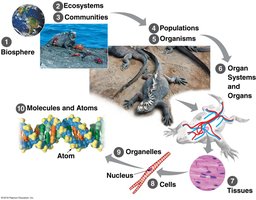
Hormone Diversity
Examples of Hormones
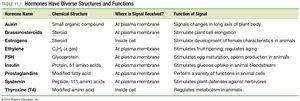
Hormones have diverse structures and functions, affecting both plants and animals.
Hormone Name | Chemical Structure | Where is Signal Received? | Function of Signal |
|---|---|---|---|
Auxin | Small organic compound | At plasma membrane | Signal changes in long axis of plant body |
Brassinosteroids | Steroid | At plasma membrane | Stimulate plant cell elongation |
Estrogens | Steroid | Inside cell | Stimulate development of female characteristics in animals |
Ethylene | C2H4 gas | At plasma membrane | Stimulates fruit ripening, regulates plant growth |
FSH | Glycoprotein | At plasma membrane | Stimulates egg maturation, sperm production in animals |
Insulin | Protein, 51 amino acids | At plasma membrane | Stimulates glucose uptake in animal cells |
Progesterone | Steroid | Inside cell | Maintains pregnancy in animals, controls menstruation |
Testosterone | Steroid | Inside cell | Stimulates development of male characteristics in animals |
Thyroxine (T4) | Modified amino acid | Inside cell | Regulates metabolism in animals |
Summary
Cell communication is fundamental to biological processes, involving complex signaling pathways that regulate cell behavior, maintain homeostasis, and ensure proper development. Understanding these mechanisms is crucial for studying physiology, development, and disease. Key Equations:
cAMP formation:
Phosphorylation cascade:
