 Indietro
Cell Communication: Mechanisms and Pathways
Guida di studio - Note intelligenti
 Appunti personalizzati basati sui tuoi materiali, ampliati con definizioni chiave, esempi e contesto.
Cell Communication
Overview of Cell Signaling
Cell communication is essential for the coordination of cellular activities and responses to external stimuli. Cells use signaling molecules to transmit information, leading to a specific response in the target cell. The process typically involves three main stages: reception, transduction, and response.
Reception: The cell detects a signaling molecule that binds to a receptor protein on the cell surface or inside the cell.
Transduction: The binding of the signaling molecule alters the receptor and initiates a signal transduction pathway, often involving multiple steps.
Response: The transduced signal triggers a specific cellular response, such as gene expression or metabolic changes.
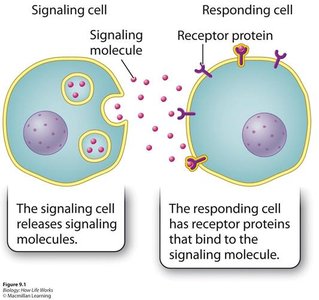
Essential Elements for Communication Between Cells
Effective cell communication requires four key components:
Signaling cell: The cell that produces and releases the signaling molecule.
Signaling molecule: The chemical messenger (e.g., hormone, neurotransmitter) that carries the signal.
Receptor molecule: The protein that binds the signaling molecule.
Receptor cell: The cell that receives and responds to the signal.
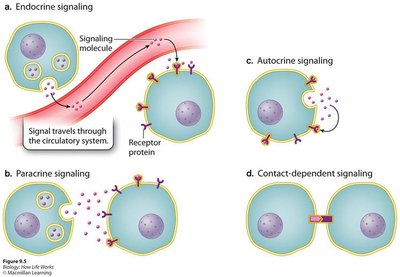
Types of Cell Signaling
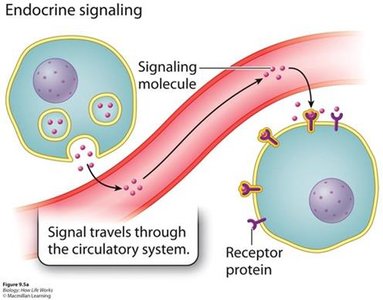
Long-Distance Signaling: Endocrine Signaling
Endocrine signaling involves the release of hormones by endocrine cells, which travel through the circulatory system to reach distant target cells. Examples include estrogen and testosterone.
Hormones: Signaling molecules that act over long distances.
Receptors: Target cells must have specific receptors for the hormone to respond.
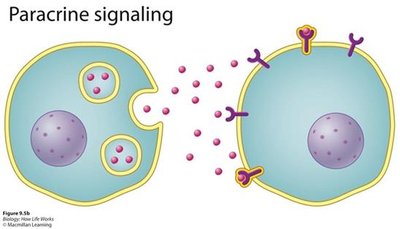
Short-Distance Signaling: Paracrine Signaling
Paracrine signaling occurs when signaling molecules affect nearby cells. Growth factors are common paracrine signals that stimulate cell growth and division.
Local regulators: Molecules that act on cells in the immediate vicinity.
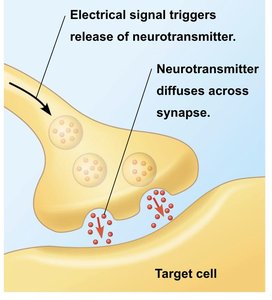
Synaptic signaling: A specialized form of paracrine signaling in the nervous system, where neurotransmitters are released in response to electrical signals.
Autocrine Signaling
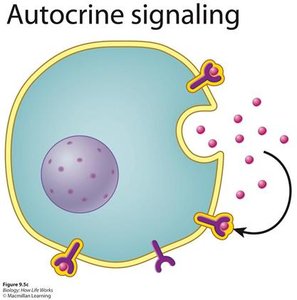
In autocrine signaling, the signaling cell and the responding cell are the same. This type of signaling is important during embryonic development and for self-regulation.
Self-signaling: The cell releases molecules that bind to its own receptors.
Contact-Dependent Signaling
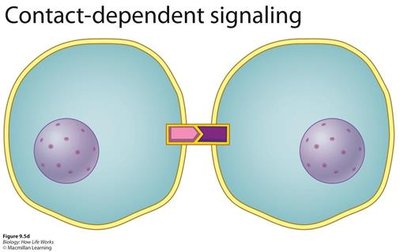
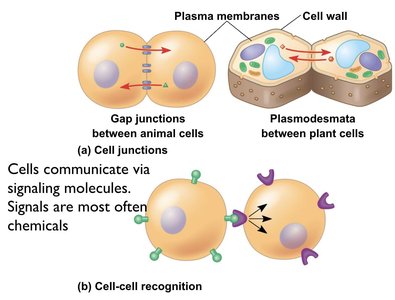
Contact-dependent signaling requires direct contact between cells. A transmembrane protein on one cell acts as the signal and binds to a receptor on an adjacent cell.
Direct interaction: No diffusion of signaling molecules; relies on cell surface proteins.
Signal Reception and Transduction
Reception
The target cell detects a signaling molecule when it binds to a receptor protein, either on the cell surface or inside the cell.
Transduction
The binding of the signaling molecule initiates a signal transduction pathway, often involving a cascade of molecular interactions. This process amplifies the signal and allows for regulation. 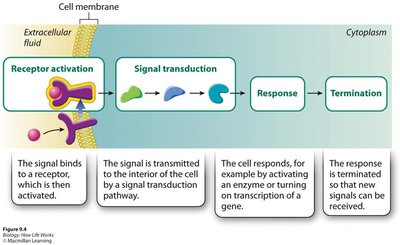
Response
The cell responds to the signal by activating specific cellular processes, such as gene expression or metabolic changes. 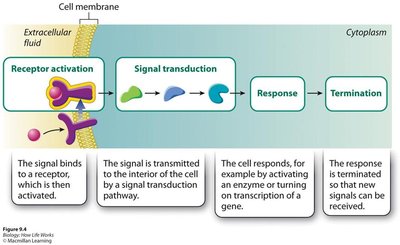
Termination
The response is terminated so that new signals can be received. Inactivation mechanisms are essential for proper regulation. 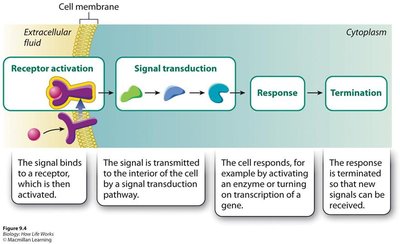
Types of Receptors
Intracellular Receptors
Nonpolar signaling molecules, such as steroid hormones, can cross the cell membrane and bind to intracellular receptors in the cytoplasm or nucleus.
Example: Estrogen and testosterone.
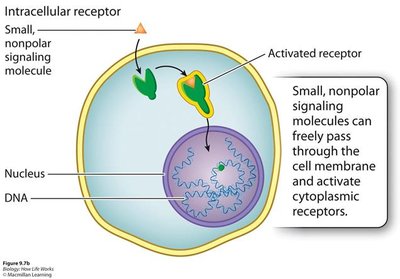
Cell-Surface Receptors
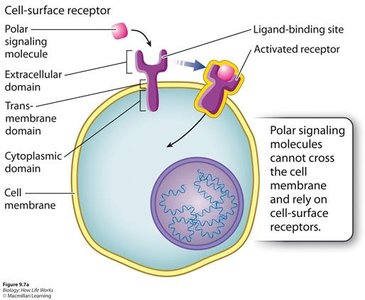
Polar signaling molecules cannot cross the cell membrane and instead bind to transmembrane proteins that act as cell-surface receptors.
Ligand-binding: The receptor undergoes a conformational change upon ligand binding, activating the receptor.
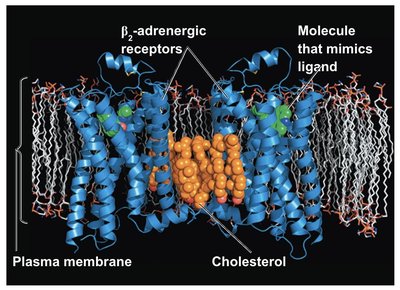
Example: β2-adrenergic receptors.
Major Classes of Cell-Surface Receptors
G Protein-Coupled Receptors (GPCRs)
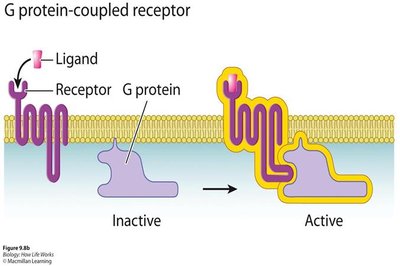
GPCRs are the largest family of cell-surface receptors. They work with the help of a G protein, which binds GTP and transmits the signal inside the cell.
Activation: Ligand binding activates the receptor, which then activates the G protein.
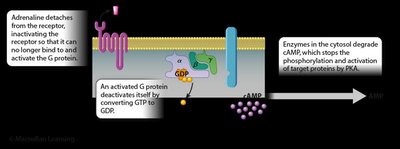
Signal termination: When the ligand concentration wanes, the receptor reverts to its inactive form, GTP is converted to GDP, and the target protein stops.
Receptor Tyrosine Kinases (RTKs)
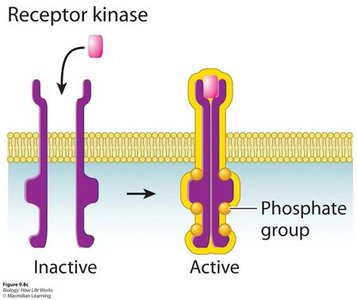
RTKs are membrane receptors that transfer phosphate groups from ATP to another protein, initiating a phosphorylation cascade.
Example: The Kit receptor kinase is responsible for pigment production in skin, feathers, scales, and hair.
Ligand-Gated Ion Channel Receptors
These receptors act as gates that open or close in response to ligand binding or changes in membrane voltage, allowing ions to flow across the membrane.
Example: Neurotransmitter-gated ion channels in synaptic signaling.
Signal Transduction Pathways
Phosphorylation Cascades
Multistep pathways amplify signals and provide opportunities for regulation. A common example is the MAP kinase pathway.
Amplification: Each step can activate multiple molecules, increasing the signal strength.
Second Messengers
Small molecules and ions, such as cyclic AMP (cAMP), inositol triphosphate (IP3), and calcium ions (Ca2+), act as second messengers to relay signals inside the cell.
cAMP: Produced by adenylyl cyclase from ATP in response to extracellular signals.
IP3 and DAG: Produced from membrane phospholipids and involved in calcium release.
Cellular Responses
Regulation of Transcription and Cytoplasmic Activities
Cell signaling can lead to changes in gene expression (transcription) or cytoplasmic activities, such as enzyme activation or metabolic regulation.
Example: Synthesis of mRNA and proteins in response to signaling.
Cytoplasmic response: Stimulation of glycogen breakdown by epinephrine.
Specificity and Termination of Cell Signaling
The specificity of cell signaling is determined by the presence of specific receptors and relay proteins, such as scaffolding proteins. Termination mechanisms ensure that signals are properly regulated and do not persist longer than necessary.
Inactivation: Unbound receptors revert to an inactive state when signaling molecules are no longer present.
Summary Table: Types of Cell Signaling
Type | Distance | Signaling Molecule | Example |
|---|---|---|---|
Endocrine | Long | Hormones | Estrogen, Testosterone |
Paracrine | Short | Growth factors | Cell division |
Synaptic | Very short | Neurotransmitters | Neuronal signaling |
Autocrine | Self | Various | Embryonic development |
Contact-dependent | Direct | Membrane proteins | Immune response |
Additional info: Academic context was added to clarify the mechanisms and importance of each signaling type, as well as to expand on the molecular details of signal transduction and cellular responses.
