 Indietro
Cell Communication: Mechanisms and Significance in Biology
Guida di studio - Note intelligenti
 Appunti personalizzati basati sui tuoi materiali, ampliati con definizioni chiave, esempi e contesto.
Cell Communication
Introduction to Cell Signaling
Cell communication is essential for the coordination of activities in multicellular organisms and is also found in single-celled organisms. It enables cells to respond to external signals and regulate internal processes, which is crucial for survival, development, and homeostasis.
Evolution of Cell Signaling
Origins and Importance
Cell signaling mechanisms evolved early in prokaryotes and single-celled eukaryotes, later being adapted by multicellular organisms. These mechanisms allow cells to sense their environment and communicate with each other.
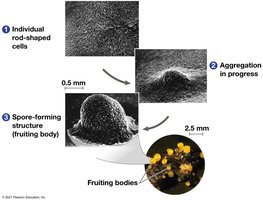
Quorum Sensing: Bacteria use signaling molecules to detect population density, leading to coordinated behaviors such as biofilm formation and toxin secretion.
Biofilm Formation: Aggregation of bacterial cells on surfaces, often mediated by quorum sensing.
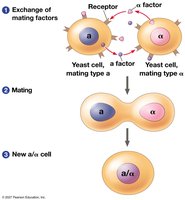
Yeast Mating: Saccharomyces cerevisiae uses secreted factors to locate and mate with cells of the opposite type, initiating a signal transduction pathway.
Local and Long-Distance Signaling
Modes of Cell Communication
Cells communicate through direct contact or by releasing signaling molecules. The mode of communication depends on the distance between cells and the nature of the signal.
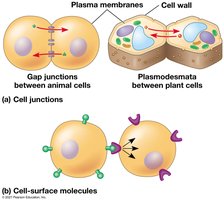
Direct Contact: Cell junctions (gap junctions in animals, plasmodesmata in plants) allow molecules to pass directly between cells.
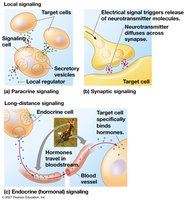
Paracrine Signaling: Local regulators, such as growth factors, affect nearby cells.
Synaptic Signaling: Neurotransmitters are released in response to electrical signals, affecting target cells in the nervous system.
Endocrine (Hormonal) Signaling: Hormones travel through the bloodstream to distant target cells.
The Three Stages of Cell Signaling
Signal Reception, Transduction, and Response
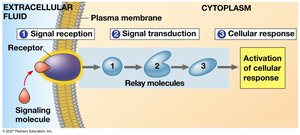
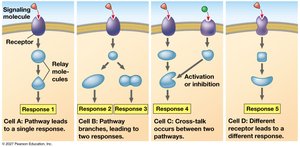
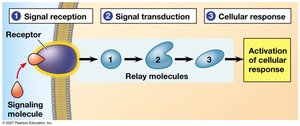
Cell signaling typically involves three stages: reception, transduction, and response. These stages ensure that external signals are accurately converted into cellular actions.
Reception: The cell detects a signaling molecule (ligand) via a receptor protein.
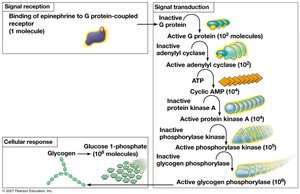
Transduction: The signal is relayed and amplified through a series of molecular changes, often involving multiple steps.
Response: The cell produces a specific response, such as gene expression or metabolic changes.
Signal Reception: Receptors and Their Types
Membrane and Intracellular Receptors
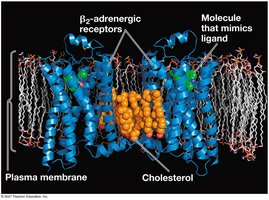
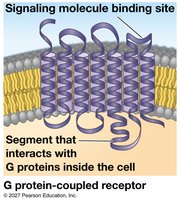
Signal receptors are highly specific proteins that bind signaling molecules and initiate cellular responses. They are located either on the cell surface or inside the cell.
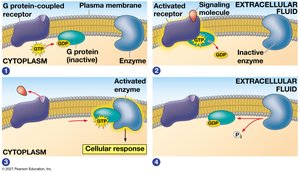
G Protein-Coupled Receptors (GPCRs): Largest family of cell-surface receptors; interact with G proteins to transmit signals.
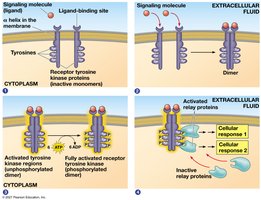
Receptor Tyrosine Kinases (RTKs): Catalyze phosphorylation of proteins, triggering multiple pathways.
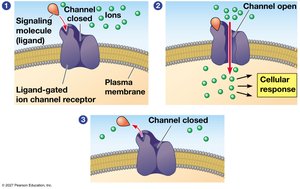
Ligand-Gated Ion Channels: Open or close in response to ligand binding, allowing ions to flow across the membrane.
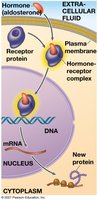
Intracellular Receptors: Located in the cytoplasm or nucleus; activated by small or hydrophobic molecules (e.g., steroid hormones).
Signal Transduction: Cascades and Second Messengers
Amplification and Regulation of Signals
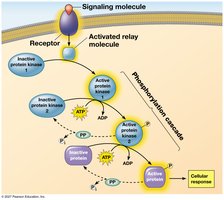
Signal transduction involves cascades of molecular interactions, often amplifying the signal and providing opportunities for regulation. Second messengers play a key role in these pathways.
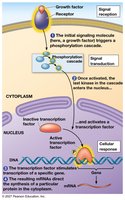
Phosphorylation Cascades: Protein kinases transfer phosphate groups, activating proteins in sequence.
Protein Phosphatases: Remove phosphate groups, deactivating proteins.
Second Messengers: Small molecules (e.g., cyclic AMP, calcium ions) that relay signals inside the cell.
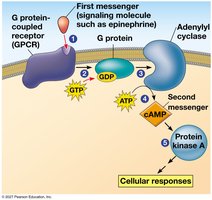
Cyclic AMP (cAMP): Produced from ATP by adenylyl cyclase; activates protein kinase A.
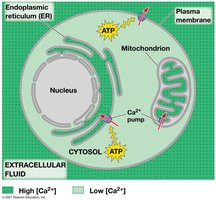
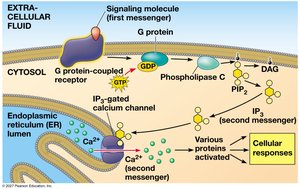
Calcium Ions and IP3: Calcium ions are released from internal stores in response to signals; IP3 and DAG are additional second messengers.

Cellular Response: Regulation of Transcription and Cytoplasmic Activities
Output Responses
The final stage of cell signaling is the cellular response, which can involve changes in gene expression or alterations in cytoplasmic activities.
Nuclear Response: Activation of transcription factors leads to gene expression changes.
Cytoplasmic Response: Modulation of enzyme activity or ion channel function.
Regulation of the Response
Amplification, Specificity, Efficiency, and Termination
Cell signaling responses are regulated to ensure appropriate outcomes. This involves amplification, specificity, efficiency, and timely termination of the signal.
Amplification: Enzyme cascades increase the magnitude of the response.
Specificity: Different cell types respond differently to the same signal due to unique protein collections.
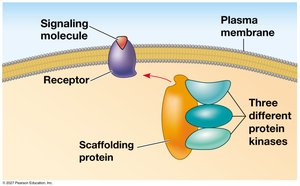
Efficiency: Scaffolding proteins organize signaling components for rapid and coordinated responses.
Termination: Inactivation mechanisms ensure signals are not perpetuated unnecessarily.
Apoptosis: Programmed Cell Death
Mechanisms and Biological Significance
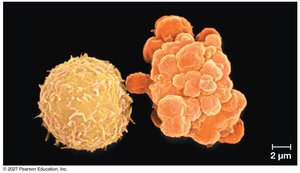
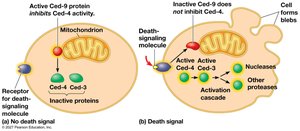
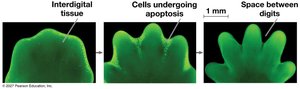
Apoptosis is a form of programmed cell death that is essential for development, maintenance, and disease prevention. It involves the integration of multiple cell-signaling pathways.
Process: Cellular components are packaged into vesicles and digested by scavenger cells, preventing damage to neighboring cells.
Regulation: Proteins such as CED-9, CED-4, and CED-3 in Caenorhabditis elegans regulate apoptosis.
Human Relevance: Apoptosis is involved in development (e.g., digit formation) and diseases (e.g., neurodegeneration, cancer).
Summary of Cell Signaling Pathways
Three-Stage Pathway Overview
Cell signaling involves a three-stage pathway: signal reception, signal transduction, and cellular response. This process is fundamental to biological regulation and adaptation.
Stage | Main Event | Key Molecules |
|---|---|---|
Reception | Detection of signaling molecule | Receptor proteins |
Transduction | Relay and amplification of signal | Protein kinases, second messengers |
Response | Cellular action (gene expression, enzyme activity) | Transcription factors, metabolic enzymes |
Key Terms and Concepts
Ligand: A molecule that binds specifically to a receptor.
Signal Transduction Pathway: Series of steps by which a signal is converted to a cellular response.
Second Messenger: Small molecules that relay signals inside the cell (e.g., cAMP, Ca2+).
Apoptosis: Programmed cell death, essential for development and homeostasis.
Important Equations
cAMP Formation:
Phosphorylation Cascade:
Additional info: The notes expand on brief textbook points to provide context, definitions, and examples for General Biology students, ensuring completeness and clarity for exam preparation.
