 Indietro
Cell Communication: Mechanisms and Significance in Biology
Guida di studio - Note intelligenti
 Appunti personalizzati basati sui tuoi materiali, ampliati con definizioni chiave, esempi e contesto.
Cell Communication
Introduction to Cell Signaling
Cell communication is essential for the coordination of activities in multicellular organisms and is also found in unicellular organisms. It enables cells to respond to external signals and adapt to changing environments. - Cell signaling involves the conversion of external signals into cellular responses. - Evolutionary origins: Signaling molecules evolved in prokaryotes and single-celled eukaryotes and were adapted for multicellular life. 
Evolution of Cell Signaling
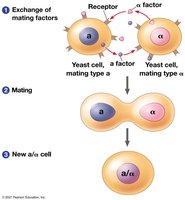
Cell signaling is critical among prokaryotes and eukaryotes, enabling processes such as quorum sensing and mating. - Quorum sensing: Bacteria sense local population density by detecting signaling molecules, leading to behaviors like biofilm formation and toxin secretion. - Biofilm: Aggregation of bacterial cells adhered to a surface, often regulated by quorum sensing. - Yeast mating: Saccharomyces cerevisiae uses secreted factors to locate cells of opposite mating type, initiating a signal transduction pathway. 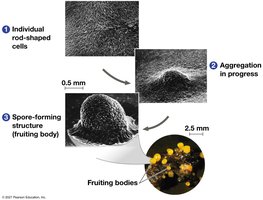
Mechanisms of Cell Signaling
Local and Long-Distance Signaling
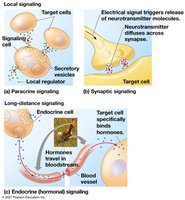
Cells communicate via signaling molecules, either locally or over long distances. - Local signaling: Includes direct contact (cell junctions, cell-surface molecules) and paracrine signaling (growth factors). - Synaptic signaling: Occurs in the nervous system via neurotransmitter release. - Long-distance signaling: Hormones travel through the circulatory system to target cells. - Receptor specificity: Only cells with the appropriate receptor can respond to a signal. 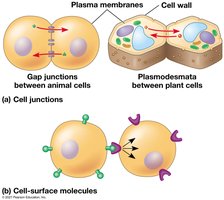
The Three Stages of Cell Signaling
Cell signaling typically involves three stages: reception, transduction, and response. - Reception: Detection of a signaling molecule by a receptor protein. - Transduction: Conversion of the signal into a form that can bring about a cellular response, often through a series of steps. - Response: Activation of a specific cellular activity. 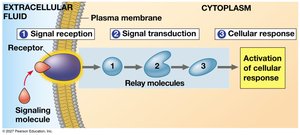
Signal Reception
Receptors in the Plasma Membrane
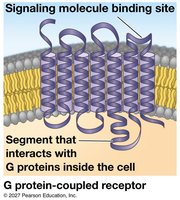
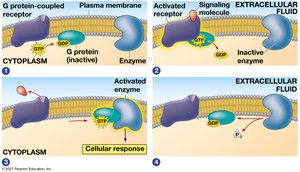
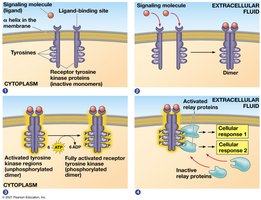
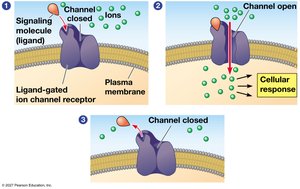
Most signal receptors are plasma membrane proteins, but some are intracellular. - G protein-coupled receptors (GPCRs): Largest family of cell-surface receptors; interact with G proteins. - Receptor tyrosine kinases (RTKs): Catalyze transfer of phosphate groups; can trigger multiple pathways. - Ion channel receptors: Act as gates for ions when activated by ligands. 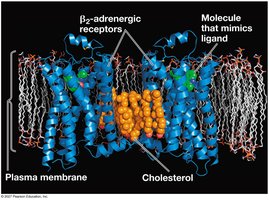
Intracellular Receptors
Some receptors are located inside the cell, in the cytoplasm or nucleus. - Hydrophobic messengers: Steroid and thyroid hormones can cross the membrane and activate intracellular receptors. - Transcription factor: Activated hormone-receptor complex can regulate gene expression. 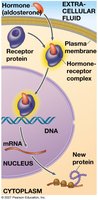
Signal Transduction
Signal Transduction Pathways
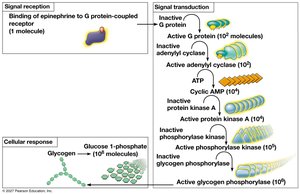
Signal transduction involves cascades of molecular interactions, often amplifying the signal. - Phosphorylation cascade: Protein kinases transfer phosphates from ATP to proteins, regulating activity. - Dephosphorylation: Protein phosphatases remove phosphates, acting as molecular switches. 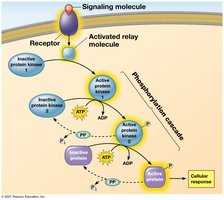
Second Messengers
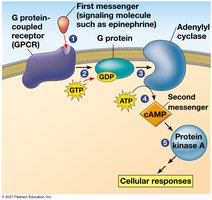
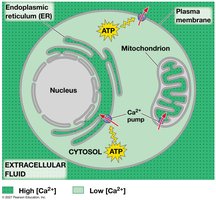
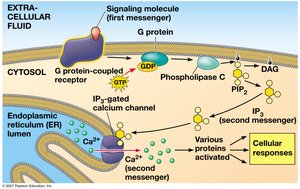
Many pathways use small, nonprotein molecules called second messengers. - Cyclic AMP (cAMP): Produced from ATP by adenylyl cyclase; activates protein kinase A. - Calcium ions (Ca2+): Widely used as second messengers; concentration changes trigger responses. - Inositol trisphosphate (IP3) and diacylglycerol (DAG): Produced by cleavage of membrane phospholipids; help release Ca2+. 
Cellular Responses
Nuclear and Cytoplasmic Responses
Signal transduction pathways regulate cellular activities in the nucleus or cytoplasm. - Nuclear response: Regulation of gene expression, often via transcription factors. - Cytoplasmic response: Regulation of protein activity, such as enzyme activation or ion channel opening. 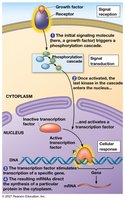
Regulation of the Response
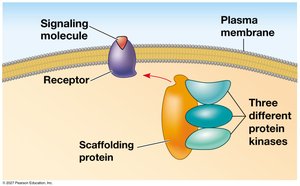
Cellular responses are regulated for amplification, specificity, efficiency, and termination. - Amplification: Enzyme cascades increase the number of activated molecules. - Specificity: Different cells respond differently to the same signal due to unique protein collections. - Scaffolding proteins: Enhance efficiency by grouping relay proteins. - Termination: Inactivation mechanisms ensure signals are not perpetuated indefinitely. 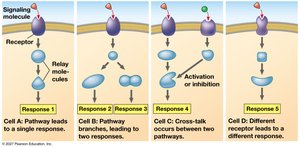
Apoptosis: Programmed Cell Death
Mechanisms and Significance of Apoptosis
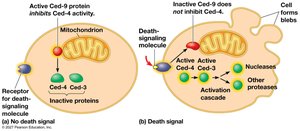
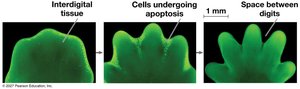
Apoptosis is a controlled process of cell death, essential for development and maintenance. - Apoptosis: Cell components are packaged into vesicles and digested by scavenger cells, preventing damage to neighboring cells. - C. elegans: Apoptosis is regulated by proteins such as Ced-9 and caspases. - Human and mammalian apoptosis: Multiple pathways and caspases; triggered by internal or external signals. - Developmental role: Apoptosis shapes structures such as fingers and toes by removing cells. 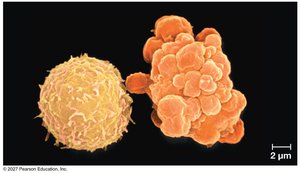
Summary Table: Types of Cell Signaling
Type | Distance | Example | Key Molecules |
|---|---|---|---|
Direct Contact | Local | Cell junctions | Gap junctions, plasmodesmata |
Paracrine | Local | Growth factors | Local regulators |
Synaptic | Local | Neurotransmitters | Neurotransmitter molecules |
Endocrine (Hormonal) | Long-distance | Hormones | Hormone molecules |
Key Equations
Phosphorylation Reaction
cAMP Formation
Signal Amplification Example
Conclusion
Cell communication is fundamental to biological processes, enabling cells to sense, respond, and adapt to their environment. Understanding these mechanisms is crucial for fields ranging from development to disease treatment.
