 Indietro
Cell Communication: Mechanisms and Significance in Biology
Guida di studio - Note intelligenti
 Appunti personalizzati basati sui tuoi materiali, ampliati con definizioni chiave, esempi e contesto.
Cell Communication
Introduction to Cell Communication
Cell communication is a fundamental process that enables cells to respond to external and internal signals, coordinating activities essential for survival, development, and homeostasis. This chapter explores the mechanisms by which cells detect, transmit, and respond to signals, highlighting evolutionary origins and diverse signaling pathways.
Evolution of Cell Signaling
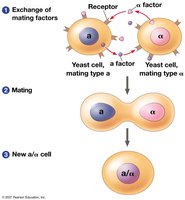
- Quorum Sensing: Bacterial cells communicate to sense population density, a process known as quorum sensing. This is critical for behaviors such as biofilm formation and toxin secretion. - Biofilm Formation: Aggregation of bacterial cells on surfaces, often mediated by signaling molecules. - Yeast Mating: Saccharomyces cerevisiae uses secreted factors to locate and mate with cells of opposite type, initiating a signal transduction pathway. - Conservation: Molecular details of signal transduction are similar across yeasts and mammals, indicating evolutionary conservation. 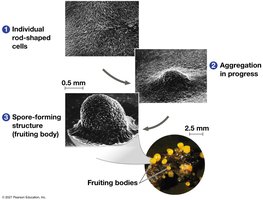
Local and Long-Distance Signaling
Cells communicate via signaling molecules, either through direct contact or by secreted messengers.
Local Signaling
- Direct Contact: Animal and plant cells have junctions (gap junctions in animals, plasmodesmata in plants) that allow cytoplasmic exchange. - Cell-Surface Molecules: Direct interaction between membrane proteins is important in development and immune responses. 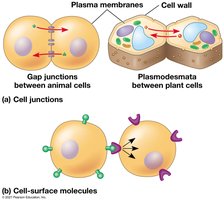
Paracrine and Synaptic Signaling
- Paracrine Signaling: Local regulators, such as growth factors, affect nearby cells. - Synaptic Signaling: Neurotransmitters released in response to electrical signals affect target cells in the nervous system.
Long-Distance Signaling
- Hormonal (Endocrine) Signaling: Hormones released by specialized cells travel via the circulatory system to distant target cells. - Receptor Specificity: Only cells with the appropriate receptor respond to a given signal. 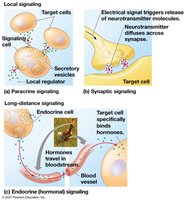
The Three Stages of Cell Signaling
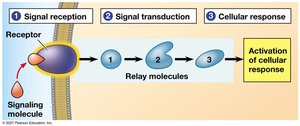
Cell signaling typically involves three stages: reception, transduction, and response.
Stages of Cell Signaling
- Reception: Detection of a signaling molecule by a receptor protein. - Transduction: Conversion of the signal into a form that can bring about a cellular response, often through a series of steps. - Response: Activation of a specific cellular activity. 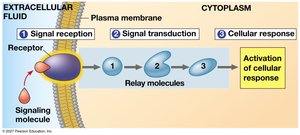
Signal Reception
Receptors in the Plasma Membrane
Most signal receptors are plasma membrane proteins, but some are intracellular.
Types of Membrane Receptors
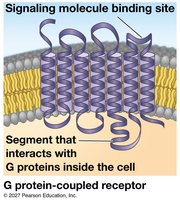
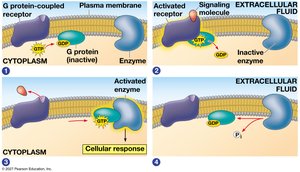
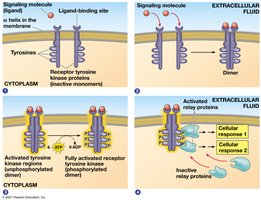
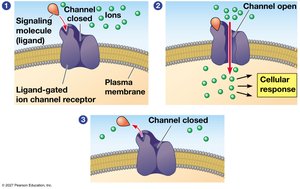
- G Protein-Coupled Receptors (GPCRs): Largest family of cell-surface receptors; interact with G proteins to transmit signals. - Receptor Tyrosine Kinases (RTKs): Catalyze transfer of phosphate groups from ATP to proteins; can trigger multiple pathways. - Ion Channel Receptors: Act as gates for ions, opening or closing in response to ligand binding. 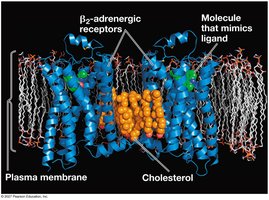
Intracellular Receptors
- Location: Found in cytoplasm or nucleus. - Activation: Small or hydrophobic messengers (e.g., steroid hormones) cross membranes and activate these receptors. - Function: Activated complexes often act as transcription factors, regulating gene expression. 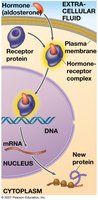
Signal Transduction
Signal Transduction Pathways
Signal transduction involves cascades of molecular interactions, often amplifying the signal and providing regulatory opportunities.
Protein Phosphorylation and Dephosphorylation
- Protein Kinases: Transfer phosphate groups from ATP to proteins (phosphorylation). - Phosphorylation Cascade: Sequential activation of kinases amplifies the signal. - Protein Phosphatases: Remove phosphates (dephosphorylation), acting as molecular switches. 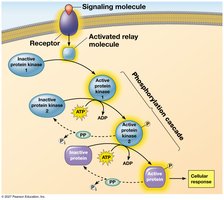
Second Messengers
Second messengers are small, nonprotein molecules or ions that relay signals inside the cell.
Cyclic AMP (cAMP)
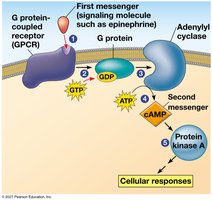
- Production: Adenylyl cyclase converts ATP to cAMP in response to extracellular signals. - Function: cAMP activates protein kinase A, which phosphorylates other proteins. - Regulation: G protein systems can inhibit adenylyl cyclase. 
Calcium Ions and Inositol Trisphosphate (IP3)
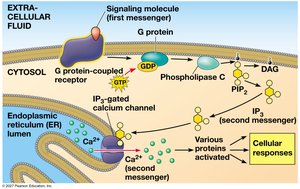
- Calcium Ions: Widely used as second messengers; concentration in cytosol is tightly regulated. - IP3 and DAG: Produced by cleavage of membrane phospholipids; trigger release of calcium from the endoplasmic reticulum. 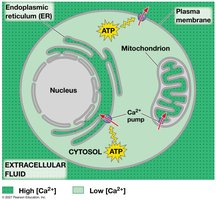
Cellular Response
Nuclear and Cytoplasmic Responses
The final outcome of cell signaling is regulation of cellular activities, either in the nucleus or cytoplasm.
Nuclear Response
- Gene Regulation: Many pathways regulate gene expression by activating transcription factors. 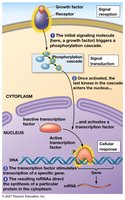
Cytoplasmic Response
- Protein Activity: Signaling can alter enzyme activity or open/close ion channels. 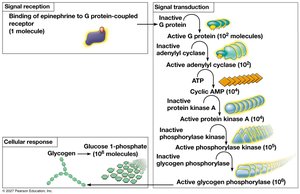
Regulation of the Response
Signal regulation involves amplification, specificity, efficiency, and termination.
Amplification
- Enzyme Cascades: Amplify the response at each step.
Specificity
- Protein Collections: Different cells have different proteins, allowing varied responses to the same signal. - Pathway Branching and Cross-Talk: Coordination of multiple signals. 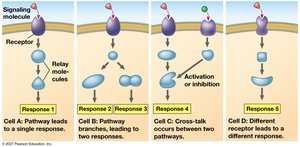
Signaling Efficiency
- Scaffolding Proteins: Organize relay proteins, increasing efficiency and sometimes activating them. 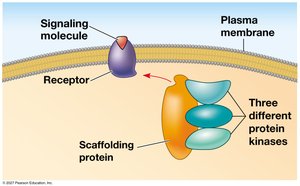
Termination
- Inactivation: Essential for proper regulation; unbound receptors revert to inactive state.
Apoptosis: Programmed Cell Death
Mechanisms and Importance
Apoptosis is a controlled process by which cells die, preventing damage to neighboring cells and playing a crucial role in development and disease prevention.
Process of Apoptosis
- Cellular Components: Cell contents are packaged into vesicles and digested by scavenger cells. - Prevention of Damage: Enzymes are contained, preventing harm to surrounding tissue. 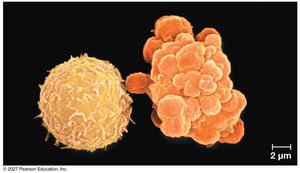
Apoptosis in Caenorhabditis elegans
- Ced-9 Protein: Acts as a brake; inactivation triggers apoptosis. - Caspases: Proteases (e.g., Ced-3) execute cell death. 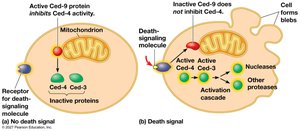
Apoptotic Pathways in Mammals
- Multiple Pathways: About 15 caspases involved; triggered by internal or external signals. - Developmental Role: Essential for normal development (e.g., digit formation in limbs). - Disease Association: Dysregulation may contribute to diseases such as Parkinson's, Alzheimer's, and cancer. 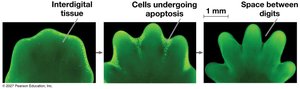
Summary Table: Types of Cell Signaling
Type | Distance | Example | Key Molecules |
|---|---|---|---|
Direct Contact | Local | Gap junctions, plasmodesmata | Cell-surface proteins |
Paracrine | Local | Growth factors | Local regulators |
Synaptic | Local | Neurotransmitters | Neurotransmitter molecules |
Endocrine | Long-distance | Hormones | Hormones |
Summary Diagram: Three-Stage Cell-Signaling Pathway
Key Terms and Concepts
- Ligand: A signaling molecule that binds to a receptor. - Receptor: Protein that detects and responds to a ligand. - Signal Transduction Pathway: Series of steps converting a signal to a cellular response. - Second Messenger: Small molecules or ions that relay signals inside the cell (e.g., cAMP, Ca2+). - Protein Kinase: Enzyme that phosphorylates proteins. - Apoptosis: Programmed cell death.
Equations and Formulas
Phosphorylation Reaction: cAMP Formation: Signal Amplification:
Additional info:
Some details, such as the specific molecular steps in signal transduction and the role of scaffolding proteins, were expanded for academic completeness. The summary table and equations were inferred to provide a self-contained study guide.
