 Indietro
Cell Cycle and Mitosis Study Guide – BIO 1305
Guida di studio - Note intelligenti
 Appunti personalizzati basati sui tuoi materiali, ampliati con definizioni chiave, esempi e contesto.
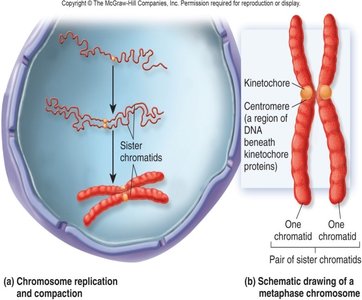
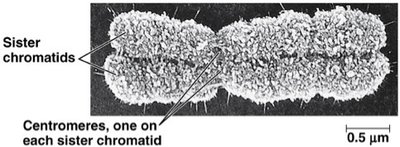
Q1. Given a micrograph or drawing of a cell, label the chromosomes, chromatids, sister chromatids, and homologous chromosomes if present, and determine the haploid number and ploidy.
Background
Topic: Chromosome Structure and Cell Cycle
This question tests your understanding of chromosome terminology and how to identify key features in cell images, including chromosomes, chromatids, sister chromatids, homologous chromosomes, haploid number (n), and ploidy (number of sets).
Key Terms:
Chromosome: A single DNA molecule with associated proteins, counted by centromeres.
Chromatid: One of the two identical copies in a replicated chromosome.
Sister Chromatids: Two identical chromatids joined at the centromere.
Homologous Chromosomes: Matching pairs from each parent, same size and genes but possibly different alleles.
Haploid Number (n): Number of different chromosome types.
Ploidy: Number of sets of chromosomes (haploid = n, diploid = 2n).
Step-by-Step Guidance
Examine the cell image and locate the centromeres to count the number of chromosomes.
Identify chromatids: If chromosomes are replicated, each will have two chromatids joined at the centromere.
Label sister chromatids: Find pairs of identical chromatids joined together.
Look for homologous chromosomes: Match pairs by size and shape, one from each parent.
Determine the haploid number (n) by counting the different types of chromosomes.
Assess ploidy by counting the number of sets (e.g., diploid = 2n).
Try solving on your own before revealing the answer!
Final Answer:
To label: Chromosomes are counted by centromeres, chromatids are the individual DNA strands, sister chromatids are the joined pairs, and homologous chromosomes are matched pairs. Haploid number is the number of types, ploidy is the number of sets (e.g., diploid = 2n).
For example, in a diploid cell with 2n = 4, you might see 4 chromosomes (centromeres), 8 chromatids (if replicated), 4 pairs of sister chromatids, and 2 homologous pairs. Haploid number n = 2, ploidy = 2n.
Q2. Explain why chromosome replication has to occur before mitosis, in interphase.
Background
Topic: DNA Replication and Cell Division
This question tests your understanding of the timing and necessity of DNA replication in the cell cycle, specifically why it must happen before mitosis.
Key Terms:
S phase: The part of interphase when DNA is replicated.
Mitosis: The process of nuclear division.
Genome: The complete set of genetic material.
Step-by-Step Guidance
Recall that mitosis separates DNA into two daughter cells, but does not copy it.
Understand that if DNA is not replicated first, each daughter cell would only receive part of the genome.
Replication occurs in S phase, when chromatin is accessible.
After replication, sister chromatids remain joined so the spindle can ensure each daughter gets one complete copy.
The G2 checkpoint ensures DNA is fully copied and undamaged before mitosis begins.
Try solving on your own before revealing the answer!
Final Answer:
Chromosome replication must occur before mitosis so that each daughter cell receives a complete, identical set of DNA. If replication did not happen first, cells would lack essential genes. Replication occurs in S phase, and the G2 checkpoint ensures it is complete before mitosis.
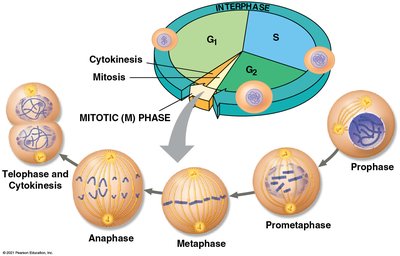
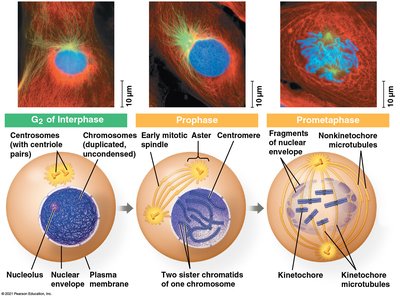
Q3. Given a labeled drawing showing the phases of mitosis, explain what is happening to the chromosomes and how it helps ensure that each daughter cell gets a complete and identical set.
Background
Topic: Mitosis Phases and Chromosome Movement
This question tests your ability to describe the events of mitosis and how chromosome behavior ensures genetic fidelity in daughter cells.
Key Terms:
Prophase, Prometaphase, Metaphase, Anaphase, Telophase: The five phases of mitosis.
Mitotic spindle: Structure that separates chromosomes.
Metaphase plate: Imaginary line where chromosomes align.
Kinetochore: Protein structure on chromatids where spindle fibers attach.
Step-by-Step Guidance
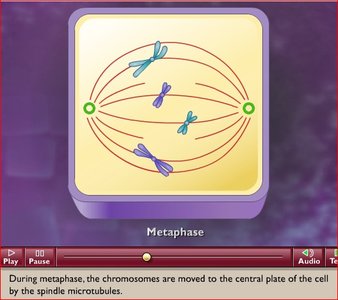
In prophase, chromosomes condense and spindle begins to form.
During prometaphase, the nuclear envelope breaks down and spindle fibers attach to kinetochores.
In metaphase, chromosomes align at the metaphase plate, ensuring each is attached to spindle fibers from opposite poles.
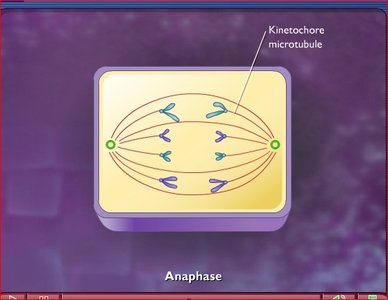
In anaphase, sister chromatids separate and move to opposite poles, ensuring each daughter cell receives one copy of each chromosome.
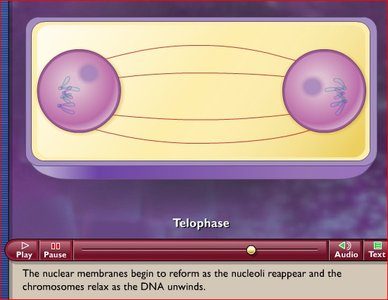
In telophase, chromosomes decondense and nuclear envelopes reform, completing the division.
Try solving on your own before revealing the answer!
Final Answer:
During mitosis, chromosomes condense, align, and are separated so that each daughter cell receives a complete and identical set. The spindle ensures accurate segregation, and checkpoints confirm proper attachment and separation. This process maintains genetic fidelity.
Q4. Diagram the sequence of stages in the eukaryotic cell cycle (M, G1, S, and G2) and label the major events or checkpoints that occur in each. Predict the consequences of altering a given stage (M, G1, S, G2) in the cell cycle in terms of the cell's structure or fate.
Background
Topic: Cell Cycle Regulation and Checkpoints
This question tests your understanding of the cell cycle stages, checkpoints, and the effects of disruptions in these stages.
Key Terms and Formulas:
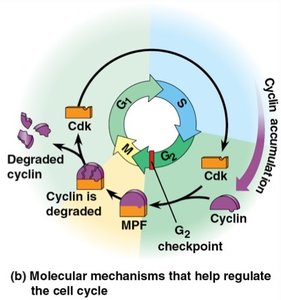
Cell Cycle Stages: G1 (growth), S (DNA synthesis), G2 (preparation), M (mitosis).
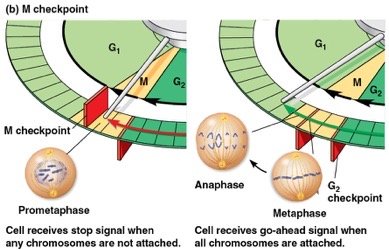
Checkpoints: G1 (cell size, nutrients, DNA damage), G2 (DNA replication, MPF), M (spindle attachment).
MPF: Maturation-promoting factor, triggers entry into mitosis.
Step-by-Step Guidance
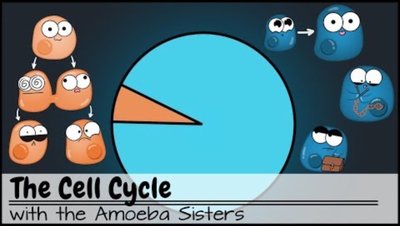
Draw or visualize the cell cycle as a circle with G1, S, G2, and M phases.
Label the checkpoints: G1 (before S), G2 (before M), M (between metaphase and anaphase).
Describe what is checked at each checkpoint (e.g., DNA damage, replication, spindle attachment).
Predict what happens if a stage is altered: e.g., if G1 checkpoint is ignored, cells may divide uncontrollably; if S phase is blocked, cells cannot replicate DNA; if G2 checkpoint is bypassed, cells may enter mitosis with damaged DNA.
Consider the consequences for cell structure and fate (e.g., cancer, cell death, arrest).
Try solving on your own before revealing the answer!
Final Answer:
The cell cycle includes G1, S, G2, and M phases, with checkpoints at G1, G2, and M. Altering these stages can lead to cell cycle arrest, uncontrolled division (cancer), or cell death. For example, skipping the G1 checkpoint can cause tumors, blocking S phase prevents DNA replication, and bypassing G2 can result in damaged cells.
