 Indietro
Cell Cycle, DNA Replication, and Mitosis: Study Notes for General Biology
Guida di studio - Note intelligenti
 Appunti personalizzati basati sui tuoi materiali, ampliati con definizioni chiave, esempi e contesto.
Cell Cycle and Its Regulation
Overview of the Cell Cycle
The cell cycle is a series of events that cells undergo to grow and divide. It consists of interphase (G1, S, G2) and the mitotic (M) phase, which includes mitosis and cytokinesis. - Interphase: The cell grows, replicates its DNA, and prepares for division. - Mitotic Phase (M phase): The cell divides its chromosomes and cytoplasm to produce two daughter cells. 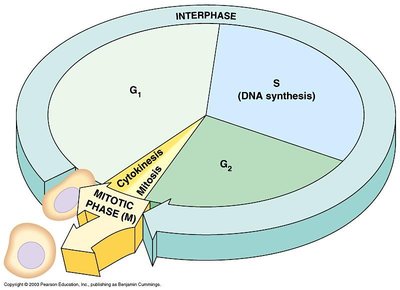
Cell Cycle Checkpoints
Cell cycle checkpoints are regulatory mechanisms that ensure the cell is ready to proceed to the next stage. - G1 checkpoint: Checks for DNA damage after mitosis; if damaged, the cell may undergo apoptosis. - G2 checkpoint: Ensures DNA has been replicated properly; prevents mitosis if DNA is damaged. - M checkpoint: Ensures chromosomes are properly aligned before cell division proceeds. 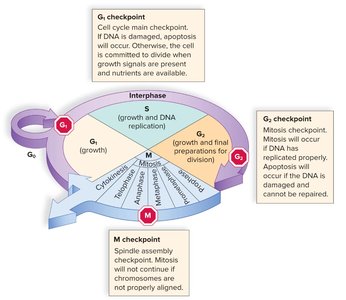
DNA Replication
Mechanism and Importance
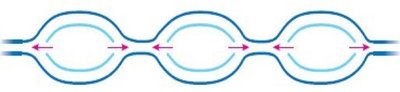
DNA replication is the process by which a cell copies its entire genome before division. This ensures that each daughter cell receives a complete set of genetic instructions. - Semiconservative replication: Each new DNA molecule consists of one old (parental) strand and one new (daughter) strand. - Origins of replication: Eukaryotic chromosomes have multiple origins, forming replication bubbles. - Replication fork: The site where DNA is actively being unwound and copied. 
Transmission of Genetic Information
DNA replication allows genetic information to be inherited from parent to daughter cells. Each gene is a unit of hereditary information, and accurate replication is essential for growth and reproduction. 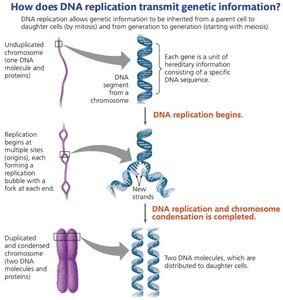
Chromosome Structure and Organization
Chromosomes and Chromatids
Chromosomes are long linear DNA molecules wrapped around proteins. - Chromatid: Each chromosome consists of one chromatid before replication. - Sister chromatids: After DNA replication, each chromosome consists of two identical sister chromatids joined at the centromere. 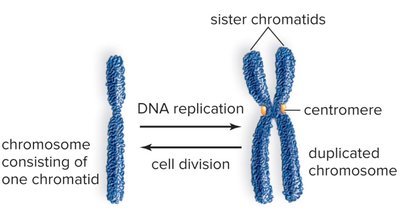
Genome and Ploidy
- Genome: One complete set of genetic information. Humans inherit one genome from each parent. - Ploidy: The number of unique sets of chromosomes. Most somatic cells are diploid (2n), meaning they have two sets of chromosomes.
Mitosis
Purpose and Outcomes
Mitosis is the process by which a cell divides its replicated chromosomes to produce two genetically identical daughter cells. It is essential for growth, asexual reproduction, cell replacement, and healing. 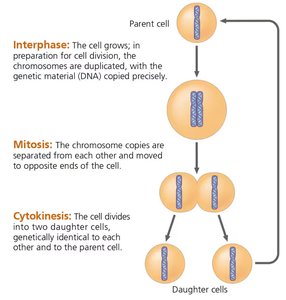
Phases of Mitosis
Mitosis consists of several distinct phases: - Prophase: Chromosomes condense, spindle apparatus forms, and centrosomes migrate. - Prometaphase: Nuclear envelope breaks down, spindles attach to chromosomes at the centromere. - Metaphase: Chromosomes align at the metaphase plate. - Anaphase: Sister chromatids separate and move to opposite poles. - Telophase: Nuclear envelope re-forms, chromosomes decondense. - Cytokinesis: Division of the cytoplasm, resulting in two daughter cells. 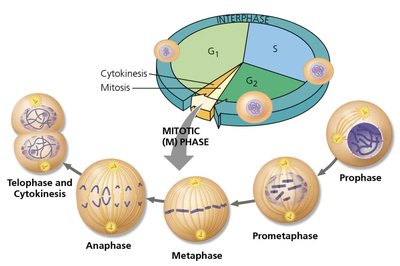
Comparison: Homologous Chromosomes vs. Sister Chromatids
Feature | Homologous Chromosomes | Sister Chromatids |
|---|---|---|
Origin | One from each parent | Result from DNA replication |
Genetic Identity | Genetically unique | Genetically identical |
Ploidy Count | Counted as separate for ploidy | Not counted as separate for ploidy |
Genes | Same genes, possibly different alleles | Identical alleles |
Summary Table: Cell Cycle Phases
Phase | Main Event | Checkpoint |
|---|---|---|
G1 | Cell growth | DNA damage check |
S | DNA synthesis (replication) | None |
G2 | Growth and preparation for mitosis | DNA replication check |
M | Mitosis and cytokinesis | Spindle assembly check |
Key Equations and Concepts
Semiconservative DNA Replication
Ploidy Calculation
Applications and Examples
Cell Division in Skin
Mitosis is responsible for cell replacement and healing in tissues such as the epidermis and dermis. 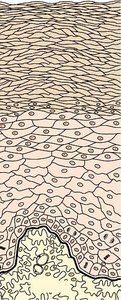
Microscopic View of Dividing Cells
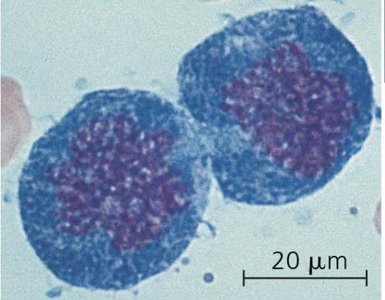
Additional info:
- The cell cycle is tightly regulated to prevent uncontrolled cell division, which can lead to cancer. - DNA replication errors are corrected by repair mechanisms; failure to repair can result in apoptosis or mutations. - Mitosis ensures genetic continuity, while meiosis (not covered in detail here) introduces genetic diversity.
