 Indietro
Cell Cycle, DNA Replication, and Mitosis: Study Notes for General Biology
Guida di studio - Note intelligenti
 Appunti personalizzati basati sui tuoi materiali, ampliati con definizioni chiave, esempi e contesto.
Cell Cycle and Its Regulation
Overview of the Cell Cycle
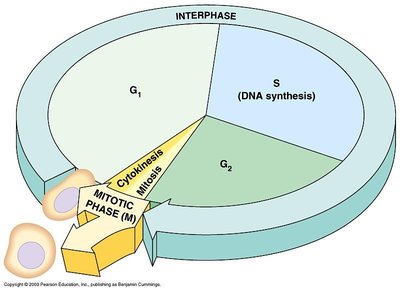
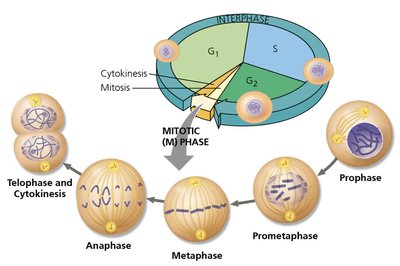
The cell cycle is the series of events that cells go through as they grow and divide. It consists of interphase (G1, S, G2) and the mitotic (M) phase, which includes mitosis and cytokinesis. Proper regulation ensures healthy growth, development, and maintenance of tissues.
G1 phase: Cell grows and prepares for DNA replication.
S phase: DNA synthesis (replication) occurs.
G2 phase: Cell prepares for mitosis.
M phase: Mitosis and cytokinesis take place.
Cell Cycle Checkpoints
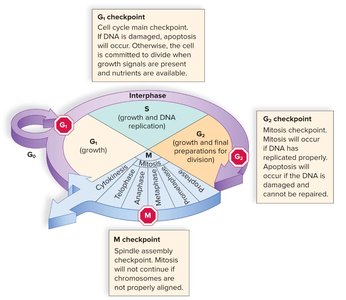
Checkpoints are control mechanisms that ensure the cell is ready to proceed to the next stage. They prevent errors such as damaged DNA or misaligned chromosomes from being passed to daughter cells.
G1 checkpoint: Checks for DNA damage after mitosis; if damaged, cell repairs or undergoes apoptosis.
G2 checkpoint: Ensures DNA has replicated properly; prevents mitosis if errors are detected.
M checkpoint: Spindle assembly checkpoint; mitosis will not continue if chromosomes are not properly aligned.
DNA Replication
Mechanism and Importance
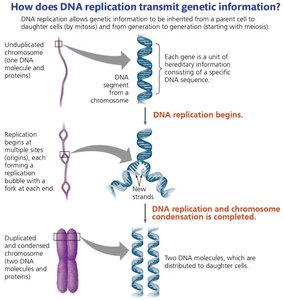
DNA replication is the process by which a cell copies its DNA before cell division. This ensures that each daughter cell receives a complete set of genetic instructions. Replication is semiconservative, meaning each new DNA molecule contains one old strand and one new strand.
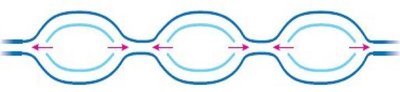
Origins of replication: Specific sites where replication begins.
Replication fork: The area where the DNA is actively being unwound and copied.
Replication bubble: The region where DNA is opened up for replication.
Transmission of Genetic Information
DNA replication allows genetic information to be inherited from parent to daughter cells during mitosis and from generation to generation during meiosis. Each gene is a unit of hereditary information, and accurate replication is essential for maintaining genetic integrity.
Gene: Segment of DNA coding for a specific protein.
Chromosome condensation: Occurs after replication, preparing chromosomes for segregation.
Chromosome Structure and Organization
Chromosomes and Chromatids
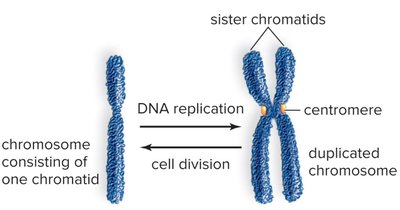
Chromosomes are long, linear DNA molecules wrapped around proteins. After DNA replication, each chromosome consists of two sister chromatids joined at the centromere. Sister chromatids are genetically identical and are separated during mitosis.
Chromatid: One of two identical halves of a replicated chromosome.
Centromere: Region where sister chromatids are joined.
Homologous Chromosomes vs. Sister Chromatids
Homologous chromosomes are pairs of chromosomes (one from each parent) with the same genes at the same loci but possibly different alleles. Sister chromatids are identical copies formed by DNA replication of a single chromosome.
Homologous chromosomes: Genetically unique, counted for ploidy, result from fertilization.
Sister chromatids: Genetically identical, not counted for ploidy, result from DNA replication.
Feature | Homologous Chromosomes | Sister Chromatids |
|---|---|---|
Origin | Mother and Father | DNA replication |
Genetic Identity | Unique | Identical |
Ploidy | Counted | Not counted |
Mitosis and Cytokinesis
Phases of Mitosis
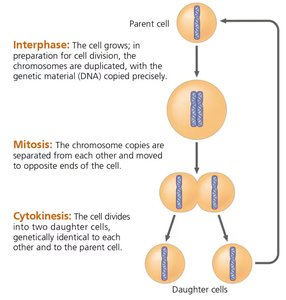
Mitosis is the process by which a cell divides its duplicated chromosomes into two identical sets, followed by cytokinesis, which divides the cytoplasm. The result is two genetically identical daughter cells.
Prophase: Chromosomes condense, spindle forms.
Prometaphase: Nuclear envelope breaks down, spindle attaches to chromosomes.
Metaphase: Chromosomes align at the metaphase plate.
Anaphase: Sister chromatids separate and move to opposite poles.
Telophase: Nuclear envelope reforms, chromosomes decondense.
Cytokinesis: Division of cytoplasm, forming two daughter cells.
Cell Cycle in Context: Growth, Repair, and Asexual Reproduction
Mitosis is essential for organismal growth, tissue repair, cell replacement, and asexual reproduction. In multicellular organisms, it maintains genetic consistency across somatic cells.
Growth: Increase in cell number.
Repair: Replacement of damaged cells.
Asexual reproduction: Production of genetically identical offspring.
Summary Table: Cell Cycle Phases and Key Events
Phase | Main Event | Checkpoint |
|---|---|---|
G1 | Cell growth | DNA damage check |
S | DNA replication | None |
G2 | Preparation for mitosis | DNA replication check |
M | Mitosis and cytokinesis | Spindle assembly check |
Additional info:
DNA replication is semiconservative:
Human somatic cells are diploid (2n = 46 chromosomes)
Cell cycle checkpoints are critical for preventing cancer and maintaining genomic integrity
