 Indietro
Cell Cycle, Mitosis, and Meiosis: Structured Study Notes
Guida di studio - Note intelligenti
 Appunti personalizzati basati sui tuoi materiali, ampliati con definizioni chiave, esempi e contesto.
The Cell Cycle
Overview: The Key Roles of Cell Division
Cell division is fundamental to life, enabling reproduction, growth, and repair in organisms. The cell cycle encompasses the life of a cell from its formation to its own division, ensuring continuity of life.
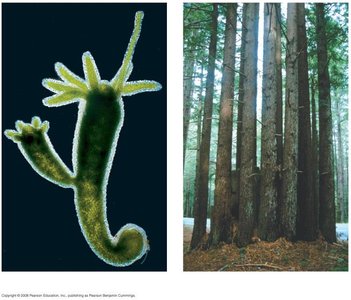
Unicellular organisms: Division of one cell reproduces the entire organism.
Multicellular organisms: Cell division is essential for development, growth, and tissue repair.
Cell cycle: Includes cell growth, DNA replication, and cell division.
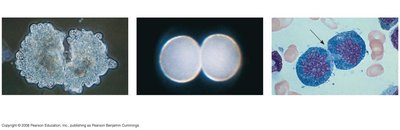
Cell Division: Mitosis and Meiosis
Cell division results in daughter cells with either identical or varied genetic information, depending on the process.
Mitosis: Produces genetically identical daughter cells (somatic cells).
Meiosis: Produces nonidentical daughter cells (gametes) with half the chromosome number.
Cellular Organization of Genetic Material
The genome is the complete set of DNA in a cell, organized into chromosomes. Chromosomes are composed of condensed chromatin (DNA and protein), which condenses further during cell division.
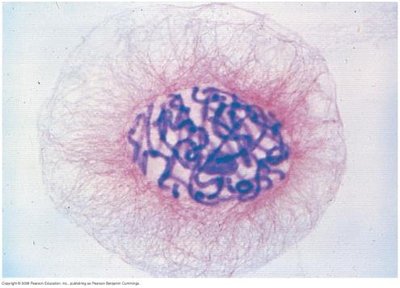
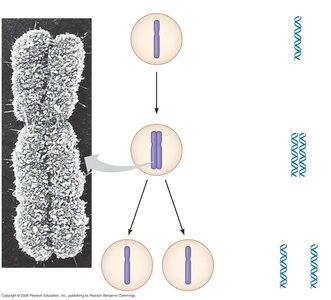
Chromosome Duplication and Separation
Before cell division, chromosomes are duplicated, forming two sister chromatids joined at the centromere. During division, sister chromatids separate, ensuring each daughter cell receives a complete set of chromosomes.
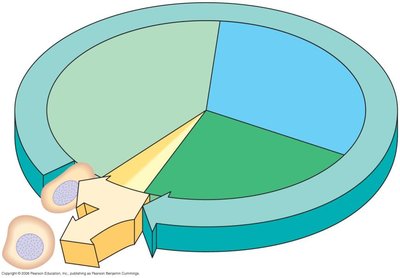
Phases of the Cell Cycle
The cell cycle consists of interphase (G1, S, G2) and the mitotic phase (mitosis and cytokinesis).
G1 phase: Cell growth and organelle development.
S phase: DNA synthesis and chromosome duplication.
G2 phase: Further growth and preparation for division.
Mitosis: Division of the nucleus.
Cytokinesis: Division of the cytoplasm.
Phases of Mitosis
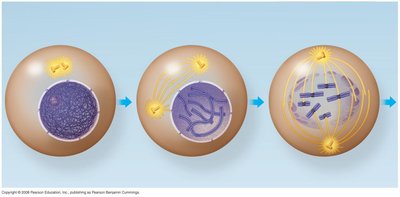
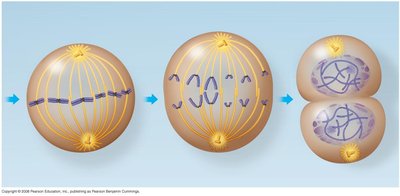
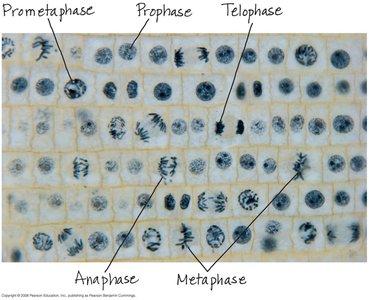
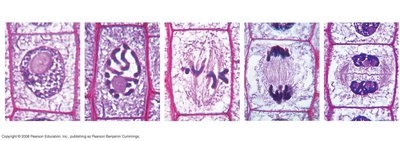
Mitosis is divided into five phases: prophase, prometaphase, metaphase, anaphase, and telophase, followed by cytokinesis.
Prophase: Chromatin condenses, nucleoli disappear, centrosomes move apart.
Prometaphase: Nuclear envelope breaks down, spindle microtubules attach to kinetochores.
Metaphase: Chromosomes align at the metaphase plate.
Anaphase: Sister chromatids are pulled apart.
Telophase: Chromosomes decondense, nuclear envelopes reform.
Cytokinesis: Cytoplasm divides, forming two daughter cells.
The Mitotic Spindle
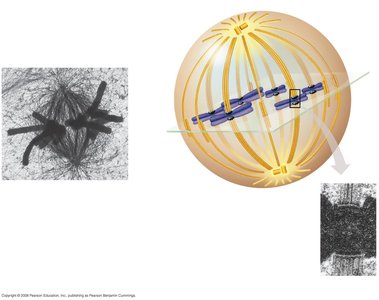
The mitotic spindle is a structure of microtubules that orchestrates chromosome movement during mitosis. It includes centrosomes, spindle microtubules, and asters.
Spindle microtubules attach to kinetochores and move chromosomes.
Nonkinetochore microtubules elongate the cell during anaphase.
Cytokinesis: Animal vs. Plant Cells
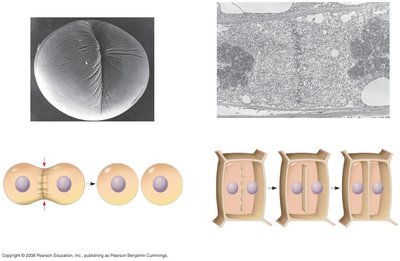
Cytokinesis differs between animal and plant cells:
Animal cells: Cleavage furrow forms, pinching the cell in two.
Plant cells: Cell plate forms, leading to new cell wall formation.
Binary Fission in Prokaryotes
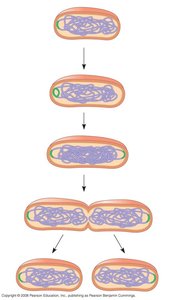
Prokaryotes reproduce by binary fission, a process where the chromosome replicates and daughter chromosomes move apart.
Evolution of Mitosis
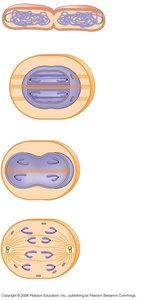
Mitosis likely evolved from binary fission, with certain protists displaying intermediate forms of cell division.
Cell Cycle Regulation
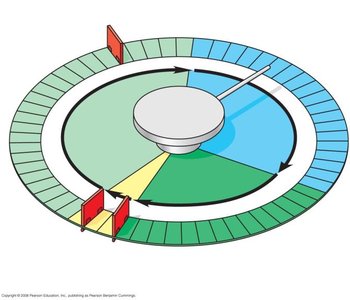
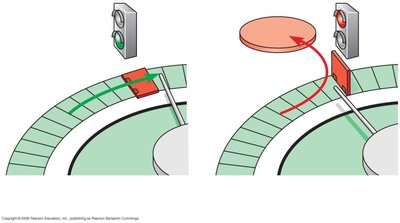
The cell cycle is regulated by a molecular control system, with checkpoints ensuring proper progression. The G1 checkpoint is particularly important; cells that do not pass enter a nondividing G0 phase.
Cyclins and Cyclin-Dependent Kinases (Cdks)
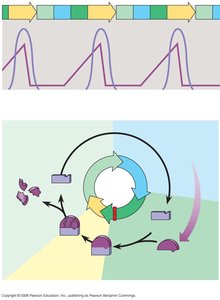
Cyclins and Cdks are regulatory proteins that control the cell cycle. MPF (maturation-promoting factor) is a cyclin-Cdk complex that triggers passage past the G2 checkpoint.
Internal and External Signals
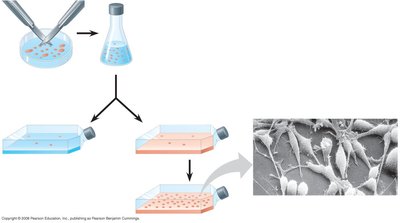
Cell division is influenced by internal signals (e.g., unattached kinetochores delaying anaphase) and external signals (e.g., growth factors like PDGF stimulating cell division).
Anchorage and Density-Dependent Inhibition
Normal cells require anchorage and exhibit density-dependent inhibition, stopping division when crowded. Cancer cells lack these controls, leading to uncontrolled growth.
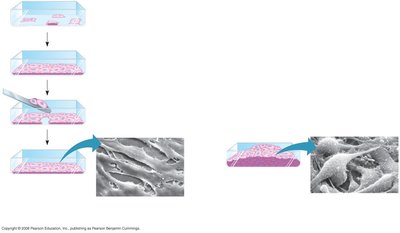
Cancer and Loss of Cell Cycle Control
Cancer cells evade normal cell cycle controls, forming tumors. Tumors can be benign (localized), malignant (invasive), or metastatic (spread to other sites).
Meiosis and Sexual Life Cycles
Overview of Genetics and Heredity
Genetics is the study of heredity and variation. Genes, composed of DNA, are inherited and located at specific loci on chromosomes. Variation arises from differences in alleles.
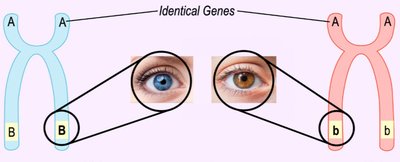
Chromosome Sets in Human Cells
Human somatic cells have 23 pairs of chromosomes (46 total), including autosomes and sex chromosomes. Homologous chromosomes carry genes for the same traits.
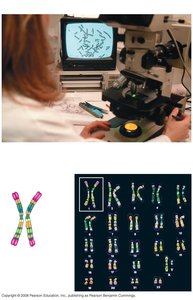
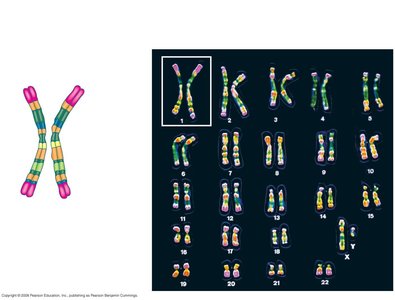
Haploid and Diploid Cells
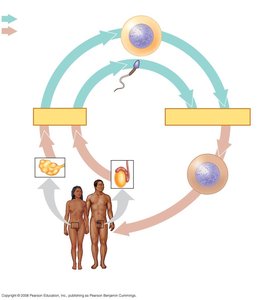
Somatic cells are diploid (2n), containing two sets of chromosomes. Gametes are haploid (n), containing one set. Fertilization restores diploidy in the zygote.
Sexual Life Cycles
Meiosis and fertilization alternate in sexual life cycles, maintaining chromosome number. Three main types of life cycles exist in animals, plants, and fungi.
Meiosis: Reduction of Chromosome Number
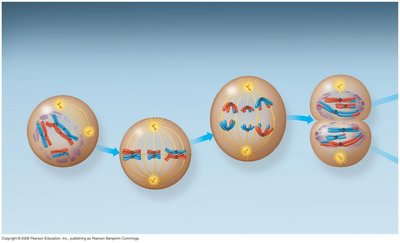
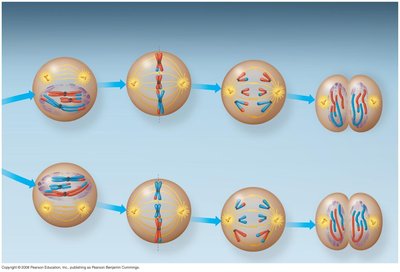
Meiosis consists of two divisions (meiosis I and II), resulting in four haploid daughter cells. Meiosis I separates homologous chromosomes; meiosis II separates sister chromatids.
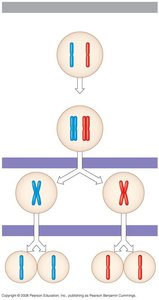
Stages of Meiosis
Meiosis I: Prophase I, Metaphase I, Anaphase I, Telophase I and cytokinesis. Meiosis II: Prophase II, Metaphase II, Anaphase II, Telophase II and cytokinesis.
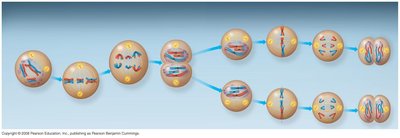
Comparison of Mitosis and Meiosis
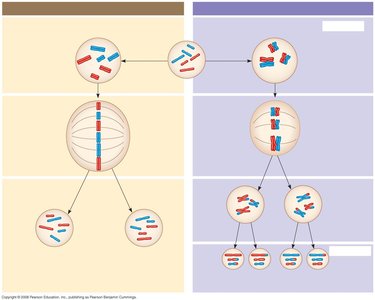
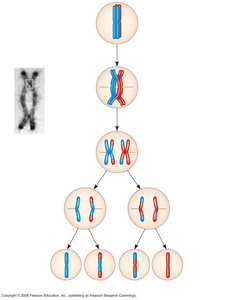
Mitosis produces genetically identical diploid cells; meiosis produces genetically distinct haploid cells. Unique events in meiosis I include synapsis and crossing over, tetrad formation, and separation of homologous chromosomes.
Genetic Variation in Sexual Life Cycles
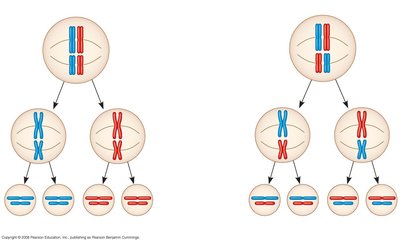
Genetic variation arises from independent assortment, crossing over, and random fertilization. These mechanisms contribute to evolution by increasing diversity.
Key Terms and Concepts
Somatic cell: Any cell other than a gamete.
Gamete: Reproductive cell (sperm or egg).
Autosome: Chromosome not involved in sex determination.
Sex chromosome: X or Y chromosome.
Haploid: One set of chromosomes (n).
Diploid: Two sets of chromosomes (2n).
Allele: Variant form of a gene.
Centromere: Region joining sister chromatids.
Chiasmata: Site of crossing over in meiosis.
Important Equations
Independent assortment combinations: (where n = haploid number)
Summary Table: Mitosis vs. Meiosis
Property | Mitosis | Meiosis |
|---|---|---|
DNA Replication | Occurs during interphase before mitosis | Occurs during interphase before meiosis I |
Number of Divisions | One | Two |
Synapsis of Homologs | Does not occur | Occurs during prophase I |
Daughter Cells | Two, diploid, genetically identical | Four, haploid, genetically distinct |
Role | Growth, repair, asexual reproduction | Gamete production, genetic variability |
Key Learning Objectives
Describe the structural organization of prokaryotic and eukaryotic genomes.
List and describe the phases of the cell cycle and mitosis.
Draw or describe the mitotic spindle and its components.
Compare cytokinesis in animals and plants.
Explain binary fission and its evolutionary relationship to mitosis.
Explain how cancer cells escape normal cell cycle controls.
Distinguish between benign, malignant, and metastatic tumors.
Distinguish between somatic cells, gametes, autosomes, sex chromosomes, haploid, and diploid.
Describe the events of meiosis and unique features of meiosis I.
Explain mechanisms contributing to genetic variation in sexually reproducing organisms.
