 Indietro
Cell Cycle, Mitosis, and Meiosis: Structured Study Notes
Guida di studio - Note intelligenti
 Appunti personalizzati basati sui tuoi materiali, ampliati con definizioni chiave, esempi e contesto.
The Cell Cycle
Overview: The Key Roles of Cell Division
Cell division is fundamental to life, enabling reproduction, growth, and repair in organisms. The cell cycle encompasses the life of a cell from its formation to its division, ensuring continuity of life.
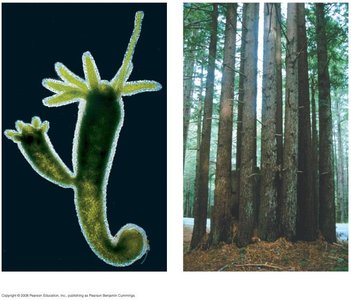
Reproduction: Unicellular organisms reproduce by cell division; multicellular organisms rely on cell division for development, growth, and tissue repair.
Cell Cycle: Includes cell growth, DNA replication, and division.
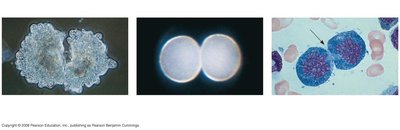
Cell Division: Mitosis and Meiosis
Mitosis: Produces genetically identical daughter cells; occurs in somatic cells (cells with two sets of chromosomes).
Meiosis: Produces nonidentical daughter cells (gametes) with half the chromosome number; essential for sexual reproduction.
Cellular Organization of Genetic Material
Genetic material is organized as chromosomes, which are condensed forms of chromatin (DNA and protein). Eukaryotic cells have multiple chromosomes, while prokaryotic cells typically have a single DNA molecule.
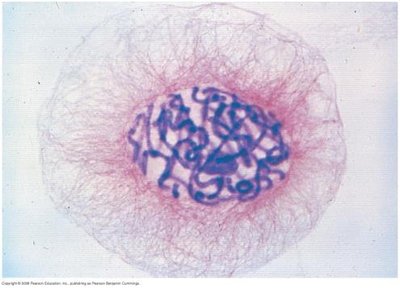
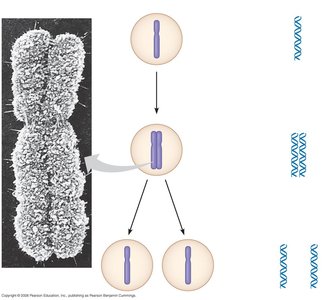
Chromosome Duplication and Separation
Chromosome Duplication: Each chromosome is replicated, forming two sister chromatids joined at the centromere.
Separation: During cell division, sister chromatids are separated into daughter cells.
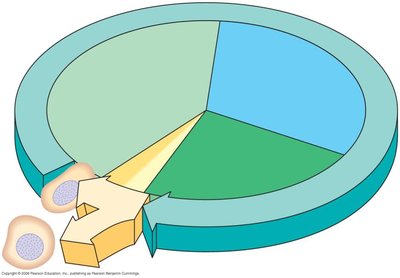
Phases of the Cell Cycle
The cell cycle consists of interphase (G1, S, G2) and the mitotic phase (mitosis and cytokinesis).
G1 phase: Cell growth and organelle development.
S phase: DNA synthesis and chromosome duplication.
G2 phase: Further growth and preparation for division; includes a checkpoint.
M phase: Mitosis (nuclear division) and cytokinesis (cytoplasmic division).
Mitosis: Phases and Events
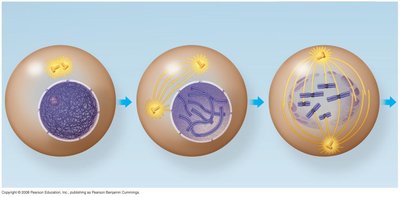
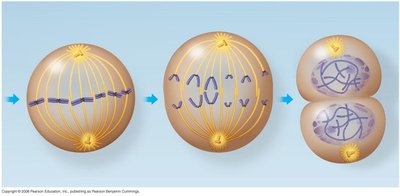
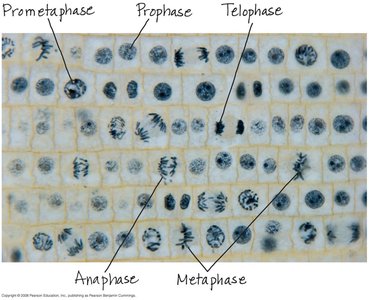
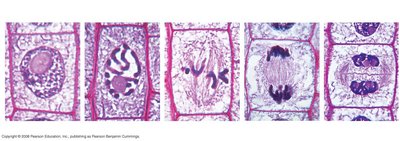
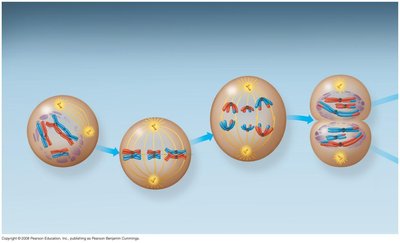
Mitosis is divided into five phases: prophase, prometaphase, metaphase, anaphase, and telophase, followed by cytokinesis.
Prophase: Chromatin condenses, nucleoli disappear, centrosomes move apart.
Prometaphase: Nuclear envelope breaks down, spindle microtubules attach to kinetochores.
Metaphase: Chromosomes align at the metaphase plate.
Anaphase: Sister chromatids are pulled apart to opposite poles.
Telophase: Nuclei reform, chromosomes decondense.
Cytokinesis: Cytoplasm divides, forming two daughter cells.
The Mitotic Spindle
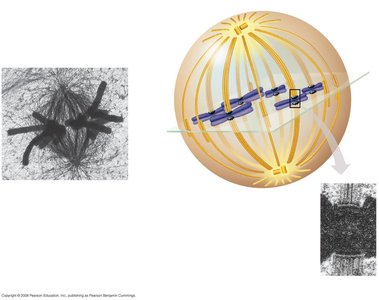
The mitotic spindle is a structure of microtubules that orchestrates chromosome movement during mitosis. It includes centrosomes, spindle microtubules, and asters.
Spindle Formation: Begins in prophase; centrosomes replicate and migrate to opposite poles.
Microtubule Attachment: Spindle microtubules attach to kinetochores during prometaphase.
Cytokinesis: Animal vs. Plant Cells
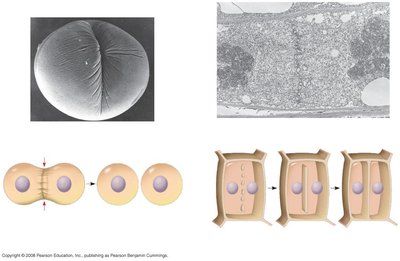
Animal Cells: Cytokinesis occurs via cleavage, forming a cleavage furrow.
Plant Cells: Cytokinesis occurs via cell plate formation, leading to a new cell wall.
Binary Fission in Prokaryotes
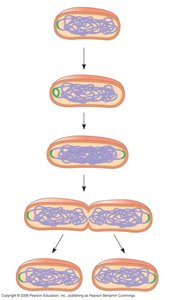
Prokaryotes reproduce by binary fission, a process where the chromosome replicates and daughter chromosomes move apart.
Evolution of Mitosis
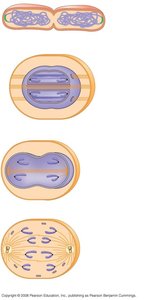
Mitosis likely evolved from binary fission. Some protists display intermediate forms of cell division.
Cell Cycle Regulation and Checkpoints
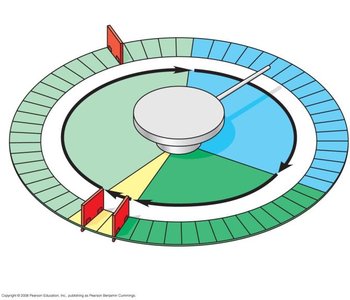
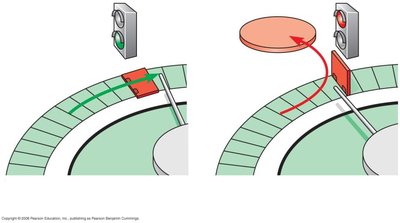
The cell cycle is regulated by a molecular control system, with checkpoints ensuring proper progression. The G1 checkpoint is particularly important.
Checkpoints: G1, G2, and M checkpoints control cell cycle progression.
G0 Phase: Cells that do not receive a go-ahead signal at G1 enter a nondividing state.
Cyclins and Cyclin-Dependent Kinases (Cdks)
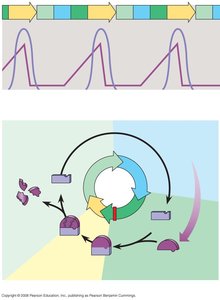
Cyclins and Cdks are regulatory proteins that control cell cycle progression. MPF (maturation-promoting factor) is a cyclin-Cdk complex that triggers entry into the M phase.
Internal and External Signals
Internal Signals: Unattached kinetochores delay anaphase.
External Signals: Growth factors (e.g., PDGF) stimulate cell division.
Anchorage and Density-Dependent Inhibition
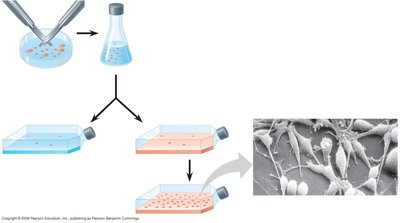
Anchorage Dependence: Cells must be attached to a substratum to divide.
Density-Dependent Inhibition: Crowded cells stop dividing.
Cancer Cells: Lack both anchorage dependence and density-dependent inhibition.
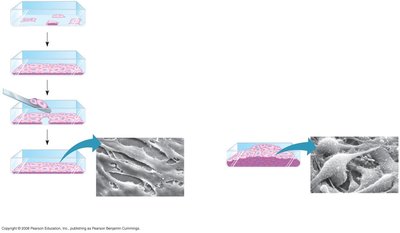
Loss of Cell Cycle Controls in Cancer
Transformation: Normal cells become cancerous.
Tumors: Benign tumors remain localized; malignant tumors invade tissues and can metastasize.
Meiosis and Sexual Life Cycles
Overview of Genetics and Heredity
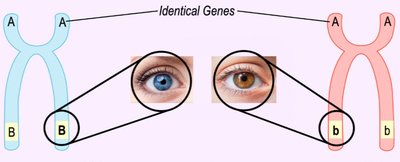
Genetics is the study of heredity and variation. Genes, located on chromosomes, are inherited through gametes. Variation arises from differences in gene alleles.
Chromosome Sets in Human Cells
Somatic Cells: Diploid (2n = 46), two sets of chromosomes.
Gametes: Haploid (n = 23), one set of chromosomes.
Karyotype: Ordered display of chromosome pairs.
Homologous Chromosomes: Same length, carry genes for same traits.
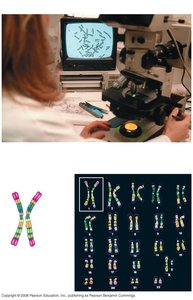
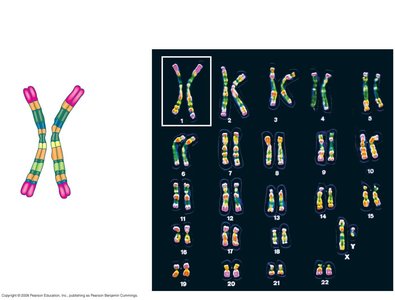
Sex Chromosomes and Autosomes
Sex Chromosomes: X and Y; females (XX), males (XY).
Autosomes: 22 pairs not involved in sex determination.
Fertilization and the Human Life Cycle
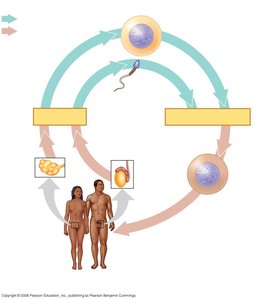
Fertilization: Union of sperm and egg forms a zygote (diploid).
Meiosis: Produces haploid gametes; alternates with fertilization to maintain chromosome number.
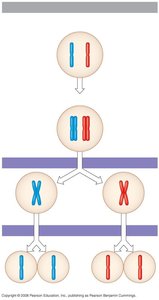
Meiosis: Reduction of Chromosome Number
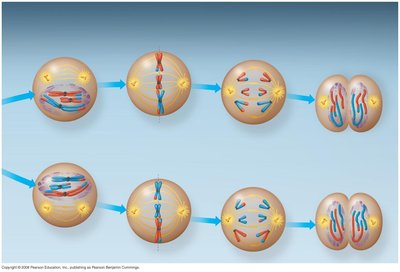
Meiosis I: Homologous chromosomes separate, forming two haploid cells.
Meiosis II: Sister chromatids separate, forming four haploid cells.
Stages of Meiosis
Meiosis I: Prophase I, Metaphase I, Anaphase I, Telophase I and Cytokinesis.
Meiosis II: Prophase II, Metaphase II, Anaphase II, Telophase II and Cytokinesis.
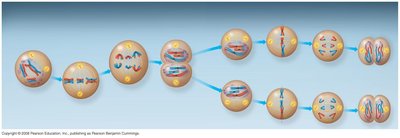
Unique Events in Meiosis
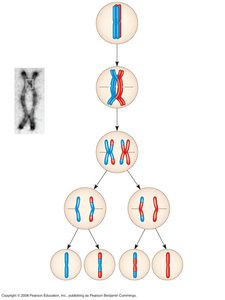
Synapsis and Crossing Over: Homologous chromosomes pair and exchange genetic material in prophase I.
Tetrads: Paired homologous chromosomes at metaphase plate.
Separation: Homologous chromosomes separate in anaphase I; sister chromatids separate in anaphase II.
Comparison of Mitosis and Meiosis
Property | Mitosis | Meiosis |
|---|---|---|
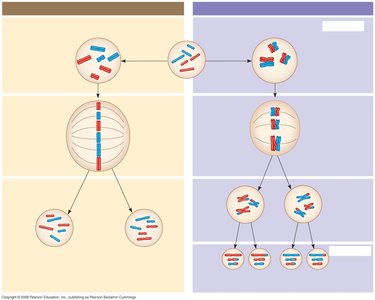
DNA Replication | Occurs during interphase before mitosis | Occurs during interphase before meiosis I |
Number of Divisions | One | Two |
Synapsis of Homologs | Does not occur | Occurs during prophase I |
Daughter Cells | Two, diploid, genetically identical | Four, haploid, genetically distinct |
Role | Growth, repair, asexual reproduction | Gamete production, genetic variability |
Genetic Variation in Sexual Life Cycles
Mutations: Source of new alleles.
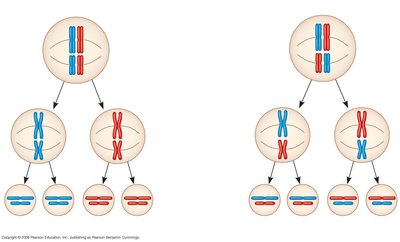
Independent Assortment: Random orientation of homologous chromosomes during meiosis I.
Crossing Over: Exchange of genetic material between nonsister chromatids.
Random Fertilization: Any sperm can fertilize any egg, increasing variation.
Evolutionary Significance of Genetic Variation
Natural Selection: Favors accumulation of beneficial genetic variations.
Sexual Reproduction: Increases genetic diversity in populations.
Key Concepts for Review
Structural organization of prokaryotic and eukaryotic genomes
Phases and events of the cell cycle and mitosis
Mitotic spindle structure and function
Cytokinesis in animals vs. plants
Binary fission and evolution of mitosis
Abnormal cell division in cancer
Types of tumors: benign, malignant, metastatic
Somatic vs. gamete cells; autosomes vs. sex chromosomes; haploid vs. diploid
Meiosis phases and unique events
Mechanisms of genetic variation
