 Indietro
Cell Cycle, Mitosis, and Meiosis: Structured Study Notes
Guida di studio - Note intelligenti
 Appunti personalizzati basati sui tuoi materiali, ampliati con definizioni chiave, esempi e contesto.
The Cell Cycle
Overview: The Key Roles of Cell Division
Cell division is fundamental to life, enabling organisms to reproduce, grow, and repair tissues. The cell cycle encompasses the life of a cell from its formation to its own division.
Reproduction: Unicellular organisms reproduce by cell division; multicellular organisms use cell division for development, growth, and repair.
Cell Cycle: Includes cell growth, DNA replication, and division.
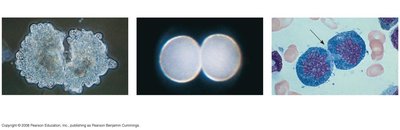
Cell Division: Mitosis and Meiosis
Cell division results in daughter cells. There are two main types:
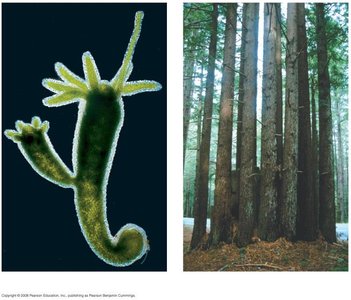
Mitosis: Produces genetically identical daughter cells (somatic cells).
Meiosis: Produces nonidentical daughter cells (gametes) with half the chromosome number.
Cellular Organization of Genetic Material
Genetic material is organized as follows:
Genome: All DNA in a cell.
Chromosomes: DNA molecules packaged with proteins (chromatin).
Chromatin: Condenses into chromosomes during cell division.
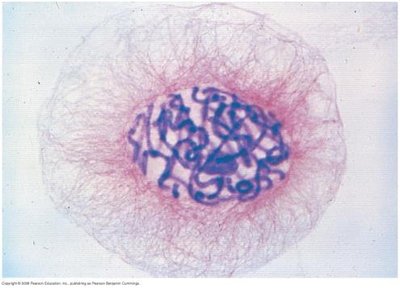
Chromosome Duplication and Separation
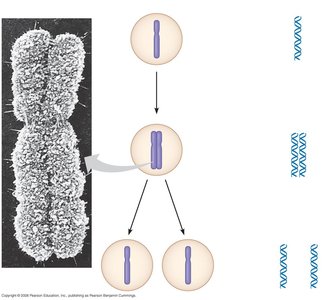
Before cell division, chromosomes are duplicated, forming sister chromatids joined at the centromere. During division, sister chromatids separate.
Phases of the Cell Cycle
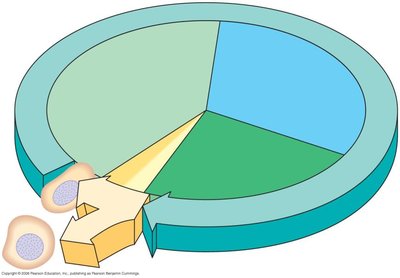
The cell cycle consists of interphase and mitotic (M) phase:
Interphase: G1 (growth), S (DNA synthesis), G2 (growth and checkpoint).
M Phase: Mitosis (nuclear division) and cytokinesis (cytoplasmic division).
Mitosis
Phases of Mitosis
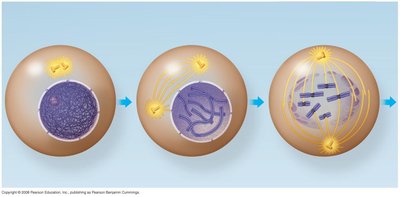
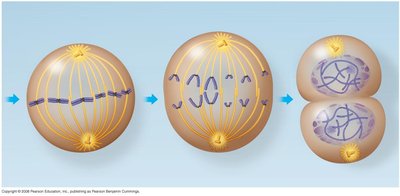
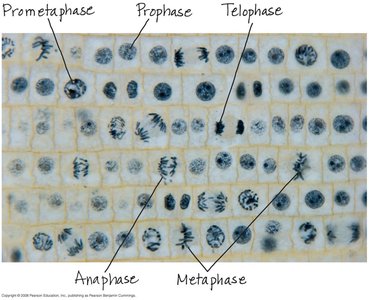
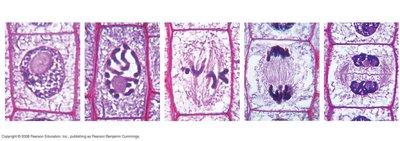
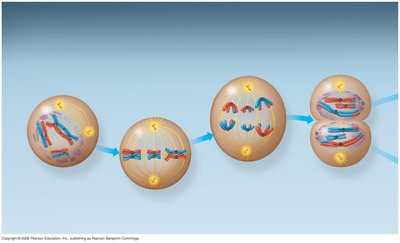
Mitosis is divided into five phases:
Prophase: Chromatin condenses, nucleoli disappear, centrosomes move apart.
Prometaphase: Nuclear envelope breaks down, spindle microtubules attach to kinetochores.
Metaphase: Chromosomes align at the metaphase plate.
Anaphase: Sister chromatids separate and move to opposite poles.
Telophase: Nuclei reform, chromosomes decondense.
Cytokinesis: Division of cytoplasm.
The Mitotic Spindle
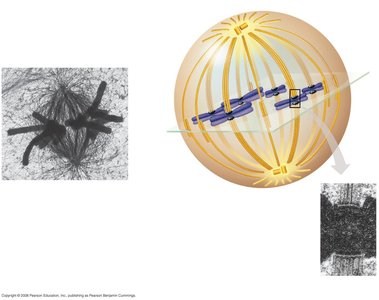
The mitotic spindle is a structure of microtubules that orchestrates chromosome movement during mitosis. It includes centrosomes, spindle microtubules, and asters.
Cytokinesis: Animal vs. Plant Cells
Cytokinesis differs between animal and plant cells:
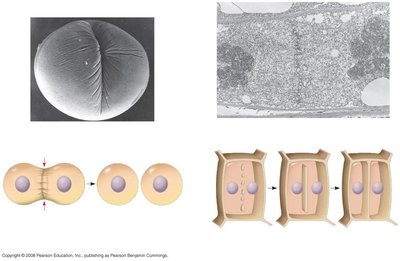
Animal cells: Cleavage furrow forms, pinching the cell in two.
Plant cells: Cell plate forms, leading to new cell wall formation.
Binary Fission
Cell Division in Prokaryotes
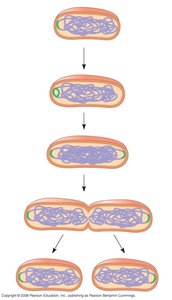
Prokaryotes reproduce by binary fission, where the chromosome replicates and daughter chromosomes move apart.
Evolution of Mitosis
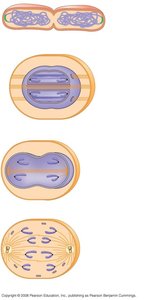
Mitosis likely evolved from binary fission, with intermediate forms seen in some protists.
Regulation of the Cell Cycle
Cell Cycle Control System
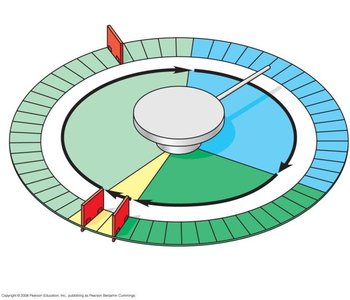
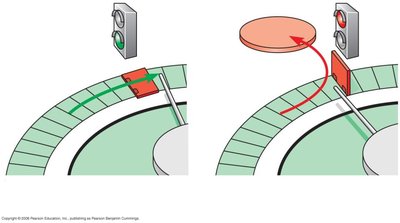
The cell cycle is regulated by a molecular control system with checkpoints (G1, G2, M) that ensure proper division.
Cyclins and Cyclin-Dependent Kinases (Cdks)
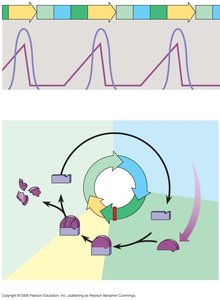
Cyclins and Cdks are regulatory proteins whose activity fluctuates during the cell cycle. MPF (maturation-promoting factor) is a cyclin-Cdk complex that triggers passage past the G2 checkpoint.
Internal and External Signals
Cell division is influenced by internal signals (e.g., unattached kinetochores delay anaphase) and external signals (e.g., growth factors like PDGF stimulate division).
Anchorage and Density-Dependent Inhibition
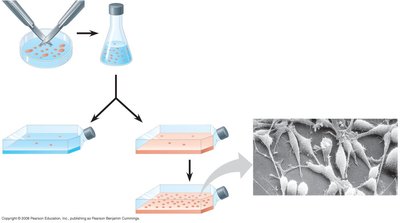
Normal cells require anchorage and stop dividing when crowded (density-dependent inhibition). Cancer cells lack these controls.
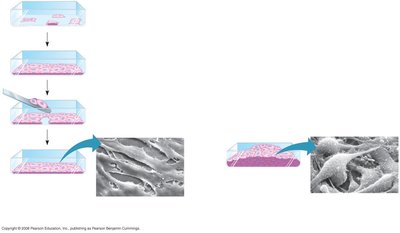
Cancer and Loss of Cell Cycle Control
Cancer cells evade normal cell cycle controls, forming tumors. Tumors can be benign, malignant, or metastatic.
Meiosis and Sexual Life Cycles
Overview of Genetics and Heredity
Meiosis is essential for sexual reproduction, producing gametes and contributing to genetic variation.
Chromosome Sets in Human Cells
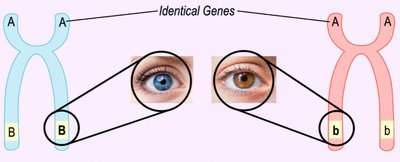
Humans have 23 pairs of chromosomes (46 total). Homologous chromosomes carry genes for the same traits. Somatic cells are diploid (2n), gametes are haploid (n).
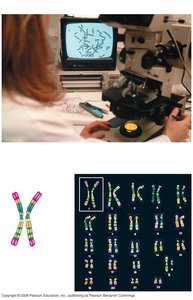
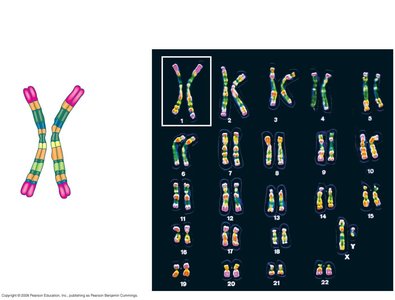
Sex Chromosomes and Autosomes
Sex chromosomes (X and Y) determine gender; autosomes are the other 22 pairs. Gametes contain one set of chromosomes.
Fertilization and Life Cycle
Fertilization unites gametes, forming a zygote. Meiosis and fertilization alternate to maintain chromosome number.
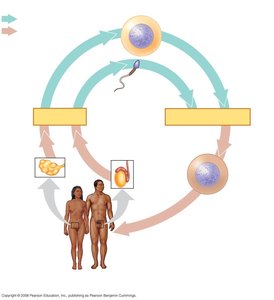
Meiosis: Reduction of Chromosome Number
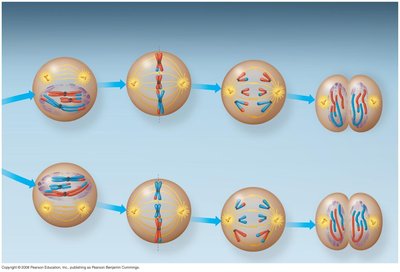
Meiosis consists of two divisions (meiosis I and II), resulting in four haploid cells. Meiosis I separates homologous chromosomes; meiosis II separates sister chromatids.
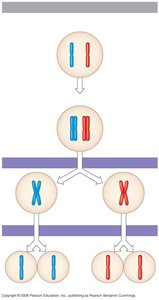
Stages of Meiosis
Meiosis I: Prophase I, Metaphase I, Anaphase I, Telophase I and cytokinesis. Meiosis II: Prophase II, Metaphase II, Anaphase II, Telophase II and cytokinesis.
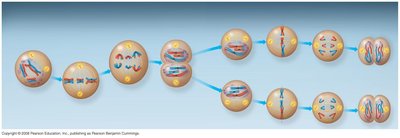
Comparison of Mitosis and Meiosis
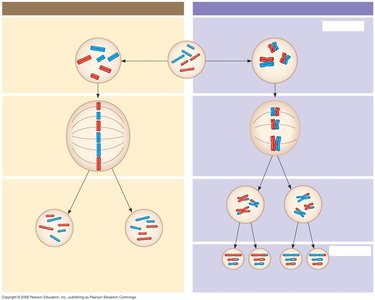
Mitosis produces two identical diploid cells; meiosis produces four genetically distinct haploid cells. Unique events in meiosis I: synapsis and crossing over, paired homologs at metaphase plate, separation of homologs.
Genetic Variation in Sexual Life Cycles
Mechanisms of Genetic Variation
Three mechanisms contribute to genetic variation:
Independent assortment: Random orientation of homologous pairs during meiosis I.
Crossing over: Exchange of genetic material between nonsister chromatids.
Random fertilization: Any sperm can fertilize any egg.
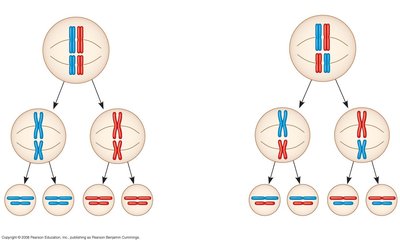
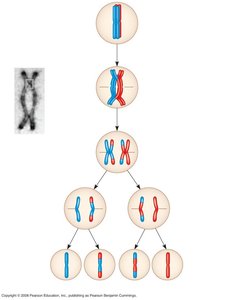
Evolutionary Significance
Genetic variation is essential for evolution, as it provides material for natural selection.
Summary Table: Mitosis vs. Meiosis
Property | Mitosis | Meiosis |
|---|---|---|
DNA Replication | Occurs during interphase before mitosis | Occurs during interphase before meiosis I |
Number of Divisions | One | Two |
Synapsis of Homologs | Does not occur | Occurs during prophase I |
Daughter Cells | Two, diploid, identical | Four, haploid, genetically distinct |
Role | Growth, repair, asexual reproduction | Gamete production, genetic variability |
Key Equations
Independent Assortment: Number of possible combinations = (where n = haploid number)
Key Terms
Somatic cell: Any cell other than a gamete.
Gamete: Reproductive cell (sperm or egg).
Autosome: Non-sex chromosome.
Sex chromosome: X or Y chromosome.
Diploid (2n): Two sets of chromosomes.
Haploid (n): One set of chromosomes.
Review Questions
Describe the structural organization of prokaryotic and eukaryotic genomes.
List the phases of the cell cycle and describe the sequence of events during each phase.
List the phases of mitosis and describe the events characteristic of each phase.
Draw or describe the mitotic spindle, including centrosomes, kinetochore microtubules, nonkinetochore microtubules, and asters.
Compare cytokinesis in animals and plants.
Describe the process of binary fission in bacteria and explain how eukaryotic mitosis may have evolved from binary fission.
Explain how the abnormal cell division of cancerous cells escapes normal cell cycle controls.
Distinguish between benign, malignant, and metastatic tumors.
Distinguish between somatic cell and gamete; autosome and sex chromosome; haploid and diploid.
Describe the events that characterize each phase of meiosis.
Describe three events that occur during meiosis I but not mitosis.
Name and explain the three events that contribute to genetic variation in sexually reproducing organisms.
Additional info: Academic context and explanations have been expanded for clarity and completeness.
