 Indietro
Cell Division and Mitosis: Structure, Process, and Comparison
Guida di studio - Note intelligenti
 Appunti personalizzati basati sui tuoi materiali, ampliati con definizioni chiave, esempi e contesto.
Cell Division and Its Importance
Role of Cell Division in Organisms
Cell division is a fundamental process in biology, essential for reproduction, growth, and maintenance in all living organisms. In unicellular organisms, cell division results in the formation of a new organism. In multicellular eukaryotes, it enables development from a single cell, and allows for renewal, repair, and replacement of cells throughout life.
Reproduction: Unicellular organisms reproduce by dividing into two identical cells.
Growth and Development: Multicellular organisms grow and develop through repeated cell divisions.
Maintenance: Cell division replaces damaged or dead cells, maintaining tissue health.
Cellular Organization of Genetic Material
Genome and Chromosomes
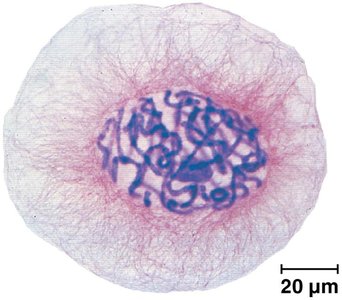
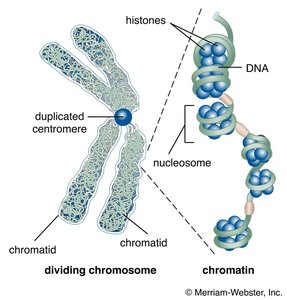
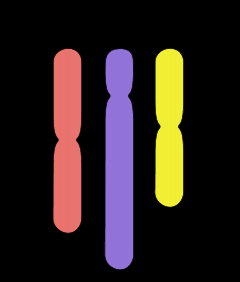
The genome of a cell consists of all its DNA. In prokaryotes, the genome is typically a single DNA molecule, while in eukaryotes, it is organized into multiple DNA molecules called chromosomes. Chromosomes are structures that package DNA and associated proteins, ensuring accurate distribution during cell division.
Chromatin: The complex of DNA and protein found in eukaryotic chromosomes.
Chromosome Structure: Each chromosome contains a centromere, chromatids, and is composed of chromatin.
Chromosome Duplication and Distribution
Process of Chromosome Duplication
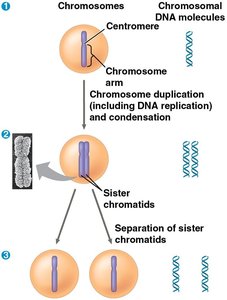
Before cell division, chromosomes are duplicated, resulting in two identical sister chromatids joined at the centromere. During mitosis, these chromatids are separated and distributed to daughter cells, ensuring each new cell receives a complete set of genetic material.
DNA Replication: Occurs during the S phase of the cell cycle.
Sister Chromatids: Identical copies of a chromosome, joined at the centromere.
Separation: During mitosis, sister chromatids are pulled apart to opposite poles of the cell.
Ploidy: Chromosome Sets
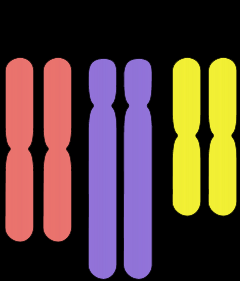
Ploidy refers to the number of sets of chromosomes in a cell. Most somatic cells are diploid (two sets), while gametes are haploid (one set).
Diploid (2n): Two sets of chromosomes, one from each parent.
Haploid (n): One set of chromosomes, typical of gametes.
The Cell Cycle
Phases of the Cell Cycle
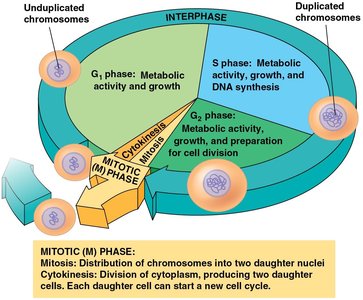
The cell cycle is the series of events that cells go through as they grow and divide. It consists of interphase (G1, S, G2) and the mitotic (M) phase, which includes mitosis and cytokinesis.
G1 Phase: Cell growth and metabolic activity.
S Phase: DNA synthesis and chromosome duplication.
G2 Phase: Preparation for cell division.
M Phase: Mitosis (nuclear division) and cytokinesis (cytoplasmic division).
Mitosis: Stages and Mechanisms
Phases of Mitosis
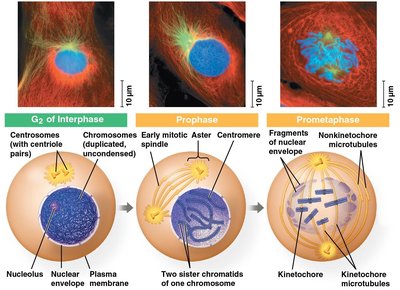
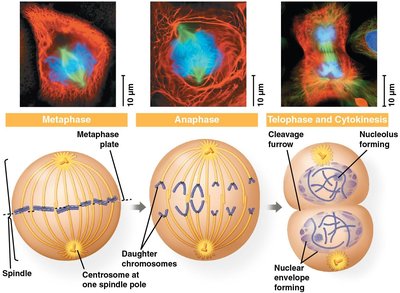
Mitosis is conventionally divided into five phases: prophase, prometaphase, metaphase, anaphase, and telophase. Each phase is characterized by specific events that ensure the accurate segregation of chromosomes.
Prophase: Chromosomes condense, spindle apparatus forms.
Prometaphase: Nuclear envelope breaks down, spindle fibers attach to kinetochores.
Metaphase: Chromosomes align at the metaphase plate.
Anaphase: Sister chromatids separate and move to opposite poles.
Telophase: Nuclear envelopes reform, chromosomes decondense.
Cytokinesis: Division of cytoplasm, forming two daughter cells.
The Mitotic Spindle
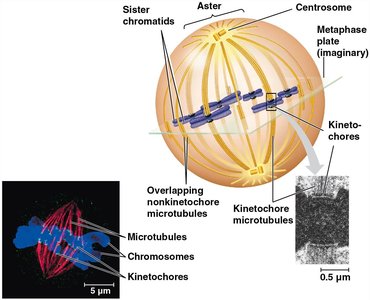
The mitotic spindle is a structure made of microtubules that controls chromosome movement during mitosis. In animal cells, spindle assembly begins at the centrosome, a microtubule organizing center.
Microtubules: Attach to chromosomes at kinetochores.
Centrosome: Organizes spindle microtubules.
Spindle Function: Ensures accurate chromosome segregation.
Cytokinesis: Animal vs. Plant Cells
Mechanisms of Cytokinesis
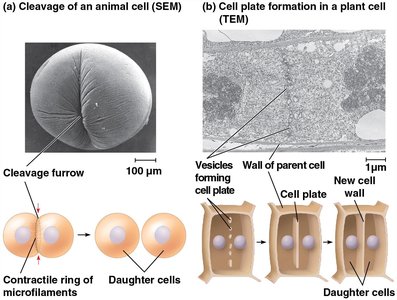
Cytokinesis is the process by which the cytoplasm divides, forming two daughter cells. The mechanism differs between animal and plant cells.
Animal Cells: Cytokinesis occurs via cleavage furrow, formed by a contractile ring of microfilaments.
Plant Cells: Cytokinesis occurs via cell plate formation, which develops into a new cell wall.
Bacterial Cell Division: Binary Fission
Binary Fission Process
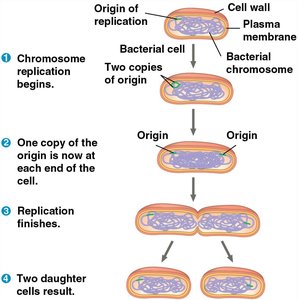
Bacteria divide by a process called binary fission, which is simpler than mitosis. The bacterial chromosome is replicated, and each copy moves to opposite ends of the cell. The cell then splits into two genetically identical daughter cells.
Origin of Replication: Site where DNA replication begins.
Chromosome Segregation: Each daughter cell receives one copy of the chromosome.
Cell Division: Results in two identical cells.
Microtubule Dynamics During Mitosis
Chromosome Movement and Spindle Function
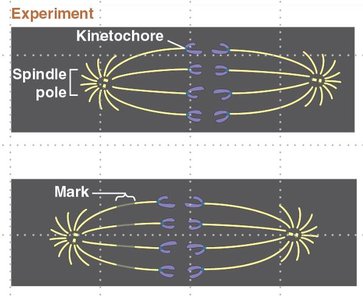
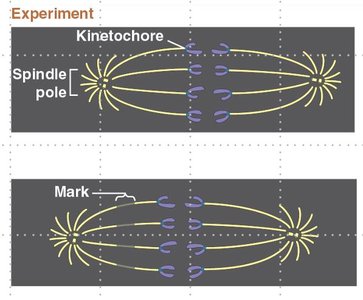
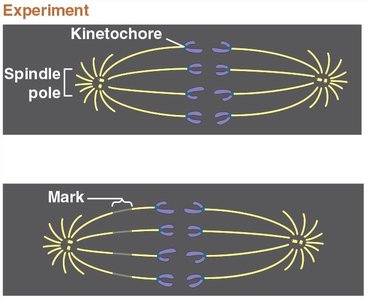
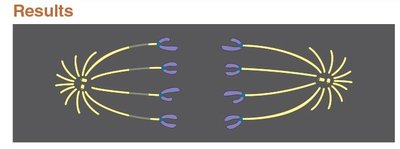
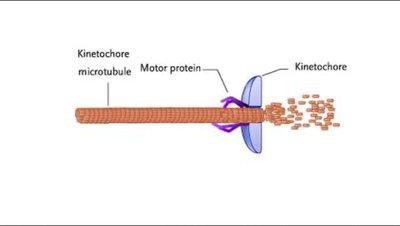
Chromosome movement during mitosis is driven by microtubule dynamics and motor proteins at the kinetochore. Experiments using fluorescent marks on spindle microtubules help elucidate these mechanisms.
Kinetochore: Protein structure on chromosome where spindle fibers attach.
Motor Proteins: Move chromosomes along microtubules.
Microtubule Shortening: Drives chromosome movement toward spindle poles.
Summary Table: Comparison of Mitosis in Animal and Bacterial Cells
Feature | Animal Cell Mitosis | Bacterial Binary Fission |
|---|---|---|
Chromosome Structure | Multiple linear chromosomes | Single circular chromosome |
Spindle Apparatus | Present | Absent |
Division Mechanism | Mitosis + Cytokinesis | Binary fission |
Genetic Material Distribution | Equal distribution of sister chromatids | Equal distribution of replicated chromosome |
Key Terms and Concepts
Mitosis: Nuclear division resulting in two identical daughter cells.
Cytokinesis: Division of cytoplasm.
Chromatin: DNA-protein complex in chromosomes.
Centromere: Region joining sister chromatids.
Kinetochore: Protein structure for spindle attachment.
Binary Fission: Bacterial cell division.
Equations and Formulas
Exponential Growth in Bacterial Division
The number of cells after n divisions can be calculated as:
Where N is the final number of cells, N_0 is the initial number of cells, and n is the number of divisions.
Example
If a bacterial cell divides every 20 minutes and you start with 10 cells, after 1 hour (3 divisions), you will have:
Application: This formula is used to estimate population growth in microbiology.
Additional info:
Some context and explanations were inferred to ensure completeness and clarity for exam preparation.
