 Indietro
Cell Division, Cancer, and Chemotherapy: Step-by-Step Study Guidance
Guida di studio - Note intelligenti
 Appunti personalizzati basati sui tuoi materiali, ampliati con definizioni chiave, esempi e contesto.
Q1. Why is cell division necessary? Describe three situations in which cell division occurs.
Background
Topic: Cell Division and Its Importance
This question tests your understanding of why cells divide and the biological contexts in which cell division is essential.
Key Terms:
Cell division: The process by which a parent cell divides into two or more daughter cells.
Mitosis: Division of somatic cells for growth, repair, and maintenance.
Meiosis: Division that produces gametes for sexual reproduction.
Step-by-Step Guidance
Think about why multicellular organisms need to produce new cells. Consider growth, repair, and reproduction.
Identify three distinct biological situations where cell division is required (e.g., organismal growth, tissue repair, reproduction).
For each situation, briefly describe how cell division contributes to the process.
Try solving on your own before revealing the answer!
Final Answer:
Cell division is necessary for:
Growth: Increasing the number of cells in an organism.
Repair: Replacing damaged or dead cells (e.g., healing wounds).
Reproduction: Producing gametes (meiosis) or new organisms (asexual reproduction).
These processes ensure the survival, maintenance, and propagation of life.
Q2. Describe the organization of the genetic material by defining the following terms: Genome, Chromosomes, Chromatin, Somatic cells, Gametes.
Background
Topic: Genetic Material Organization
This question tests your knowledge of how genetic material is structured and classified in cells.
Key Terms:
Genome: The complete set of genetic material in an organism.
Chromosomes: Structures that carry genetic information, made of DNA and proteins.
Chromatin: The complex of DNA and proteins that forms chromosomes.
Somatic cells: Body cells (non-reproductive), diploid.
Gametes: Reproductive cells (sperm/egg), haploid.
Step-by-Step Guidance
Define each term clearly, focusing on its role in genetic organization.
Explain the relationship between chromatin, chromosomes, and the genome.
Distinguish between somatic cells and gametes in terms of chromosome number.
Try solving on your own before revealing the answer!
Final Answer:
Genome: All genetic material in a cell or organism.
Chromosomes: DNA structures carrying genes; humans have 46 in somatic cells.
Chromatin: DNA plus proteins (histones), forms chromosomes.
Somatic cells: Diploid cells (2 sets of chromosomes), all body cells except gametes.
Gametes: Haploid cells (1 set of chromosomes), sperm and egg.
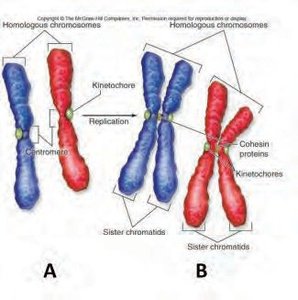
Q3. Use the figures to describe: Homologous Chromosomes and Sister Chromatids.
Background
Topic: Chromosome Structure
This question tests your ability to distinguish between homologous chromosomes and sister chromatids using visual aids.
Key Terms:
Homologous chromosomes: Pair of chromosomes, one from each parent, same genes but possibly different alleles.
Sister chromatids: Identical copies of a chromosome, joined at the centromere after DNA replication.
Step-by-Step Guidance
Examine the provided figure and identify the homologous chromosomes (pairs of similar chromosomes, one maternal and one paternal).
Locate the sister chromatids (identical copies joined together after replication).
Describe the differences in origin and genetic content between homologous chromosomes and sister chromatids.
Try solving on your own before revealing the answer!
Final Answer:
Homologous chromosomes are pairs (one from each parent) with the same genes but possibly different alleles. Sister chromatids are identical copies of a single chromosome, joined at the centromere after DNA replication.
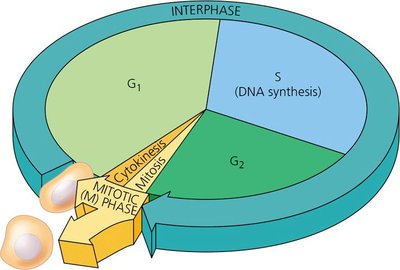
Q4. Describe the overall process of the cell cycle. Describe the general function of each phase. Which is the longest part?
Background
Topic: Cell Cycle Phases
This question tests your understanding of the cell cycle and the function of each phase.
Key Terms and Formula:
Cell cycle: Sequence of events in cell growth and division.
Interphase: Includes G1, S, and G2 phases; longest part.
M phase: Mitosis and cytokinesis.
Step-by-Step Guidance
List the main phases: G1, S, G2, and M phase.
Describe the function of each phase (e.g., G1: cell growth, S: DNA synthesis, G2: preparation for mitosis, M: cell division).
Identify which phase is the longest and explain why.
Try solving on your own before revealing the answer!
Final Answer:
The cell cycle consists of G1 (growth), S (DNA synthesis), G2 (preparation), and M (mitosis/cytokinesis). Interphase (G1, S, G2) is the longest part, as most cellular activities occur here.
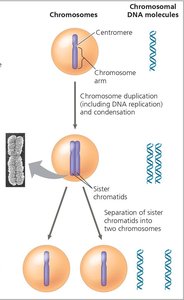
Q5. Cell division occurs in multiple steps. Describe major features of each step: Interphase (G1, S phase, G2), Mitosis (Prophase, Metaphase, Anaphase, Telophase), Cytokinesis.
Background
Topic: Steps of Cell Division
This question tests your knowledge of the sequence and features of cell division.
Key Terms:
Interphase: G1 (growth), S (DNA replication), G2 (preparation).
Mitosis: Prophase (chromosome condensation), Metaphase (alignment), Anaphase (separation), Telophase (reformation).
Cytokinesis: Division of cytoplasm.
Step-by-Step Guidance
Describe what happens in G1, S, and G2 phases during interphase.
Explain the events of each mitotic phase (prophase, metaphase, anaphase, telophase).
Describe cytokinesis and how it completes cell division.
Try solving on your own before revealing the answer!
Final Answer:
G1: Cell grows and prepares for DNA replication.
S: DNA is replicated.
G2: Cell prepares for mitosis.
Prophase: Chromosomes condense, spindle forms.
Metaphase: Chromosomes align at the center.
Anaphase: Sister chromatids separate.
Telophase: Nuclear envelope reforms.
Cytokinesis: Cytoplasm divides, forming two cells.
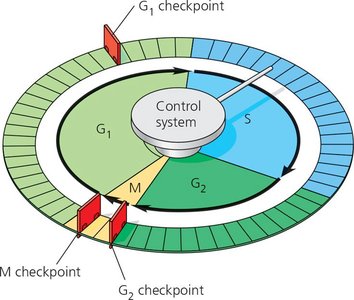
Q6. Cells can continue to grow out of control when checkpoint processes fail. Describe the checkpoints that regulate the cell cycle.
Background
Topic: Cell Cycle Checkpoints
This question tests your understanding of cell cycle regulation and the importance of checkpoints.
Key Terms:
Checkpoints: Control mechanisms that ensure proper cell cycle progression.
G1, G2, and M checkpoints: Specific points where the cell checks for errors or readiness.
Step-by-Step Guidance
Identify the main checkpoints: G1, G2, and M.
Describe what each checkpoint checks for (e.g., DNA damage, proper chromosome alignment).
Explain what happens if a checkpoint fails.
Try solving on your own before revealing the answer!
Final Answer:
G1 checkpoint: Checks for DNA damage and cell size.
G2 checkpoint: Ensures DNA is fully replicated and undamaged.
M checkpoint: Verifies chromosome alignment and spindle attachment.
If checkpoints fail, cells may divide uncontrollably, leading to cancer.
Q7. Cancer results from out of control cell growth. There are two classes of genes that can result in cancer. Describe the difference between each and how they cause cancer.
Background
Topic: Cancer Genetics
This question tests your understanding of oncogenes and tumor suppressor genes.
Key Terms:
Oncogenes: Genes that promote cell division; mutations can lead to uncontrolled growth.
Tumor suppressor genes: Genes that inhibit cell division; loss of function can lead to cancer.
Step-by-Step Guidance
Define oncogenes and tumor suppressor genes.
Explain how mutations in each class contribute to cancer.
Describe the normal function of each gene type and what happens when they malfunction.
Try solving on your own before revealing the answer!
Final Answer:
Oncogenes are mutated forms of genes that normally promote cell division; when overactive, they cause excessive growth. Tumor suppressor genes normally inhibit cell division; when inactivated, cells divide uncontrollably. Both types of mutations can lead to cancer.
Q8. How many copies need to be mutated in a tumor suppressor gene to cause cancer? In a proto-oncogene?
Background
Topic: Gene Mutation and Cancer
This question tests your understanding of genetic mutations and their impact on cancer development.
Key Terms:
Tumor suppressor gene: Requires both copies to be mutated for loss of function.
Proto-oncogene: Only one copy needs to be mutated to become an oncogene.
Step-by-Step Guidance
Recall the difference between dominant and recessive mutations.
Explain why both alleles of a tumor suppressor gene must be mutated.
Describe how a single mutation in a proto-oncogene can lead to cancer.
Try solving on your own before revealing the answer!
Final Answer:
Both copies of a tumor suppressor gene must be mutated to cause cancer. Only one copy of a proto-oncogene needs to be mutated to become an oncogene and promote cancer.
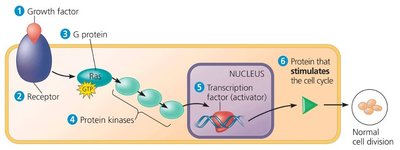
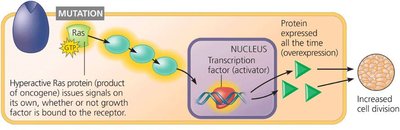
Q9. Describe the role of ras in the cell. How does a malfunctional ras result in cancer?
Background
Topic: Ras Protein and Cell Signaling
This question tests your understanding of the ras protein's role in cell division and how its malfunction can lead to cancer.
Key Terms:
Ras: A GTPase involved in transmitting signals for cell division.
Oncogene: Mutated ras can become an oncogene.
Step-by-Step Guidance
Describe the normal function of ras in cell signaling pathways.
Explain how ras activation leads to cell division.
Discuss what happens when ras is mutated and cannot be inactivated.
Try solving on your own before revealing the answer!
Final Answer:
Ras normally transmits signals from growth factors to promote cell division. A malfunctional (mutated) ras is always active, leading to continuous cell division and cancer.
Q10. Describe how the role of ras in the cell. How does a malfunctional ras result in cancer?
Background
Topic: Ras Protein and Cancer
This question repeats the previous one, reinforcing the importance of ras in cell division and cancer.
Key Terms:
Ras: Signal transduction protein.
Oncogene: Mutated ras leads to uncontrolled cell division.
Step-by-Step Guidance
Review the normal signaling pathway involving ras.
Explain how ras mutation affects cell cycle regulation.
Discuss the consequences of continuous ras activation.
Try solving on your own before revealing the answer!
Final Answer:
Malfunctional ras is always active, causing constant cell division and contributing to cancer development.
Q11. Describe estrogen, progesterone, and HER2 receptor signaling in the development of breast cancer.
Background
Topic: Receptor Signaling in Breast Cancer
This question tests your understanding of how hormone and growth factor receptors contribute to breast cancer.
Key Terms:
Estrogen and progesterone receptors: Hormone receptors that regulate cell growth.
HER2: Growth factor receptor involved in cell proliferation.
Step-by-Step Guidance
Describe how estrogen and progesterone receptors influence cell division in breast tissue.
Explain the role of HER2 in cell signaling and proliferation.
Discuss how overexpression or mutation of these receptors can lead to cancer.

Try solving on your own before revealing the answer!
Final Answer:
Estrogen and progesterone receptors stimulate cell division in breast tissue. HER2 is a growth factor receptor; its overexpression leads to increased cell proliferation and breast cancer.
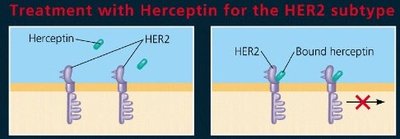
Q12. How does Herceptin work as a therapeutic?
Background
Topic: Targeted Cancer Therapy
This question tests your understanding of Herceptin's mechanism in treating HER2-positive breast cancer.
Key Terms:
Herceptin: Monoclonal antibody targeting HER2 receptor.
HER2: Growth factor receptor.
Step-by-Step Guidance
Describe what Herceptin targets in breast cancer cells.
Explain how Herceptin binding affects HER2 signaling.
Discuss the outcome of Herceptin treatment on cell division.
Try solving on your own before revealing the answer!
Final Answer:
Herceptin binds to HER2 receptors, blocking their activity and preventing excessive cell division in HER2-positive breast cancer.
