 Indietro
Cell Division: Mitosis and Meiosis Study Guide MIDTERM
Guida di studio - Note intelligenti
 Appunti personalizzati basati sui tuoi materiali, ampliati con definizioni chiave, esempi e contesto.
Mitosis and the Cell Cycle
Overview of Mitosis
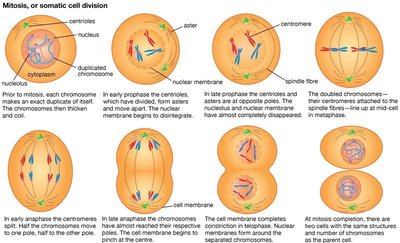
Mitosis is the process by which a eukaryotic cell divides to produce two genetically identical daughter cells. This process is essential for growth, tissue repair, and asexual reproduction in multicellular organisms. The cell cycle consists of interphase (where the cell grows and DNA is replicated) and the mitotic phase (where the cell divides).
Interphase: The cell prepares for division by replicating its DNA and organelles. It consists of G1 (growth), S (DNA synthesis), and G2 (preparation for mitosis).
Prophase: Chromosomes condense and become visible; the nuclear envelope begins to disintegrate.
Metaphase: Chromosomes align at the cell's equatorial plane (metaphase plate).
Anaphase: Sister chromatids separate and move toward opposite poles.
Telophase: Nuclear envelopes reform around the two sets of chromosomes.
Cytokinesis: The cytoplasm divides, resulting in two daughter cells.

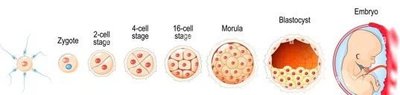
Animal vs. Plant Cell Mitosis
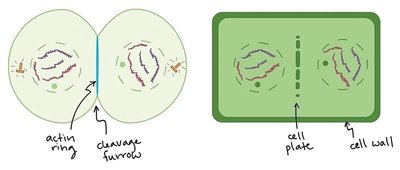
While the fundamental steps of mitosis are similar in both animal and plant cells, cytokinesis differs. Animal cells form a cleavage furrow, while plant cells build a cell plate that becomes the new cell wall.
Animal Cells: Cytokinesis occurs via constriction of the actin ring, forming a cleavage furrow.
Plant Cells: Cytokinesis occurs via formation of a cell plate, which develops into a new cell wall.

Stages of Mitosis Under the Microscope
Each stage of mitosis can be identified by the arrangement and appearance of chromosomes within the cell. Microscopic examination is used to distinguish these stages in both plant and animal cells.
Prophase: Chromosomes condense and spindle fibers begin to form.
Metaphase: Chromosomes align at the metaphase plate.
Anaphase: Chromatids are pulled apart to opposite poles.
Telophase: Chromosomes decondense and nuclear envelopes reform.
Meiosis and Sexual Reproduction
Overview of Meiosis
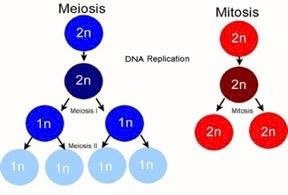
Meiosis is a specialized type of cell division that reduces the chromosome number by half, producing four haploid cells (gametes). It is essential for sexual reproduction and increases genetic diversity through recombination and independent assortment.
Meiosis I: Homologous chromosomes separate, resulting in two haploid cells.
Meiosis II: Sister chromatids separate, resulting in four unique haploid cells.
Genetic Variation: Crossing over during prophase I and independent assortment contribute to genetic diversity.

Mitosis vs. Meiosis
Mitosis and meiosis are both forms of nuclear division, but they serve different purposes and produce different outcomes.
Feature | Mitosis | Meiosis |
|---|---|---|
# of divisions | One | Two |
Occurs in | Somatic cells | Germ cells |
# cells produced | Two identical | Four unique |
Ploidy of cells produced | Diploid | Haploid |
Increases genetic variation? | No | Yes |
Ploidy and Homologous Chromosomes
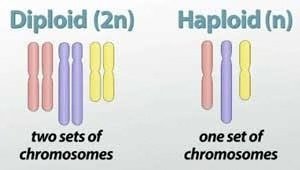
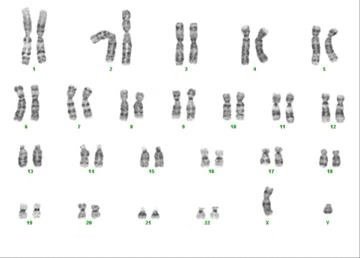
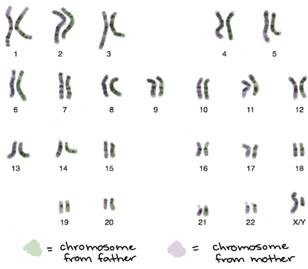
Ploidy refers to the number of sets of chromosomes in a cell. Homologous chromosomes are pairs that carry genetic information for the same traits, one inherited from each parent.
Diploid (2n): Two sets of chromosomes, typical of somatic cells.
Haploid (n): One set of chromosomes, typical of gametes.
Homologous Chromosomes: Chromosome pairs with similar structure and gene content, but may carry different alleles.
Stages of Meiosis
Meiosis I and II
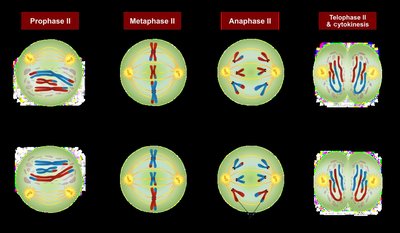
Meiosis consists of two sequential divisions: Meiosis I (reduction division) and Meiosis II (equational division). Key events include crossing over, separation of homologous chromosomes, and separation of sister chromatids.
Meiosis I: Prophase I (crossing over), Metaphase I, Anaphase I (homologous chromosomes separate), Telophase I.
Interkinesis: Short resting phase between Meiosis I and II.
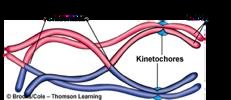
Meiosis II: Prophase II, Metaphase II, Anaphase II (chromatids separate), Telophase II.
Gametogenesis: Spermatogenesis and Oogenesis
Spermatogenesis
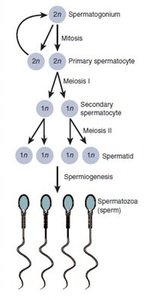
Spermatogenesis is the process by which sperm are produced in the testes. It involves meiosis and results in four haploid sperm cells from each diploid primary spermatocyte.
Primary spermatocyte (2n): Undergoes meiosis I to produce two secondary spermatocytes (n).
Secondary spermatocytes (n): Undergo meiosis II to produce four spermatids (n).
Spermatids: Mature into spermatozoa.
Oogenesis
Oogenesis is the process by which ova (egg cells) are produced in the ovaries. It involves unequal cytokinesis, resulting in one large ovum and smaller polar bodies.
Primary oocyte (2n): Begins meiosis I before birth, suspended until puberty.
Secondary oocyte (n): Completes meiosis II only upon fertilization.
Polar bodies: Small cells produced during oogenesis that typically degenerate.

Meiosis in Plants and Animals
Meiosis in Plants
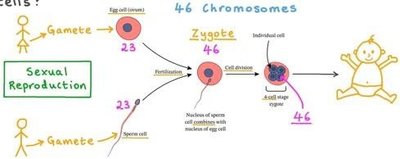
Flowering plants produce pollen (male gametes) by meiosis in the anther, and eggs (female gametes) by meiosis in the ovule. Both gametes are haploid. Fertilization produces a diploid zygote, which divides by mitosis to form an embryo.
Anther: Site of pollen formation.
Ovule: Site of egg formation.
Zygote: Diploid cell formed by fusion of gametes.
Meiosis in Animals
Sexual reproduction in animals requires formation of sperm and ovum, which fuse to form a zygote. Spermatogenesis and oogenesis are the processes by which these gametes are formed.
Spermatogenesis: Formation of haploid sperm.
Oogenesis: Formation of haploid ova.
Zygote: Diploid cell formed by fertilization.
Genetic Variability
Sources of Genetic Variation
Meiosis increases genetic variability through two main mechanisms:
Crossing Over: Exchange of genetic material between homologous chromosomes during prophase I.
Independent Assortment: Random distribution of homologous chromosomes during metaphase I.
Review for Midterm
Identify each stage of the cell cycle and explain what is happening inside the cell.
Differentiate between plant and animal mitosis.
Know the end products of mitosis and meiosis and their significance.
Explain the process of plant and animal meiosis (spermatogenesis, oogenesis).
Describe how genetic variability occurs.
