 Indietro
Cell Membrane Structure and Function, Energy Flow, and Transport Mechanisms
Guida di studio - Note intelligenti
 Appunti personalizzati basati sui tuoi materiali, ampliati con definizioni chiave, esempi e contesto.
Cell Membrane Structure and Function
Phospholipid Bilayer
The cell membrane is primarily composed of a phospholipid bilayer, which forms a flexible, semi-permeable barrier between the cell's interior and its external environment. - Phospholipids have hydrophilic (water-loving) heads and hydrophobic (water-fearing) tails. - The hydrophilic heads face outward toward the watery environments inside and outside the cell, while the hydrophobic tails face inward, away from water. - This arrangement allows the membrane to be fluid and dynamic, enabling movement and flexibility. 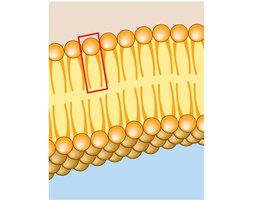
Membrane Fluidity
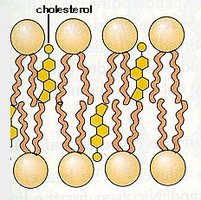
Membrane fluidity is crucial for cell function, affecting permeability and the movement of proteins within the membrane. - Unsaturated fatty acids (with kinks from double/triple bonds) increase fluidity, while saturated fatty acids (mostly single bonds) decrease fluidity. - Cholesterol stabilizes the membrane, modulating fluidity and reducing permeability. 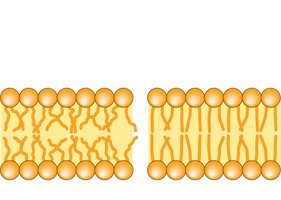
Membrane Permeability
The phospholipid bilayer allows selective passage of substances. - Small nonpolar molecules (e.g., O2, CO2) and some water molecules can diffuse freely. - Large polar molecules (e.g., glucose) and ions require specialized transport proteins.
Transport Across the Membrane
Passive Transport
Passive transport does not require energy and relies on concentration gradients. - Simple diffusion: Movement of small, nonpolar molecules directly through the bilayer. - Facilitated diffusion: Movement of molecules via channel or carrier proteins. - Osmosis: Diffusion of water through aquaporins or the bilayer. 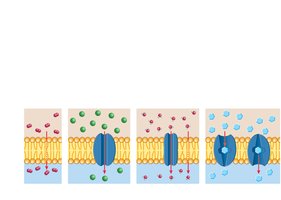
Diffusion
Diffusion is the movement of molecules from an area of high concentration to low concentration. - Both solute and solvent molecules move until equilibrium is reached. 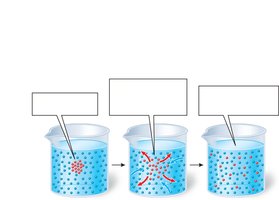
Osmosis and Effects on Cells
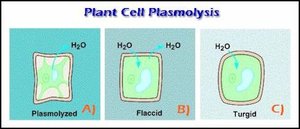
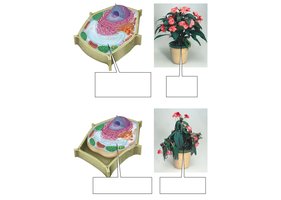
Osmosis is the movement of water across a membrane in response to solute concentration. - Isotonic solution: No net flow of water; cell size remains constant. - Hypertonic solution: Water flows out; cell shrinks. - Hypotonic solution: Water flows in; cell swells. 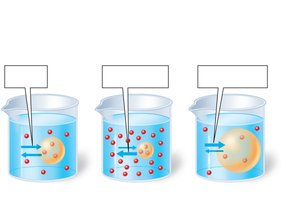

Active Transport
Active transport requires energy (usually ATP) to move substances against their concentration gradient. - Transport proteins bind both ATP and the target molecule (e.g., Ca2+), change shape, and move the molecule across the membrane. 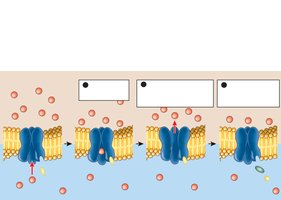
Bulk Transport: Endocytosis and Exocytosis
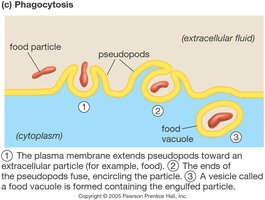
Endocytosis is the process by which cells engulf particles or liquids using vesicles. - Pinocytosis: "Cell drinking"; uptake of liquids. 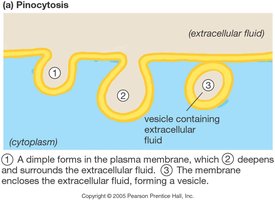 - Phagocytosis: "Cell eating"; uptake of large particles.
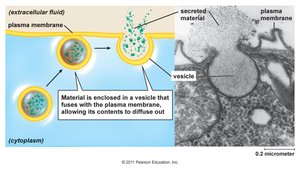
 Exocytosis is the process of expelling materials from the cell using vesicles.
Cell Size and Surface Area
Surface Area to Volume Ratio
As cells grow larger, their surface area increases less rapidly than their volume. - This limits the efficiency of diffusion and transport within the cell, restricting cell size. 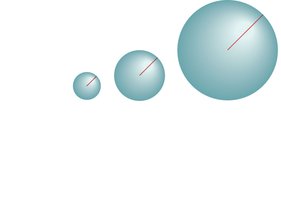
Cell Attachment and Communication
Cell Junctions
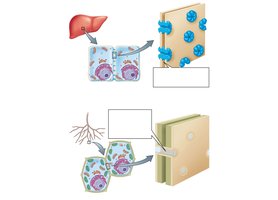
Cells are connected and communicate through specialized structures. - Desmosomes: Protein filaments hold cells together, providing mechanical strength. - Tight junctions: Proteins seal cells together, preventing leakage. 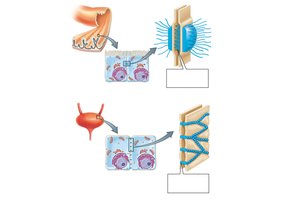 - Gap junctions (animals): Channel proteins connect adjacent cells for direct communication. - Plasmodesmata (plants): Membrane-lined channels connect plant cells.
Energy Flow in the Life of a Cell
Types of Energy
Cells utilize two fundamental types of energy: - Potential energy: Stored energy (e.g., chemical bonds, electrical charge). - Kinetic energy: Energy of movement (e.g., light, heat, motion). 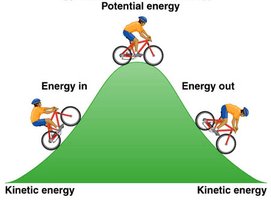
Laws of Thermodynamics
- First law: Energy cannot be created or destroyed, only transformed (law of conservation of energy). - Second law: Useful energy decreases with each transformation; entropy (disorder) increases. 
Energy Conversions and Cellular Reactions
- Exergonic reactions: Release energy (e.g., breakdown of glucose). - Endergonic reactions: Require energy input (e.g., synthesis of proteins). - ATP is the principal energy carrier in cells, storing and releasing energy as needed.
Enzymes and Metabolic Pathways
Enzymes are biological catalysts that lower activation energy and speed up reactions. - Enzyme activity is regulated by competitive and noncompetitive inhibition, as well as feedback inhibition. - Metabolic pathways consist of a series of enzyme-catalyzed reactions, transforming an initial reactant into a final product.
Summary Table: Types of Membrane Transport
Type | Energy Required? | Direction | Example |
|---|---|---|---|
Simple Diffusion | No | High to Low | O2, CO2 |
Facilitated Diffusion | No | High to Low | Glucose, ions |
Osmosis | No | High to Low (water) | Water movement |
Active Transport | Yes | Low to High | Na+/K+ pump |
Endocytosis | Yes | Into cell | Phagocytosis, pinocytosis |
Exocytosis | Yes | Out of cell | Secretion of hormones |
Conclusion
Understanding the structure and function of the cell membrane, mechanisms of transport, and energy flow is fundamental to cell biology. These concepts are essential for explaining how cells maintain homeostasis, communicate, and perform vital metabolic processes. Mastery of these topics is critical for success in General Biology.
