 Indietro
Cell Membrane Structure and Function: Study Notes for General Biology
Guida di studio - Note intelligenti
 Appunti personalizzati basati sui tuoi materiali, ampliati con definizioni chiave, esempi e contesto.
The Cell Membrane
Introduction to Cell Membranes
The cell membrane, also known as the plasma membrane, is a fundamental structure in all cellular life. It serves as a boundary, regulating the entry and exit of substances, and is essential for maintaining cellular metabolism.
Metabolism: The controlled use of energy by cells to build, break apart, store, and release substances.
All cells, regardless of their kingdom, possess a cell membrane.
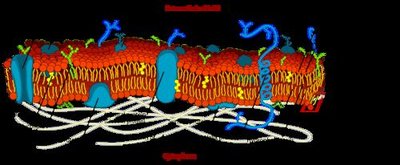
The membrane is semi-fluid and flexible, described by the fluid-mosaic model.
Fluid-Mosaic Model of the Cell Membrane
The fluid-mosaic model describes the cell membrane as a dynamic structure composed of various macromolecules, primarily phospholipids, proteins, sterols, and carbohydrates.
Fluid: Components move laterally within the layer.
Mosaic: Diverse molecules (lipids, proteins, carbohydrates) are embedded within the membrane.
Phospholipids: Structure and Function
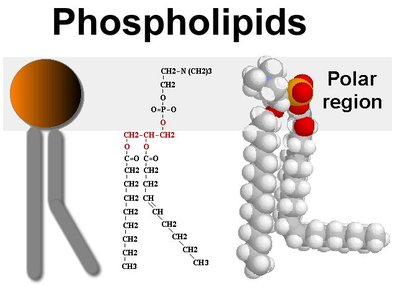
Phospholipids are the primary component of the cell membrane, forming a bilayer that provides both structural integrity and selective permeability.
Each phospholipid has a hydrophilic (polar) head and hydrophobic (nonpolar) tails.
The bilayer arrangement ensures that hydrophobic tails face inward, shielded from water, while hydrophilic heads face outward.
Phospholipids are amphipathic, possessing both hydrophilic and hydrophobic regions.
Additional Components of Cell Membranes
Besides phospholipids, the cell membrane contains sterols, carbohydrates, and proteins, each contributing to membrane function.
Sterols (Cholesterol): Regulate membrane fluidity, act as antifreeze in cold temperatures, and are precursors for vitamin D and steroid hormones. Found in animal cells.
Carbohydrates: Increase cell specificity, help cells adhere to form tissues, and contribute to cell recognition.
Proteins: Perform most regulatory functions, including transport, signaling, and cell adhesion.
Membrane Permeability and Transport
Semi-Permeable Nature of the Membrane
The cell membrane is semi-permeable, meaning it selectively allows certain molecules to cross while restricting others.
Regulates what enters and exits the cell.
Uses various mechanisms to control molecular movement.
Passive Transport
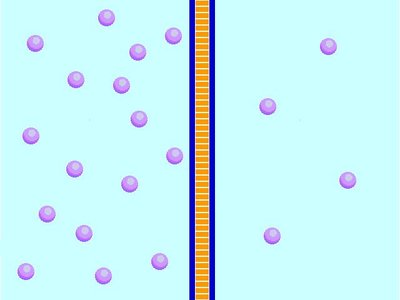
Passive transport involves the movement of substances from areas of high concentration to low concentration, without the use of cellular energy (ATP).
Simple Diffusion: Direct movement of small, nonpolar molecules (e.g., O2, CO2) through the phospholipid bilayer.
Osmosis: Diffusion of water across the membrane.
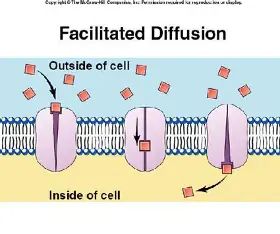
Facilitated Diffusion: Movement of molecules through integral proteins (e.g., aquaporins for water).
Active Transport and Energy-Requiring Transport
Active transport moves substances against their concentration gradient (from low to high concentration), requiring energy input from ATP.
Active Transport: Uses protein pumps to move ions and molecules against the gradient.
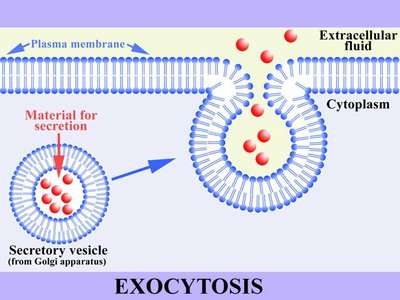
Exocytosis: Expels large molecules or groups of molecules from the cell via vesicles.
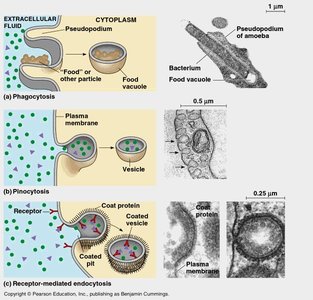
Endocytosis: Brings large molecules or groups of molecules into the cell via vesicles.
Types of Endocytosis
Pinocytosis: 'Cell drinking'—uptake of fluid molecules.
Phagocytosis: 'Cell eating'—engulfment of particles or microorganisms.
Receptor-Mediated Endocytosis: Selective uptake using specific receptors.
Membrane Proteins
Types of Membrane Proteins
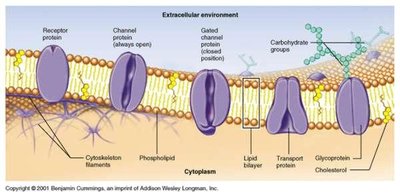
Membrane proteins are essential for the diverse functions of the cell membrane. There are four main types:
Transport Proteins / Channel Proteins: Provide hydrophilic channels for ions and molecules to cross the membrane. Example: Hemoglobin (in red blood cells).
Receptor Site Proteins: Bind specific molecules (ligands) and trigger cellular responses. Ligands include hormones and neurotransmitters.
Cell Adhesion Proteins / Junction Proteins: Help cells stick together and communicate, often forming glycoproteins with carbohydrates.
Cell Recognition Proteins: Act as surface markers, distinguishing cell types, species, and individuals. Important for immune response and blood group identification.
Tonicity
Definition and Types of Solutions
Tonicity refers to the direction of water movement across the cell membrane, determined by the relative concentration of solutes inside and outside the cell.
Hypertonic Solution: Higher solute concentration outside the cell; water moves out, causing cell shrinkage.
Hypotonic Solution: Lower solute concentration outside the cell; water moves in, causing cell swelling.
Isotonic Solution: Equal solute concentration; no net water movement.
Additional info: Tonicity is crucial for understanding osmoregulation and cell volume maintenance.
