 Indietro
Cell Membrane Structure, Function, and Transport Mechanisms
Guida di studio - Note intelligenti
 Appunti personalizzati basati sui tuoi materiali, ampliati con definizioni chiave, esempi e contesto.
Cell Membrane Structure and Fluidity
Phospholipid Bilayer and Amphipathic Nature
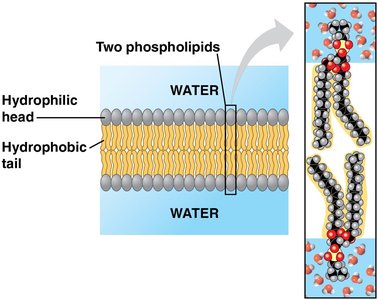
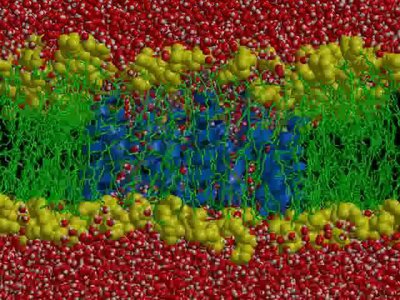
The cell membrane is primarily composed of a phospholipid bilayer, which is amphipathic—meaning it contains both hydrophobic (water-fearing) and hydrophilic (water-loving) regions. This structure is essential for forming a selective barrier between the cell's internal and external environments.
Phospholipids have hydrophilic heads facing outward toward water and hydrophobic tails facing inward, away from water.
This arrangement creates a semi-permeable membrane.
Fluid Mosaic Model
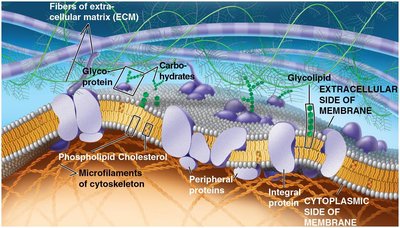
The fluid mosaic model describes the cell membrane as a dynamic structure with proteins embedded in or associated with a fluid bilayer of phospholipids.
Membrane proteins and lipids can move laterally within the layer, contributing to membrane fluidity.
Rarely, lipids may flip-flop between layers.
Membrane Fluidity and Lipid Composition
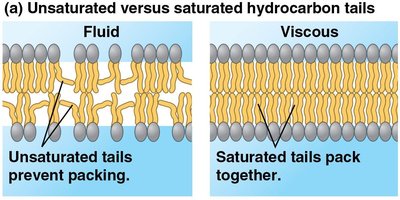
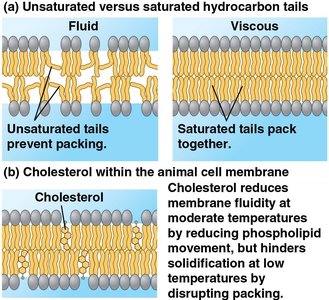
Membrane fluidity is influenced by temperature and the types of lipids present.
Unsaturated fatty acid tails prevent tight packing, increasing fluidity.
Saturated fatty acid tails pack tightly, making the membrane more viscous.
Cholesterol acts as a fluidity buffer in animal cells, restraining movement at high temperatures and preventing solidification at low temperatures.
Membrane Proteins and Their Functions
Types of Membrane Proteins
Membrane proteins are crucial for the cell membrane's function and are classified as:
Peripheral proteins: Bound to the membrane surface.
Integral proteins: Penetrate the hydrophobic core of the bilayer.
Functions of Membrane Proteins
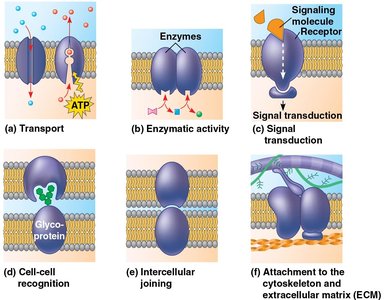
Membrane proteins perform a variety of functions, including:
Transport: Move substances across the membrane.
Enzymatic activity: Catalyze reactions at the membrane surface.
Signal transduction: Relay signals from outside to inside the cell.
Cell-cell recognition: Identify and interact with other cells.
Intercellular joining: Connect cells together.
Attachment: Anchor the membrane to the cytoskeleton and extracellular matrix.
Membrane Carbohydrates and Cell Recognition
Carbohydrates attached to lipids (glycolipids) or proteins (glycoproteins) on the cell surface serve as markers for cell identification and recognition.
These markers are important for immune responses and tissue formation.
Membrane Transport Mechanisms
Selective Permeability
The cell membrane is selectively permeable, allowing some substances to cross more easily than others.
Hydrophobic (nonpolar) molecules pass through rapidly.
Hydrophilic (polar) molecules, such as sugars and ions, pass through slowly or require transport proteins.
Types of Membrane Transport
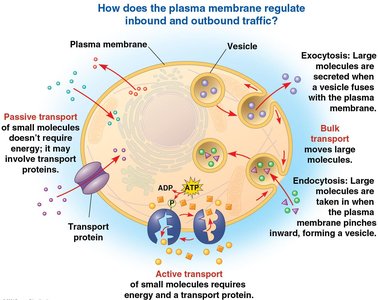
Passive transport: Does not require energy; includes diffusion and facilitated diffusion.
Active transport: Requires energy (usually ATP) and transport proteins to move substances against their concentration gradient.
Bulk transport: Involves endocytosis (entry) and exocytosis (exit) of large molecules via vesicles.
Diffusion and Facilitated Diffusion
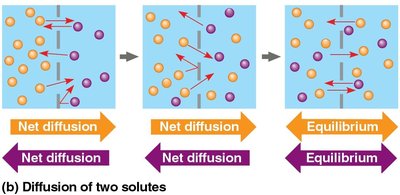
Diffusion: Movement of particles from high to low concentration until equilibrium is reached.
Facilitated diffusion: Uses transport proteins (channel or carrier proteins) to move substances across the membrane without energy input.
Osmosis and Tonicity
Osmosis: Diffusion of free water across a selectively permeable membrane.
Tonicity: The ability of a solution to cause a cell to gain or lose water, depending on solute concentration.
Types of tonicity:
Isotonic: Equal solute concentration; no net water movement.
Hypertonic: Higher solute concentration outside; cell loses water.
Hypotonic: Lower solute concentration outside; cell gains water.
Applied Concepts and Examples
HIV Infection and Membrane Proteins
HIV enters immune cells by binding to cell-surface proteins CD4 and CCR5. Individuals lacking CCR5 are resistant to HIV infection. 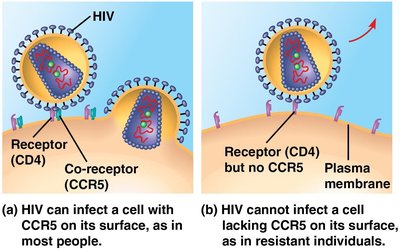
Osmoregulation in Organisms
Organisms regulate solute concentration and water balance to survive in different environments.
Freshwater fish and Paramecium use contractile vacuoles to expel excess water.
Saltwater fish actively excrete salt to maintain osmotic balance.
Plant Cell Water Balance
Plant cells are turgid (firm) in hypotonic solutions due to turgor pressure.
They become flaccid in isotonic solutions and undergo plasmolysis in hypertonic solutions.
Summary Table: Types of Membrane Transport
Type | Energy Required? | Mechanism | Example |
|---|---|---|---|
Passive Transport | No | Diffusion, Facilitated Diffusion | O2, CO2 movement |
Active Transport | Yes (ATP) | Transport proteins move substances against gradient | Na+/K+ pump |
Bulk Transport | Yes | Endocytosis, Exocytosis | Protein secretion, phagocytosis |
Key Equations
Diffusion: where J is flux, D is diffusion coefficient, and is concentration gradient.
Osmosis: where is osmotic pressure, i is ionization constant, C is concentration, R is gas constant, T is temperature.
Additional info:
Organisms adapt membrane lipid composition to environmental conditions (e.g., more unsaturated lipids in cold environments).
Membrane sidedness is established during synthesis in the ER and Golgi apparatus.
