 Indietro
Cell Membrane Transport: Passive and Active Mechanisms
Guida di studio - Note intelligenti
 Appunti personalizzati basati sui tuoi materiali, ampliati con definizioni chiave, esempi e contesto.
Cell Membrane Structure and Fluidity
Phospholipid Bilayer Composition
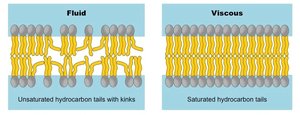
The cell membrane is primarily composed of a phospholipid bilayer, which provides selective permeability and structural integrity. The fluidity of the membrane is influenced by the types of fatty acid tails present and the presence of cholesterol.
Unsaturated fatty acid tails have kinks due to double bonds, preventing tight packing and increasing membrane fluidity.
Saturated fatty acid tails lack double bonds, allowing tight packing and resulting in a more viscous, less fluid membrane.
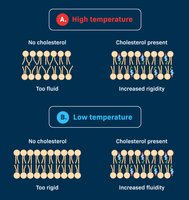
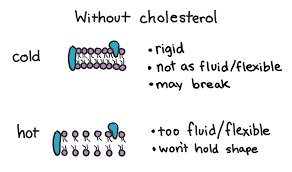
Cholesterol acts as a buffer, increasing rigidity at high temperatures and fluidity at low temperatures.
Selective permeability allows certain molecules to cross the membrane more easily than others.
Example: At low temperatures, cholesterol prevents the membrane from becoming too rigid; at high temperatures, it prevents excessive fluidity.
Passive Transport
Overview of Passive Transport
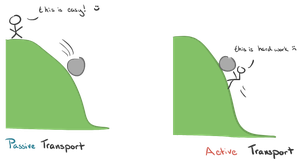
Passive transport is the movement of molecules across the cell membrane without the expenditure of cellular energy. Molecules move down their concentration or electrochemical gradient.
Simple diffusion: Direct movement of molecules across the membrane.
Facilitated diffusion: Movement of molecules via specific transport proteins.
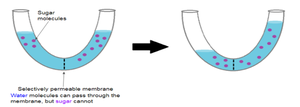
Osmosis: Diffusion of water across a selectively permeable membrane.
Simple Diffusion
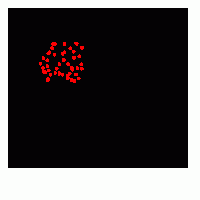
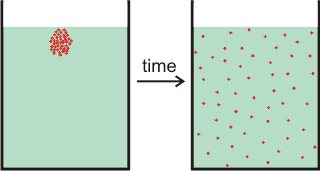
Simple diffusion involves the movement of small, nonpolar molecules directly across the phospholipid bilayer. The membrane remains selectively permeable, allowing only certain molecules to pass.
Substances move from areas of high concentration to low concentration.
Examples: Oxygen (O2), carbon dioxide (CO2).
Facilitated Diffusion
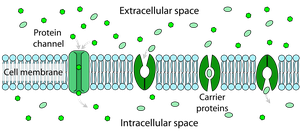
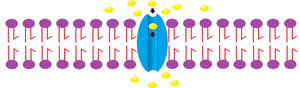
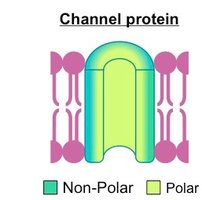
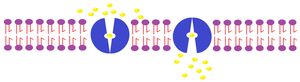
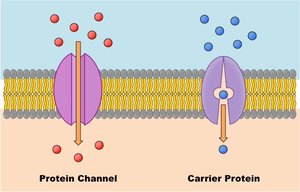
Facilitated diffusion is the movement of molecules across the membrane with the help of transport proteins. This process is essential for ions, water, and carbohydrates that cannot easily cross the lipid bilayer.
Channel proteins: Provide hydrophilic channels for molecules and ions to pass. Many are gated and open in response to stimuli.
Aquaporins: Specialized channel proteins for water.
Carrier proteins: Undergo conformational changes to transport substances across the membrane.
Each transport protein is specific to the substances it moves.

Osmosis
Osmosis is the diffusion of water across a selectively permeable membrane. Water moves from areas of low solute concentration to areas of high solute concentration.
Most water enters cells via aquaporins (facilitated diffusion).
Osmosis is crucial for maintaining cell turgor and homeostasis.
Selective Permeability
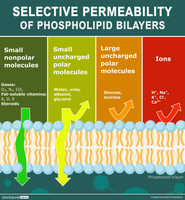
The cell membrane is selectively permeable, allowing some molecules to pass while restricting others based on size, charge, and polarity.
Nonpolar molecules pass easily due to the nonpolar lipid interior.
Polar molecules and ions require transport proteins.

Active Transport
Overview of Active Transport
Active transport is the movement of molecules against their concentration gradient, requiring cellular energy (ATP). This process is essential for maintaining concentration differences across the membrane.
Pumps: Use ATP to move ions and molecules.
Cotransport: Couples the movement of one substance with another.
Exocytosis and Endocytosis: Transport of large molecules via vesicles.
ATP and Protein Pumps
ATP provides energy for active transport by transferring a phosphate group to transport proteins, causing conformational changes that move substances across the membrane.
Protein pumps maintain membrane potential, an electrochemical gradient essential for cell function.
The cytoplasm is typically more negative than the extracellular fluid.
Sodium-Potassium Pump
The sodium-potassium pump is a key example of active transport in animal cells, regulating Na+ and K+ concentrations.
3 Na+ ions are pumped out of the cell.
2 K+ ions are pumped into the cell.
Results in a net positive charge outside the cell.
Proton Pump
Proton pumps are integral membrane proteins that build up a proton gradient across the membrane, used by plants, fungi, and bacteria.
Pumps H+ ions out of the cell.
Creates an electrochemical gradient used for cotransport.
Cotransport
Cotransport involves the coupling of a favorable movement (high to low concentration) of one substance with the unfavorable movement (low to high concentration) of another.
Example: Sucrose-H+ cotransporter in plants.
Sucrose moves into the cell against its gradient only if coupled with H+ moving down its gradient.
Exocytosis and Endocytosis
Large molecules are transported across the membrane via vesicle-mediated processes.
Exocytosis: Secretion of molecules via vesicles that fuse with the plasma membrane.
Endocytosis: Uptake of molecules via vesicles formed from the plasma membrane.
Types of endocytosis: Phagocytosis (cell eating), Pinocytosis (cell drinking), Receptor-mediated endocytosis (specific uptake).
Summary Table: Passive vs Active Transport
Transport Type | Energy Requirement | Direction | Examples |
|---|---|---|---|
Passive | No energy required | High to low concentration (with gradient) | Simple diffusion, facilitated diffusion, osmosis |
Active | Requires ATP | Low to high concentration (against gradient) | Pumps, cotransport, exocytosis, endocytosis |
Key Equations
Diffusion Rate:
Osmosis: (Osmotic pressure equation)
Additional info: The notes cover cell membrane structure, fluidity, and transport mechanisms, directly relevant to General Biology topics such as "The Membrane," "Cell Components," "Energy and Metabolism," and "Transport." All images included are directly relevant to the explanations provided.
