 Indietro
Cell Membranes: Structure, Diffusion, and Transport Mechanisms
Guida di studio - Note intelligenti
 Appunti personalizzati basati sui tuoi materiali, ampliati con definizioni chiave, esempi e contesto.
Cell Membranes and Transport
Introduction to Cell Membranes
The cell membrane, also known as the plasma membrane, is a selectively permeable barrier that separates the interior of the cell from its external environment. It is primarily composed of a phospholipid bilayer with embedded proteins, which regulate the movement of substances into and out of the cell.
Diffusion Across Membranes
Principles of Diffusion
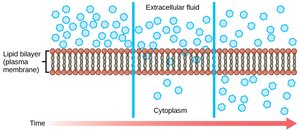
Diffusion is the spontaneous movement of molecules or ions from regions of higher concentration to regions of lower concentration, driven by the random thermal motion of particles. This process continues until equilibrium is reached, where there is no net movement of molecules.
Concentration Gradient: The difference in solute concentration across a membrane drives diffusion.
Equilibrium: Achieved when the concentration of solute is equal on both sides of the membrane.
Selective Permeability: Only certain molecules, such as small non-polar molecules (e.g., O2, CO2, lipid hormones), can diffuse freely across the lipid bilayer.
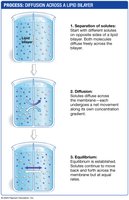
Random Walks and Diffusion
The process of diffusion can be compared to a random walk, similar to flipping a coin, where each movement is independent and random. Over time, this randomness leads to the net movement of particles from high to low concentration.
Factors Affecting Diffusion Rate
The rate at which molecules diffuse across membranes depends on several factors:
Concentration Gradient: Greater differences increase diffusion rate.
Mass of Molecules: Smaller molecules diffuse faster.
Temperature: Higher temperatures increase molecular movement.
Solvent Density: Higher density (e.g., dehydration) slows diffusion.
Solubility: Nonpolar (lipid-soluble) molecules diffuse more rapidly.
Surface Area: Larger surface area increases diffusion rate.
Distance: Greater distances slow diffusion; this limits cell size.
Pressure: In some cells, pressure (e.g., blood pressure in kidneys) can speed up diffusion.
Osmosis: Diffusion of Water
Definition and Mechanism
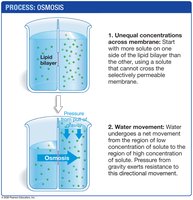
Osmosis is the diffusion of water molecules across a selectively permeable membrane. Water moves from regions of higher water concentration (lower solute concentration) to regions of lower water concentration (higher solute concentration).
Osmosis is specific to water movement.
It is essential for maintaining cell volume and internal environment.
Effects of Osmosis on Cells
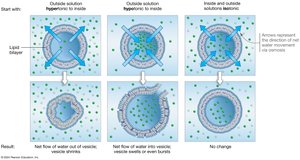
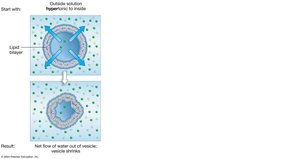
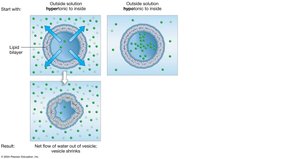
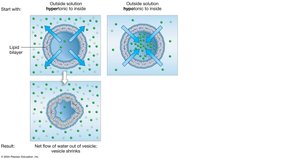
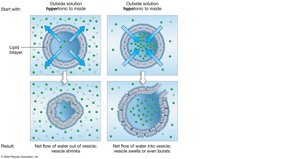
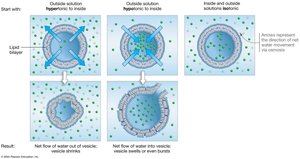
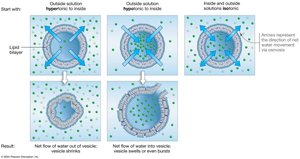
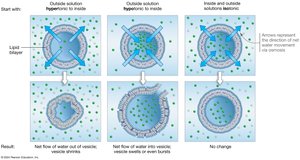
Osmosis can cause cells or membrane-bound vesicles to shrink, swell, or burst, depending on the relative solute concentrations inside and outside the cell.
Hypertonic Solution: Higher solute concentration outside; water leaves the cell, causing it to shrink.
Hypotonic Solution: Lower solute concentration outside; water enters the cell, causing it to swell or burst.
Isotonic Solution: Equal solute concentration; no net water movement.
Transport Mechanisms Across Membranes
Passive Transport
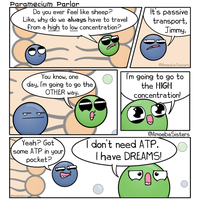
Passive transport does not require energy and includes diffusion, facilitated diffusion, and osmosis. Molecules move down their concentration gradients.
Facilitated Diffusion: Movement of molecules across membranes via transport proteins, still down the concentration gradient.
Active Transport
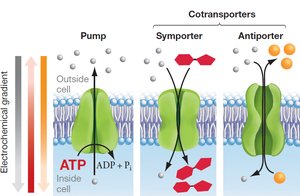
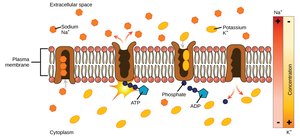
Active transport moves molecules against their concentration or electrochemical gradients and requires energy input, usually from ATP.
Primary Active Transport: Direct use of ATP to move molecules (e.g., Na+-K+ pump).
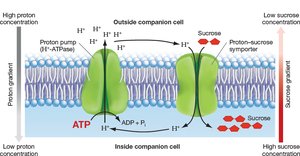
Secondary Active Transport: Uses the energy stored in electrochemical gradients created by primary active transport to move other substances.
Electrochemical Gradients
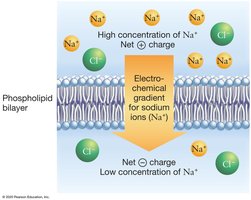
An electrochemical gradient is formed by the combined effects of concentration gradients and electrical charge differences across the membrane. These gradients are critical for processes such as nerve impulse transmission and secondary active transport.
Secondary Active Transport
Secondary active transport does not use ATP directly. Instead, it relies on the energy stored in an ion gradient established by primary active transport. Many amino acids and glucose molecules enter cells via this mechanism.
Bulk Transport: Endocytosis and Exocytosis
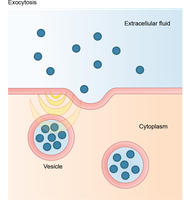
Bulk transport is used for molecules too large to pass through transport proteins. This process requires energy and includes:
Endocytosis: Importing substances into the cell by engulfing them in vesicles.
Exocytosis: Exporting substances out of the cell by vesicle fusion with the plasma membrane.
Summary Table: Types of Membrane Transport
Transport Type | Energy Required? | Direction | Example |
|---|---|---|---|
Simple Diffusion | No | High to Low | O2, CO2 |
Facilitated Diffusion | No | High to Low | Glucose via GLUT transporter |
Osmosis | No | High to Low (water) | Water movement |
Primary Active Transport | Yes (ATP) | Low to High | Na+-K+ pump |
Secondary Active Transport | Indirect (uses gradient) | Low to High (coupled) | Glucose/Na+ symporter |
Bulk Transport | Yes | In or Out | Endocytosis, Exocytosis |
