 Indietro
Cell Organelles and Membrane Structure: Study Notes for General Biology
Guida di studio - Note intelligenti
 Appunti personalizzati basati sui tuoi materiali, ampliati con definizioni chiave, esempi e contesto.
Cell Components
Cytoplasm
The cytoplasm is the region between the cell membrane and the nuclear envelope, containing both the liquid cytosol and various organelles. It is the site of many cellular processes and provides a medium for organelle movement.
Cytosol: The liquid portion, mostly water, where metabolic reactions occur.
Organelles: Specialized structures performing distinct functions within the cell.
Cytoskeleton
The cytoskeleton is a dynamic network of protein filaments that provides structural support, facilitates movement, and organizes the cell's contents.
Microtubules: Straight, hollow tubes made of protein; act as support beams, tracks for organelle movement, and chromosome tracks during cell division.
Microfilaments: Thin, solid protein strands; form support structures such as a cage for the nucleus.
Cilia and Flagella: Specialized structures formed from the cytoskeleton for cell movement.
Dynamic Assembly: Can rapidly assemble, disassemble, and reassemble, allowing for cell shape changes and movement.
Nucleus
Structure and Function
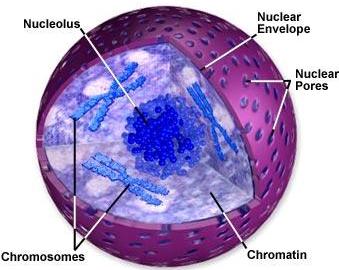
The nucleus is the control center of the cell, housing DNA and coordinating activities such as growth, metabolism, and reproduction.
Nucleolus: Site of ribosome component synthesis.
Nuclear Envelope: Double membrane that regulates material entry and exit.
Nuclear Pores: Openings in the envelope allowing transport of molecules.
Chromatin: DNA in a non-reproductive state, loosely organized with protein supports.
Chromosomes: Tightly coiled DNA, RNA, and protein, visible during cell division.
Ribosomes
Protein Synthesis
Ribosomes are the cellular machinery responsible for protein synthesis, translating genetic information from mRNA into polypeptides.
Free Ribosomes: Suspended in cytosol, synthesize proteins for use within the cell.
Associated Ribosomes: Attached to the nuclear envelope or Rough ER, synthesize proteins for export.
Process: mRNA exits the nucleus, ribosome reads the code, gathers amino acids, and forms proteins.
Endoplasmic Reticulum (ER)
Types and Functions
The ER is a network of membrane channels and sacs connecting the nucleus to other cell parts, serving as a manufacturing site for biomolecules.
Rough ER: Has ribosomes; synthesizes proteins for export and plasma membrane formation.
Smooth ER: Lacks ribosomes; synthesizes lipids, steroids, and detoxifying enzymes, especially important in the liver.
Transport Vesicles: Channels collect proteins and pinch off vesicles for transport.
Golgi Apparatus
Processing and Packaging
The Golgi apparatus modifies, sorts, and packages proteins and other molecules received from the ER for intracellular use or export.
Receives: Transport vesicles from ER.
Modifies: Molecules, usually proteins.
Releases: Products in vesicles for delivery or export.
Mitochondria
Cellular Respiration and Energy Production
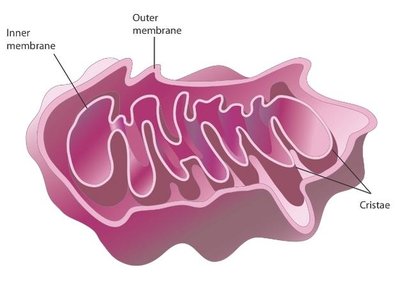
Mitochondria are the powerhouses of the cell, converting energy stored in food (mainly glucose) into ATP through cellular respiration.
ATP: Adenosine triphosphate, the cell's energy currency.
Own DNA: Mitochondria contain their own DNA and can synthesize some proteins independently.
Structure: Inner membrane folds (cristae) increase surface area for chemical reactions.
Cellular Respiration Equation:
Chloroplasts
Photosynthesis
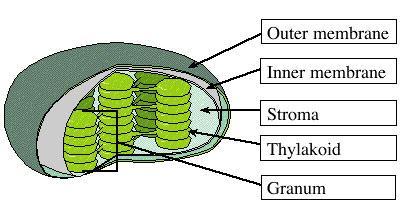
Chloroplasts are organelles found in plant cells and some protists, responsible for photosynthesis—the process of converting light energy into chemical energy.
Structure: Contains outer and inner membranes, stroma, thylakoids, and grana.
Function: Thylakoids are the site of light-dependent reactions; stroma is the site of the Calvin cycle.
Photosynthesis Equation:
Lysosomes
Intracellular Digestion
Lysosomes are membrane-bound sacs filled with digestive enzymes, breaking down polymers into monomers and recycling cellular components.
Origin: Formed as vesicles from the Golgi apparatus.
Functions: Fuse with food vacuoles, destroy bacteria, and digest old/damaged organelles.
Vacuoles
Storage and Specialized Functions
Vacuoles are membrane-bound storage sacs, varying in function across different organisms.
Plants: Central vacuole stores water and maintains cell rigidity.
Protists: Contractile vacuole expels excess water.
Animals: Vacuoles often become lysosomes.
The Membrane
Fluid Mosaic Model
The cell membrane is a dynamic structure composed of a phospholipid bilayer with embedded proteins, carbohydrates, and cholesterol, providing selective permeability and stability.
Fluid: Components move freely within the membrane.
Mosaic: Made of many different pieces (phospholipids, proteins, carbohydrates).
Functions: Stability, spacing between phospholipids, selective transport of molecules.
Transport: Proteins allow passage of larger or charged molecules (e.g., H2O, glucose); small uncharged molecules (e.g., CO2, O2) pass directly through the membrane.
Summary Table: Major Cell Organelles and Their Functions
Organelle | Main Function | Key Features |
|---|---|---|
Nucleus | Genetic information storage, regulation | Nuclear envelope, nucleolus, chromatin |
Ribosome | Protein synthesis | Free or attached to ER |
ER (Rough/Smooth) | Protein/lipid synthesis | Rough: ribosomes; Smooth: detoxification |
Golgi Apparatus | Processing and packaging | Receives, modifies, releases vesicles |
Mitochondria | ATP production | Double membrane, cristae, own DNA |
Chloroplast | Photosynthesis | Thylakoids, stroma, grana |
Lysosome | Digestion | Enzyme-filled vesicles |
Vacuole | Storage | Central in plants, contractile in protists |
Additional info: Academic context was added to clarify the functions and structures of each organelle, as well as to provide relevant equations and a summary table for exam preparation.
