 Indietro
Cell Organization: Extracellular Matrix, Cell Adherence, Movement, and Signaling
Guida di studio - Note intelligenti
 Appunti personalizzati basati sui tuoi materiali, ampliati con definizioni chiave, esempi e contesto.
Cell Organization
Multicellularity and Differentiation
Multicellular organisms are composed of many cells that specialize and differentiate to perform distinct functions. Differentiation is the process by which cells become specialized, allowing for complex tissue and organ formation.
Multicellularity: Enables division of labor among cells.
Differentiation: Cells acquire unique structures and functions.
Cytoskeleton
The cytoskeleton is a network of protein filaments that provides structural support, facilitates cell movement, and organizes cellular contents.
Microtubules: Hollow tubes involved in cell shape, transport, and division.
Microfilaments (Actin): Thin filaments important for cell movement and shape.
Intermediate filaments: Provide mechanical strength.
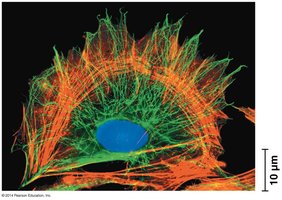
Extracellular Matrix (ECM)
Structure and Function of the ECM
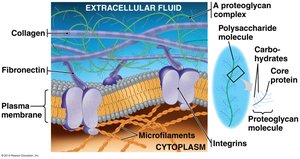
The extracellular matrix (ECM) is a complex network of proteins and carbohydrates outside the cell, providing structural support, strength, organization, and facilitating cell signaling.
Strength: ECM resists mechanical stress.
Structural support: Maintains tissue integrity.
Organization: Arranges cells within tissues.
Cell signaling: ECM components interact with cell surface receptors to influence cell behavior.
Proteins of the ECM
Adhesive proteins: Fibronectin and Laminin connect cells to the ECM and basal lamina.
Structural proteins: Collagen provides tensile strength; Elastin gives elasticity.
Cell Adherence
Mechanisms of Cell Attachment
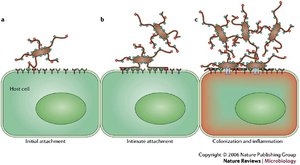
Cell adherence refers to the ability of cells to attach to the ECM, to each other, and to surfaces. This is essential for tissue formation and maintenance.
Attachment to ECM: Mediated by integrins and other receptors.
Attachment to other cells: Involves specialized junctions.
Attachment to surfaces: Important for cell migration and tissue repair.
Types of Cell Junctions in Animal Cells
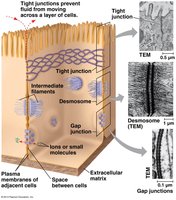
Animal cells use several types of junctions to adhere and communicate:
Tight junctions: Seal cells together, preventing fluid movement between them.
Desmosomes: Provide strong adhesion by linking intermediate filaments.
Gap junctions: Allow direct communication by permitting passage of ions and small molecules.
Cell Junctions in Plant Cells
Plant cells have unique structures for attachment and communication:
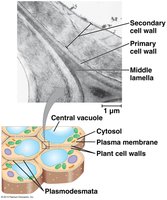
Middle lamella: Sticky layer between cell walls for adhesion.
Plasmodesmata: Channels that connect cytoplasm of adjacent cells for communication.
Cell Movement
Movement Within Cells
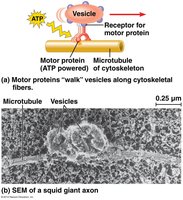
Intracellular movement is facilitated by the cytoskeleton, especially microtubules and motor proteins.
Vesicle transport: Motor proteins (e.g., kinesin, dynein) move vesicles along microtubules using ATP.
Movement of Single Cells
Cells can move in their environment using specialized structures:
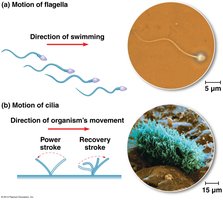
Prokaryotes: Use flagella for movement.
Eukaryotes: Use flagella, cilia, or pseudopodia.
Migration of Cells Within Tissues
Cell migration is crucial during development (e.g., embryogenesis) and tissue repair.
Examples: Migration during metamorphosis (caterpillar to butterfly), embryonic development.
Structure of Cilia and Flagella
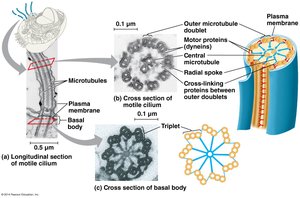
Cilia and flagella are composed of microtubules arranged in a characteristic "9+2" pattern, anchored by basal bodies (a type of microtubule organizing center).
Basal body: Anchors cilia/flagella to the cell.
9+2 arrangement: Nine doublets of microtubules surround two central microtubules.
Cell Signaling
Overview of Cell Signaling
Cell signaling is the process by which cells communicate with each other and respond to their environment. Most signals are chemical, but some can be physical (e.g., light, mechanical).
Types of signals: Peptides, proteins, ions, steroids, etc.
Universality: All cells send and receive signals; mechanisms are conserved across domains of life.
Signal Reception and Transduction
Cell signaling involves three main steps: reception, transduction, and response. A signaling molecule binds to a specific receptor, causing a shape change and triggering downstream effects.
Reception: Signal binds to receptor.
Transduction: Relay molecules transmit the signal inside the cell.
Response: Activation of cellular processes.
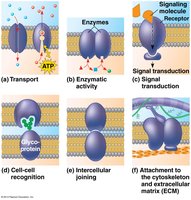
Types of Signal Receptors
Receptors can be located on the plasma membrane or inside the cell. Binding of a signal is highly specific and causes a conformational change in the receptor.
Plasma membrane receptors: Most common; interact with external signals.
Steroid receptors: Located inside the cell; steroid hormones are non-polar and can cross the membrane.
Ion Channel Receptors
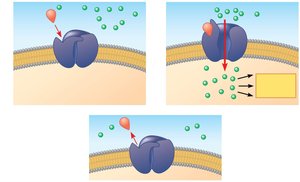
Ligand-gated ion channel receptors open or close in response to binding of a signaling molecule, allowing ions to flow across the membrane and trigger a cellular response.
Example: Neurotransmitter-gated ion channels in nerve cells.
Signal Cascades and Amplification
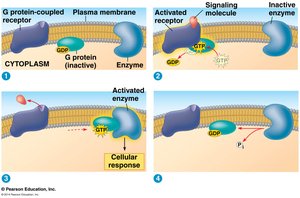
Signal transduction often involves cascades of molecular events, leading to amplification of the original signal. Enzymes activated by receptors can generate many secondary messengers, increasing the response.
Amplification: One signal can activate many downstream molecules.
Example: G protein-coupled receptor pathways.
Cell Signaling Outcomes
Cell signaling controls essential processes such as cell division, apoptosis (programmed cell death), and senescence (cell aging). The same signal can have different effects depending on the cell type and context.
Cell cycle regulation: Ensures proper cell division.
Apoptosis: Removes damaged or unnecessary cells.
Senescence: Limits cell lifespan.
